Raspberry Pi 4 Benchmarks: 32- Vs 64-bits

[Matteo] bought a new Raspberry Pi 4. Why not? You get a quad-core ARM processor, up to 4 GB of RAM, and a gigabit Ethernet port for $35 $35-55. However, the default operating system is still a 32-bit system and doesn’t take advantage of the Pi 4’s 64-bit capable CPU. So he installed a light version of 64-bit Debian and ran some benchmarks for the Raspberry Pi 4 running both 32-bit and 64-bit operating systems.

It really shouldn’t be surprising that the 64-bit OS did better in nearly every test. If anything is surprising, it may be that the difference is so pronounced. Some of the benchmarks, like Dhrystones, probably don’t relate much to real-life usage. But some things, like computing a hash, is something you probably do pretty often in normal usage, and the timing difference is pronounced.

Continue reading “Raspberry Pi 4 Benchmarks: 32- Vs 64-bits”

Carbide3D Router Teardown And Testing

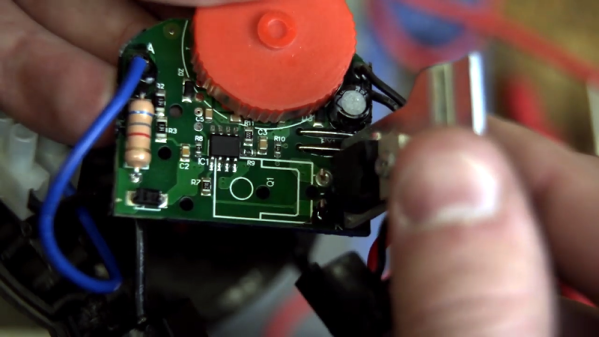
On the face of it, you’d think a small router would be pretty simple. After all, what is it other than a spinning motor? However, that motor has to handle some pretty serious torque depending on what you are routing. [Baki1] had his Carbide3D router die in the middle of a project, so he did what any of us would do. He tore it open.

In addition to showing off its insides, he also tried to figure out what was wrong with it. It looks like a blown triac was the culprit, and we assume that part 2 will be the repair and how that actually worked out.

Continue reading “Carbide3D Router Teardown And Testing”

Can You Help 3D Print A Selectric Ball?

The IBM Selectric changed typewriters as we knew them. Their distinctive ball element replaced the clunky row of typebars and made most people faster typists. When [Steve Malikoff] thought about 3D printing a type ball — colloquially known as a golf ball — it seemed like a great idea.

The problem? It just doesn’t work very well. According to [Steve], it is likely because of the low resolution of the printer. However, it isn’t clear the latitudes of the characters are correct. and there are a few other issues. It is possible that a resin printer would do better and there’s a call for someone out there to try it and report back. We are guessing a finer nozzle and very low layer height might help on an FDM printer.

Judging from the images, it looks like some of the balls do pretty well, but don’t get a full strike at the tilt angle. So it could be something else. However, it does sound like cleaning up the print so it fits is a major problem.

The Selectric was notable for several reasons — you can see an ad for the machine in the video below. The type ball meant you couldn’t jam keys. Since you didn’t have to unjam keys and you had the ribbon in a cartridge, you would have to work really hard to get ink on your fingers, even if you used the cloth ribbon instead of the arguably better carbon film ribbon. The Selectric II could even use a special tape to lift the carbon ribbon off the paper for correcting mistakes. No white-out liquid or fussing with little strips of correction paper. The fact that the ball moves means you don’t have to clear space on the side of the machine for the platen to travel back and forth.

Can you help? If you have a Selectric I or II and a high-quality printer, this would be a fun project to try and report back your results to [Steve]. If you are familiar with the later issue typeballs, you might not have seen the wire clip that [Steve] uses to hold the ball in place. However, you can see them in the video ad below. More modern balls use a plastic lever that acts as a handle so even with cloth ribbons you have less chance of getting ink on your hands.

Although there were Selectrics meant to interface with a computer, you can refit any of them to do it with some work. The Selectric also has a role in one of the great techno spy stories of all time: The GUNMAN project.

Continue reading “Can You Help 3D Print A Selectric Ball?”

Failed: Air Umbrella

About five years ago, a Kickstarter popped up for the air umbrella. It wasn’t long before the project fell apart and the company made at least some refunds. Old news, we know. But [The Action Lab] recently explored the physics behind the air umbrella and why it wouldn’t be very practical. (Video, embedded below.)

Notice we said not very practical, not unworkable. It is possible to shoot rain away from you by using pressurized air. The problem is you need a lot of air pressure. That means you also need a lot of battery. In particular, [The Action Lab] used a leaf blower and even with that velocity, there was only minimal water deflection. In other words, you are still going to get wet.

Continue reading “Failed: Air Umbrella”

THAT Preamp

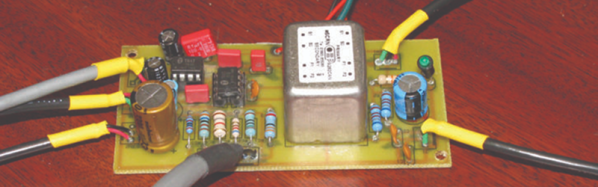
It is easy to cobble together projects these days. ICs make it simple and microcontrollers even easier. However, we always respect a project that really goes from concept to finished product and that’s what we liked about [Curt Yengst’s] “THAT” Thing microphone preamp.

In part 1 of his post about it, he talks about the basic ideas including the chips from THAT — a small but high-end audio chipmaker — he uses. The first chip is a low-noise audio preamp and the other is a balanced line driver.

In part 2, we get to see [Curt] go from breadboard testing to PCB fabrication all the way to the finished rack-mounted device with a good looking front panel. It worked, but like all designers, [Curt] was already thinking about the next version.

Continue reading “THAT Preamp”

Students Use Low Tech Hacks On High Tech Parking Enforcer

If you are a college student and you get too many parking fines, you are going to get in trouble. But one school didn’t count on students hacking their high tech parking violation deterrent. Some even got free internet from the devices.

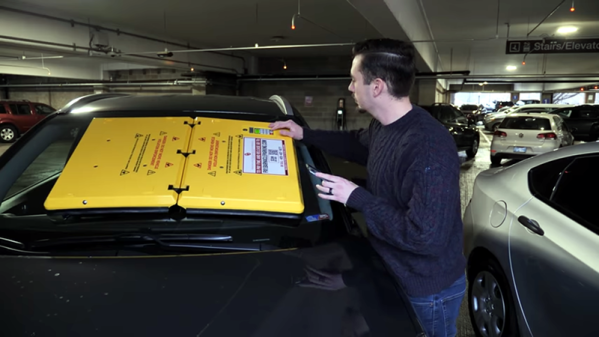
You pay your taxes or — in the case of students — your tuition. But still, the city or university wants you to pay to park your car. In the old days, you’d get your car towed. But the people running the parking lot don’t really like having to share the fees they charge you with a tow truck driver. Many places clamp a device to your tire that makes it impossible to drive. Oklahoma University decided that was too much trouble, also, so they turned to Barnacle. Barnacle is a cheaper alternative to the old parking clamp. In sticks to your windshield so you can’t see to drive. The suction cups have an air pump to keep them secure and a GPS squeals if you move the car with it on there anyway.

Continue reading “Students Use Low Tech Hacks On High Tech Parking Enforcer”

A Simple Science Fair AM Transmitter

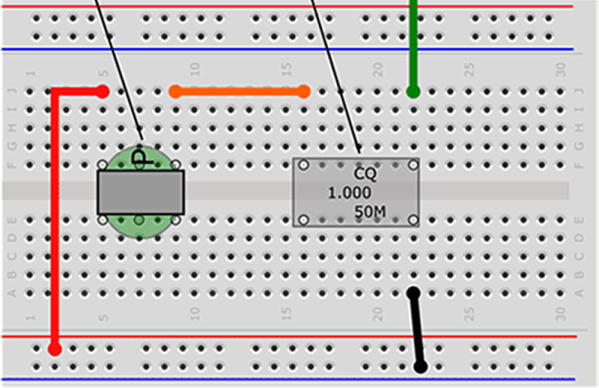
A crystal radio is a common enough science fair project, but the problem is, there isn’t much on anymore. The answer is, of course, obvious: build your own AM transmitter, too. AM modulation isn’t that hard to do and [Science Buddies] has plans for how to build one with a canned oscillator and an audio transformer.

We don’t imagine the quality of this would be so good, but for a kid’s science project it might be worth a shot. Maybe something like “What kind of materials block radio waves?” would be a good project statement.

Continue reading “A Simple Science Fair AM Transmitter”