Ploopy Open Source Trackball Keeps Rolling Along

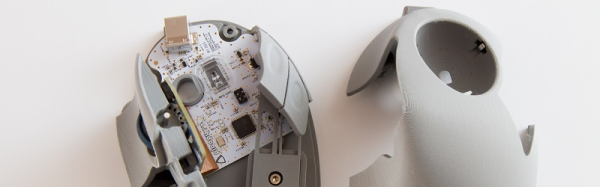
We’ll be honest. When we first heard about a mouse, we weren’t convinced. The argument was that business people weren’t familiar with computers. That didn’t ring true since every business person in the last century had at least seen a typewriter keyboard, but most of them had never seen a mouse before the 1980s. The mouse has since become totally ubiquitous, so presumably, it was the right choice. However, if you are a serious touch typist, it is annoying to have to move your hands off the keyboard to a different location each time. There are several solutions for that, but the oldest one is probably the trackball. Ploopy is an open-source trackball you can build yourself, and it looks pretty capable.

While we aren’t wild about the name, Ploopy looks pretty good and is one of those projects that would have been very difficult ten years ago. It requires two PC boards. Those used to be hard to get. It also requires some very customized plastic parts. Getting a handful of plastic parts made used to be hard, too. But now you probably have a 3D printer that is just begging for something to do.

Continue reading “Ploopy Open Source Trackball Keeps Rolling Along”
BEAM Dragonfly Causes A Flap

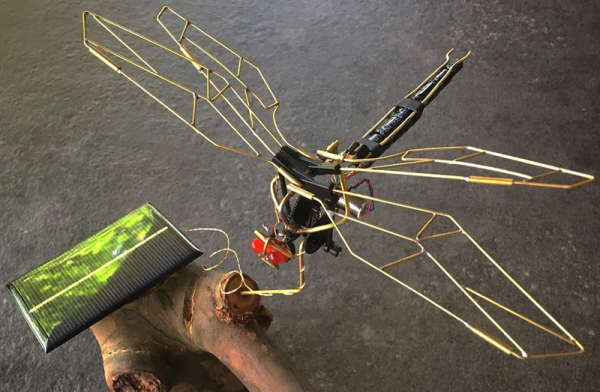
Normal people throw away stuff when it breaks. But not people like us. Or, apparently, [NanoRobotGeek]. A cheap robotic dragonfly died, and he cannibalized it for robot parts. But he kept the gearbox hoping to build a new dragonfly and, using some brass rod, he did just that.

The dragonfly’s circuitry uses a solar panel for power and a couple of flashing LEDs. This is a BEAM robot, so not a microcontroller in sight. You can see a brief video of how the dragonfly moves.

Continue reading “BEAM Dragonfly Causes A Flap”

Stereolithography Goes Big

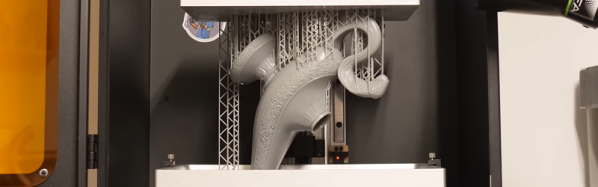
When it comes to hobby-level 3D printing, most of us use plastic filament deposited by a hot end. Nearly all the rest are using stereolithography — projecting light into a photosensitive resin. Filament printers have typical build volumes ranging from 1,000 to 10,000 cubic centimeters and even larger isn’t unusual. By contrast, SLA printers are often much smaller. A 1,200 CC SLA printer is typical and the cheaper printers are sometimes as little as 800 CCs. Perhaps that’s why [3D Printing Nerd] (otherwise known as [Joel]) was excited to get his hands on a Peopoly Phenom which has a build area of over 17,000 CCs. You can see the video review, below.

He claims that it is even bigger than a Formilab 3L, although by our math that has a build volume of around 20,000 CCs. On the other hand, the longest dimension on the Peopoly is 40 cm which is 6.5 cm longer than the 3L, so maybe that’s what he means. Either way, the printer is huge. That’s nearly 16 inches which is big even for a filament printer. Regardless of which one is bigger, the Peopoly is certainly much less expensive coming in at around $1,800 versus the 3L’s almost $10,000 price tag.

Continue reading “Stereolithography Goes Big”

Unix Tell All Book From Kernighan Hits The Shelves

When you think of the Unix and C revolution that grew out of Bell Labs, there are a few famous names. Dennis Ritchie, Ken Thompson, and Brian Kernighan come to mind. After all, the K in both K&R C and in AWK stand for Kernighan. While Kernighan is no stranger to book authorship — he’s written several classics including “the white book” for C and Unix — he has a new book out that is part historical record and part memoir about the birth of Unix.

Usually, when a famous person writes a retrospective like this, it is full of salacious details, but we don’t expect much of that here. The book talks about Bell Labs and Multics, of course. There’s serious coverage of the first, sixth, and seventh editions with biographies of people integral to those releases.

Continue reading “Unix Tell All Book From Kernighan Hits The Shelves”

Chisel Away At FPGA Development

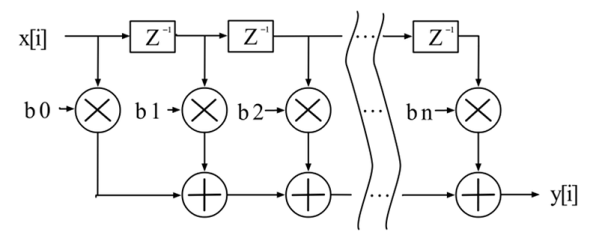
Most of the time if you were to want to develop for an FPGA, you might turn to Verilog or VHDL. Both of these are quite capable, but they are also firmly rooted in languages that are old-fashioned by today’s standards. There have been quite a few attempts to treat those languages as an output to some other tool — either a higher-level language or a graphical tool. One recent effort is a toolchain that starts with Chisel.

The idea behind Chisel is to provide Scala with Verilog-like constructs. If you want, you can use it as a “super Verilog” taking advantage of classes and other features. However, Chisel also allows you to create generators that produce different output Verilog depending on how you call them. True, you can do some of this with Verilog modules, but it is much easier with Chisel. Chisel uses Firrtl to convert what you ask it to do into Verilog for different FPGA and ASIC targets.

Continue reading “Chisel Away At FPGA Development”

Drop In Motor Converts Car To EV

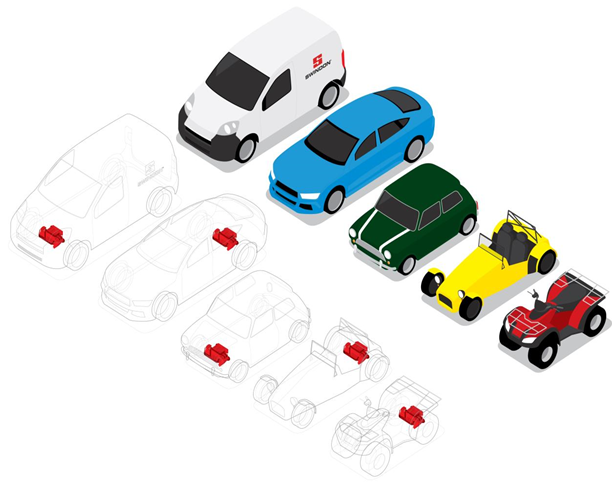
With the latest craze of electric vehicles, it might be tempting to take an old project car and convert it from gas to electric. On the surface, it sounds simple, but the reality is there are a number of pitfalls. It would be nice if you could find a drop in engine replacement that was ready to go. According to Swindon Powertrain, you’ll be able to soon.

Based on their existing powertrain that can convert a Mini to EV, the transverse powertrain weighs 70 kg and if it can fit in a Mini, it can probably fit in nearly anything. Specifically, it’s 60 cm wide and 44 cm deep — that means it could fit easily in a roughly two foot box. The height can be as little as 28 cm. The company talks about fitting it on a quad bike or even a loading platform. It can be thought of as sort of an electric “crate engine” — a common term for a ready to install powerplant that, as the name implies, arrives in a crate.

The powertrain with a single-speed transmission, cooling system, and inverter weighs in at 154 pounds and generates up to 110 horsepower.  We aren’t sure what the expected battery pack is, but presumably, it will be somewhat flexible.

It’ll be interesting to see how people will integrate these if and when they become available as planned in June of next year. Can you drive a differential? Can you use two or four, each driving a different wheel? Turns out we might just be car designers after all.

If you want to see what they did with a Mini, look at their E Classic which claims an 80 MPH top speed and a range of 125 miles. We’ve looked at conversions before. If a conversion is not your thing, you could try to go Open Source although that project doesn’t seem very active.

Haptic Glove Controls Robot Hand Wirelessly

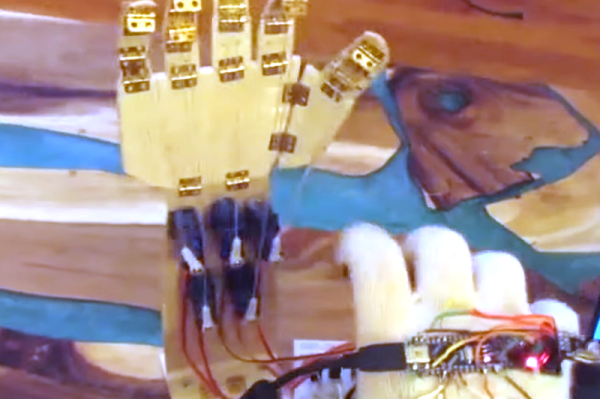
[Miller] wanted to practice a bit with some wireless modules and wound up creating a robotic hand he could teleoperate with the help of a haptic glove. It lookes highly reproducible, as you can see the video, below the break.

The glove uses an Arduino’s analog to digital converter to read some flex sensors. Commercial flex sensors are pretty expensive, so he experimented with some homemade sensors. The ones with tin foil and graphite didn’t work well, but using some bent can metal worked better despite not having good resolution.

Continue reading “Haptic Glove Controls Robot Hand Wirelessly”