Command Line Utilities… In The Cloud?

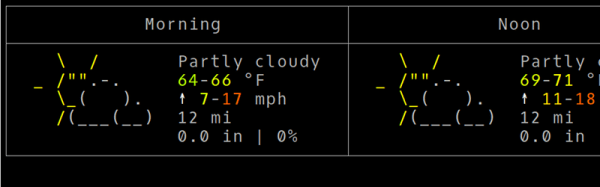
Although many people think of Linux-based operating systems as graphical, really that GUI is just another application running over the bare operating system. Power users, remote administrators, and people running underpowered computers like a Raspberry Pi have a tendency to do more with command line tools. [Igor] did a FOSDEM19 presentation you can see below about how he’s providing web-like services to the command line using web servers and curl as a client.

This is subtly different from just accessing an ordinary web server via curl. The output is meant for display in the terminal. Of course, you could also hit them with a web browser, if you wanted — at least, for some of them. [Igor’s] tools include a weather reporter, a QR code encoder, information and graphs for currency and cybercurrency rates, and an online help system for programmers.

Continue reading “Command Line Utilities… In The Cloud?”

Understanding Math Rather Than Merely Learning It

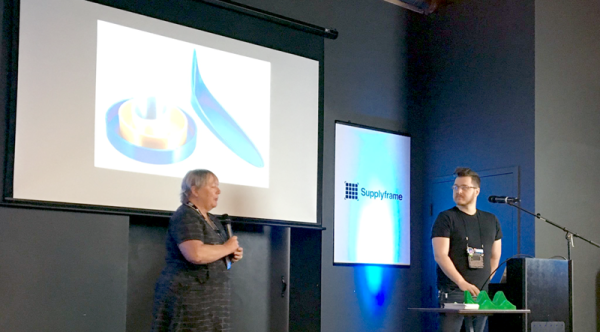
There’s a line from the original Star Trek where Khan says, “Improve a mechanical device and you may double productivity, but improve man and you gain a thousandfold.” Joan Horvath and Rich Cameron have the same idea about improving education, particularly autodidacticism or self-learning. They share what they’ve learned about acquiring an intuitive understanding of difficult math at the Hackaday Superconference and you can watch the newly published video below.

The start of this was the pair’s collaboration on a book about 3D printing science projects. Joan has a traditional education from MIT and Rich is a self-taught guy. This gave them a unique perspective from both sides of the street. They started looking at calculus — a subject that scares a lot of people but is really integral (no pun intended) to a lot of serious science and engineering.

You probably know that Newton and Leibniz struck on the fundamentals of calculus about the same time. The original papers, however, were decidedly different. Newton’s approach was more physical and less mathematical. Leibniz used formal logic and algebra. Although both share credit, the Leibniz notation won out and is what we use today.

Continue reading “Understanding Math Rather Than Merely Learning It”

In Space, No One Can Hear You Explode: The Byford Dolphin Incident

“It wouldn’t happen that way in real life.” One of the most annoying habits of people really into the “sci” of sci-fi is nitpicking scientific inaccuracies in movies. The truth is, some things just make movies better, even if they are wrong.

What would Star Wars be without the sounds of an epic battle in space where there should be no sound? But there are plenty of other examples where things are wrong and it would have been just as easy to get them right — the direction of space debris in the movie Gravity, for example. But what about the age-old trope of explosive decompression? Some movies show gross body parts flying everywhere. Others show distressed space travelers surviving in space for at least brief periods.
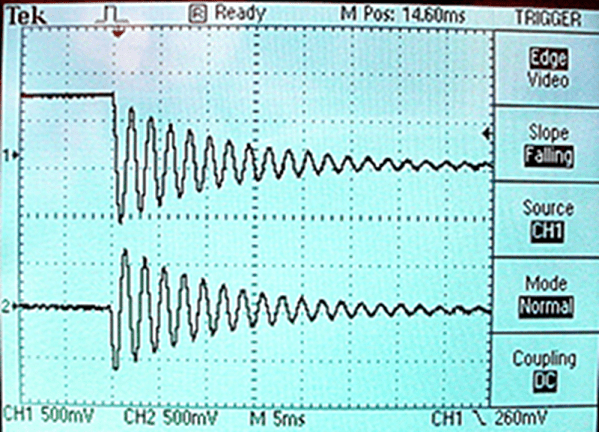
It turns out, dropping pressure from one atmosphere to near zero is not really good for you as you might expect. But it isn’t enough to just make you pop like some meat balloon. You are much more likely to die from a pulmonary embolism or simple suffocation. But you are a meat balloon if you experience a much greater change in pressure. How do we know? It isn’t theoretical. These things have happened in real life.

Continue reading “In Space, No One Can Hear You Explode: The Byford Dolphin Incident”

COB LED Teardown

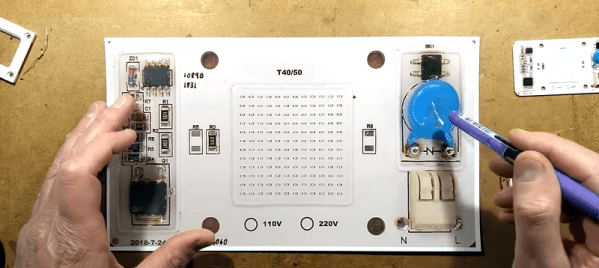
[Big Clive] picked up some chip-on-board (COB) LEDs meant for hydroponics that were very unusual and set out to examine them on video. Despite damaging the board almost right away, he managed to do some testing on these arrays and you can see the results in the video below. He also compares it to older LED modules.

The 144 LEDs produce a lot of light. In addition to powering the device up, he also looks at the construction of the LEDs under a magnification, comparing the older style that used tiny bond wires to make connections versus the new version soldered on the board directly.

Continue reading “COB LED Teardown”

FPGA Makes Digital Analog Computer

When you think of analog computing, it’s possible you don’t typically think of FPGAs. Sure, a few FPGAs will have specialized analog blocks, but usually they are digital devices. [Bruce Land] — a name well-known to Hackaday — has a post about building a digital differential analyzer using an FPGA and it is essentially an analog computer simulated on the digital fabric of an FPGA.

Whereas traditional analog computers use operational amplifiers to do mathematical integration, on the FPGA [Land] uses digital summers The devices simulate a system of differential equations, which can be nonlinear.

Continue reading “FPGA Makes Digital Analog Computer”

Text Projector With — You Know — Lasers

We missed [iliasam’s] laser text projector when it first appeared, perhaps because the original article was in Russian. However, he recently reposted in English and it really caught our eye. You can see a short video of it in operation, below.

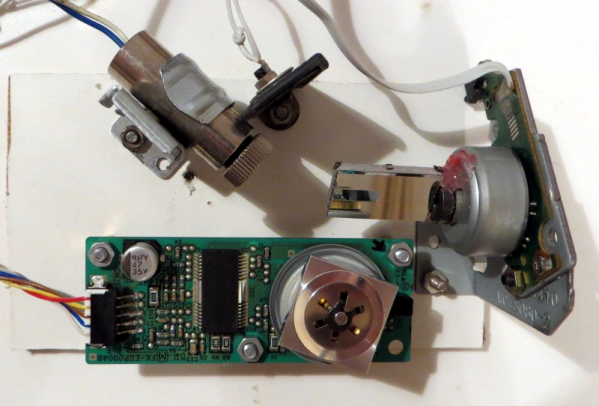
The projector uses raster scanning where the beam goes over each spot in a grid pattern. The design uses one laser from a cheap laser pointer and a salvaged mirror module from an old laser printer. The laser pointer diode turned out to be a bit weak, so a DVD laser was eventually put into service. A DVD motor also provides the vertical scan which is just a slight wobble of a mirror. A Blue Pill CPU provides all the smarts. You can find the code on GitHub.

Continue reading “Text Projector With — You Know — Lasers”

The Vedolyzer Was High Tech Repair Gear For 1939

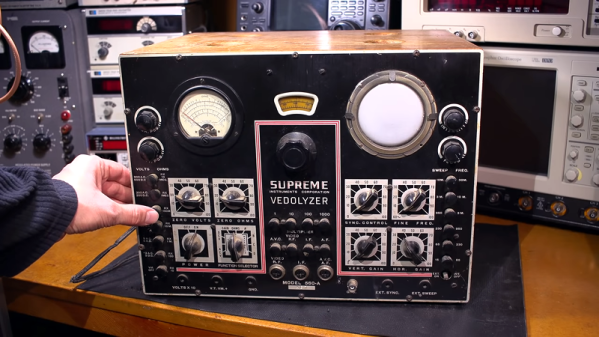
There’s an old joke that all you need to fix TVs is a cheater, a heater, and a meter. If you don’t remember, a cheater was a cord to override the interlock on TVs so you could turn them on with the back removed. Of course, in real life, pro repair techs always had better equipment. In 1939 that might have meant the Supreme Vedolyzer which combined a meter, a ‘scope, and a wavemeter all in one device. [Mr Carlson] acquired one that was in fair shape and made a few videos (see below) of the teardown and restoration.

[Mr Carlson] wasn’t restoring this as an art project, by the way. He plans on using it, so he was less concerned with authenticity and more worried about usability. That led him to do things like remove the input jacks and replace them with BNCs. The video series is a bit of a time investment. Part one is about 82 minutes long! But if you are interested in old gear, this is a chance to peer inside an unusual specimen.

Continue reading “The Vedolyzer Was High Tech Repair Gear For 1939”