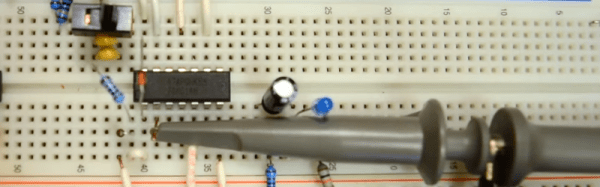
Solderless Breadboard Parasitics

Solderless breadboards are extremely handy. You always hear, of course, that you need to be careful with them at high frequencies and that they can add unwanted capacitance and crosstalk to a circuit. That stands to reason since you have relatively long pieces of metal spaced close together — the very definition of a capacitor.

[Ryan Jensen] did more than just listen to that advice. He built a circuit and used a scope to investigate just how much coupling he could expect with a simple digital circuit. Better still, he also made a video of it (see below). The test setup shows a single gate of a hex Schmitt trigger inverter with a sine wave input. The output transitionsĀ ring and also couple back into the input.

Continue reading “Solderless Breadboard Parasitics” →

Basically, Its Minecraft

[SethBling] really likes Minecraft. How can you tell? A quick look at his YouTube channel should convince you, especially the one where he built a full-blown BASIC interpreter in Minecraft. It is not going to win any speed races, as you might expect, but it does work.

For novelty and wow factor, this is amazing. As a practical matter, it is hard to imagine the real value since there are plenty of ways a new programmer could get access to BASIC. Still, you have to admire the sheer audacity of making the attempt. One Hackaday poster (who shall remain nameless) once won a case of beer by betting someone he or she could write a BASIC compiler in BASIC, so we aren’t sticklers for practicality.

Continue reading “Basically, Its Minecraft” →

Mouse Pen From Old Parts

No offense to [Douglas Engelbart] but the computer mouse has always seemed a bit of a hack to us (and not in the good sense of the word). Sure we’ve all gotten used to them, but unlike a computer keyboard, there is no pre-computer analog to a mouse. There are plenty of alternatives, of course, like touchpads and trackballs, but they never seem to catch on to the extent that the plain old mouse has.

One interesting variation is the pen mouse. These do rely on a pre-computer analog: a pen or pencil. You can buy them already made (and they are surprisingly inexpensive), but what fun is that? [MikB] wanted one and decided to build it instead of buying it.

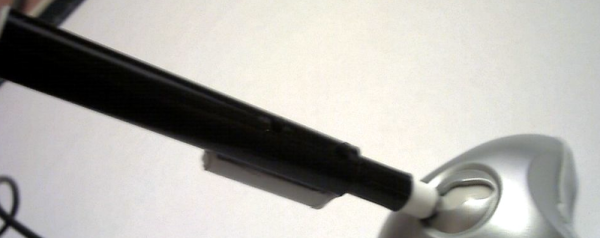
The main parts of the pen mouse include a cheap mouse with a failing scroll wheel, a bingo pen, and the base from an old web camera. There’s also a normal-sized pen to act as the handpiece. The project is mostly mechanical rather than electrical. [MikB] took the mouse apart and cut the PCB to fit inside the base. The rest of the build is a construction project.

The result appears to work well. [MikB] includes instructions for installing the mouse correctly in Linux. The net effect is like a tablet but doesn’t’ require much space on your desk. We’ve seen plenty of mouse projects in the past, of course. We’ve even seen hacks for a head mouse if that’s your thing.

Continuing Education Via Wheel Balancing

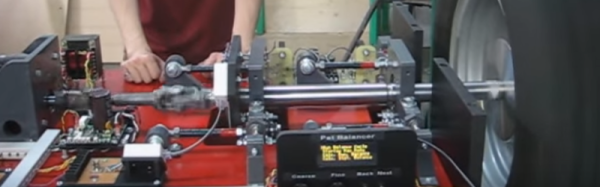
There’s an old saying that you should make things twice. Once to figure out how to build the thing, and again to build it the right way. [Pmbrunelle] must agree. His senior project in college was a machine to balance wheels. It was good enough for him to graduate, but he wanted it to be even better.

The original machine required observation of measurements on an oscilloscope and manual calculations. [Pmbrunelle] added an AVR micro, a better motor drive, and made a host of other improvements. As you can see in the video below, the machine works, but [Pmbrunelle] still wasn’t happy.

Continue reading “Continuing Education Via Wheel Balancing” →

PS/2 Keyboard For Raspberry Pi

A lot of people can bake a cake. Sort of. Most of us can bake a cake if we have a cake mix. Making a cake from scratch is a different proposition. Sure, you know it is possible, but in real life, most of us just get a box of cake mix. The Raspberry Pi isn’t a cake (or even a pie), but you could make the same observation about it. You know the Raspberry Pi is just an ARM computer, you couldĀ program it without running an available operating system, but realistically you won’t. This is what makes it fun to watch those that are taking on this challenge.

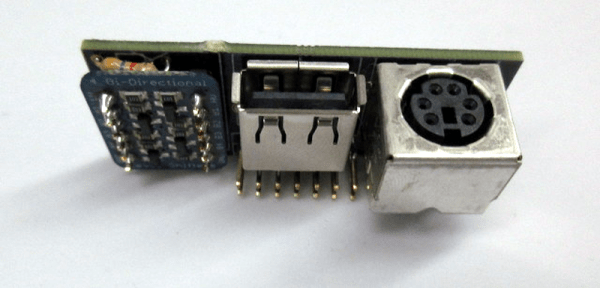
[Deater] is writing his own Pi operating system and he faced a daunting problem: keyboard input. Usually, you plug a USB keyboard into the Pi (or a hub connected to the Pi). But this only works because of the Linux USB stack and drivers exist. That’s a lot of code to get working just to get simple keyboard input working for testing and debugging. That’s why [Deater] created a PS/2 keyboard interface for the Pi.

Even if you aren’t writing your own OS, you might find it useful to use a PS/2 keyboard to free up a USB port, or maybe you want to connect that beautiful Model-M keyboard without a USB adapter. The PS/2 keyboard uses a relatively simple clock and data protocol that is well-understood. The only real issue is converting the 5V PS/2 signals to 3.3V for the Pi (and vice versa, of course).

Continue reading “PS/2 Keyboard For Raspberry Pi” →

Cheap Smartwatch Teardown

A proper smartwatch can cost quite a bit of money. However, there are some cheap Bluetooth-connected watches that offer basic functions like show your incoming calls, dial numbers and display the state of your phone battery. Not much, but these watches often sell for under $20, so you shouldn’t expect too much.

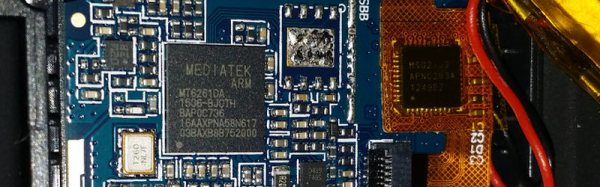
Because they’re so cheap, [Lee] bought one of these (a U8Plus) and within an hour he had the case opened up and his camera ready. As you might expect, the biggest piece within was the rechargeable battery. A MediaTek MT6261 system on a chip provides the smart part of the watch.

Continue reading “Cheap Smartwatch Teardown” →

Nanotech Makes Safer Lithium Batteries

Lithium-ion batteries typically contain two electrodes and an electrolyte. Shorting or overcharging the battery makes it generate heat. If the temperature reaches about 300 degrees Fahrenheit (150 degrees Celsius), the electrolyte can catch fire and explode.

spikesThere have been several attempts to make safer lithium-ion cells, but often these safety measures render them unusable after overheating. Stanford University researchers have a new method to protect from overheating cells that uses–what else–nanotechnology graphene. The trick is a thin film of polyethylene that contains tiny nickel spikes coated with graphene (see electron micrograph to the right).

Continue reading “Nanotech Makes Safer Lithium Batteries” →