FLOSS Weekly Episode 873: Wait, That’s Not Open Source!

This week Jonathan chats with Andy Gryc and Aaron Basset about QNX, and the interesting Open Source history and future of that embedded OS. Why does QNX Everywhere feel more open, and why do you need to register an account to download images? All that and more — Watch to find out!

Continue reading “FLOSS Weekly Episode 873: Wait, That’s Not Open Source!”

Review: The Tanmatsu, A Year On

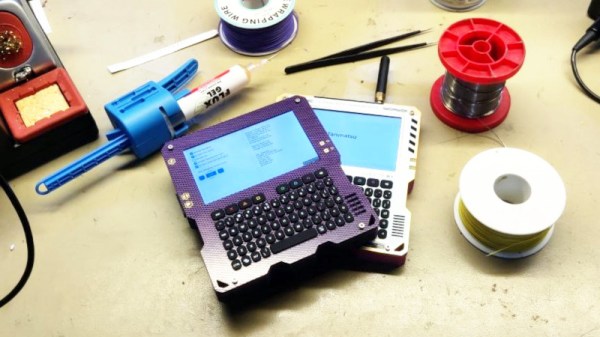
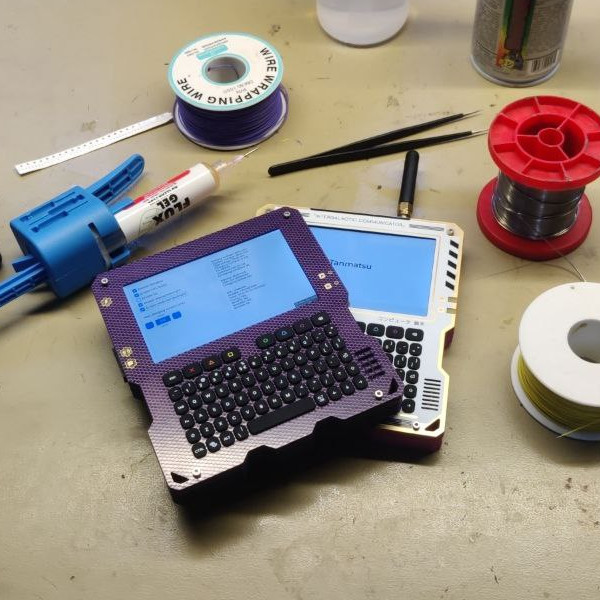
About 18 months ago, we brought you a sneak peek at a handheld that started life in the Dutch conference badge scene. At the time it showed promise, but its software wasn’t ready for a fair review. Now it has both a stable operating system and a growing software library. It’s time to put it through its paces and see what it can do.

A Handheld Computer For Hackers

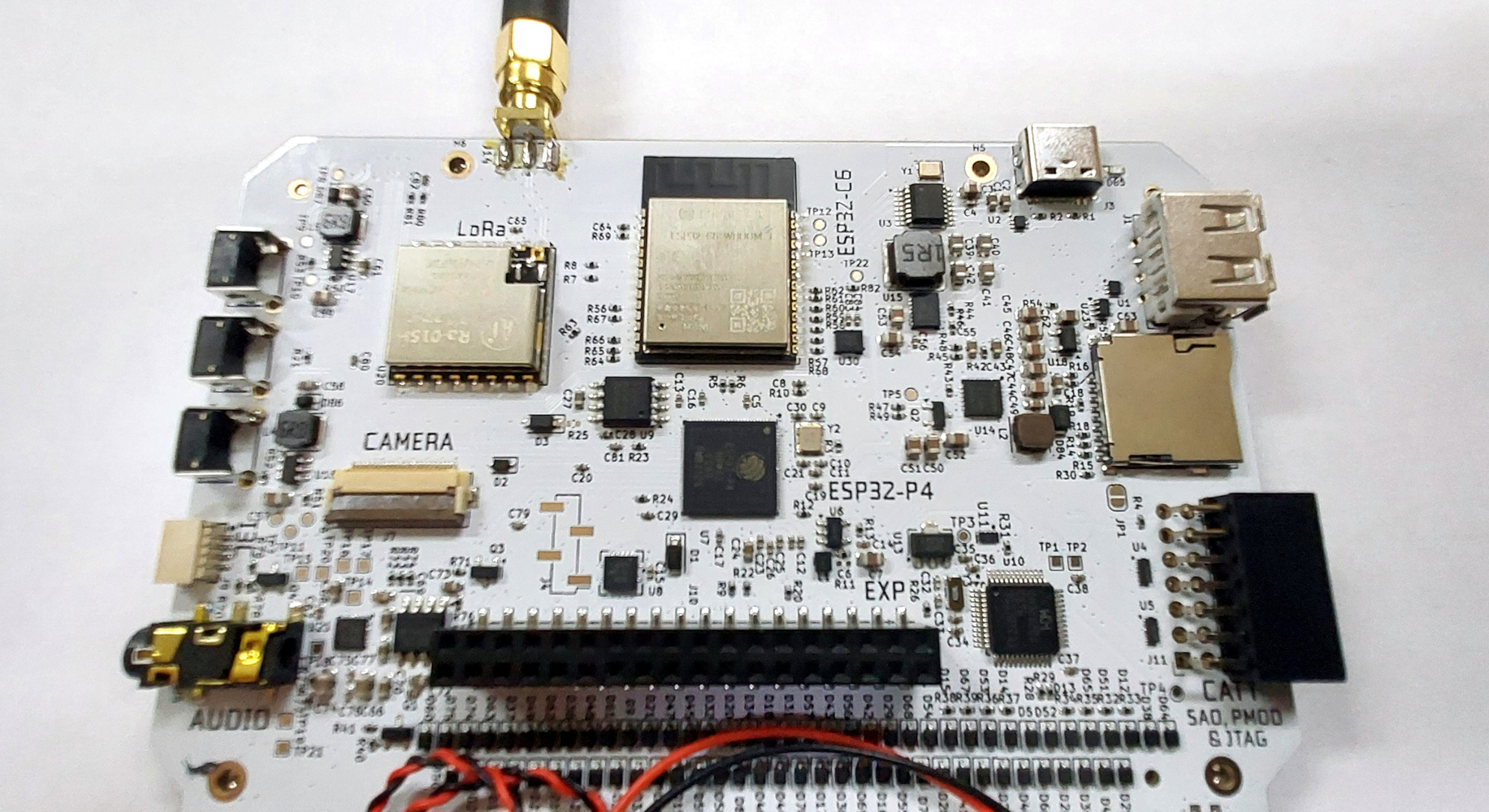
The Tanmatsu PCB, showing all the different parts.
The bare PCB, with the expansion connector bottom centre.

The Tanmatsu (Japanese for “Terminal”), is a general putpose palmtop computer based around an ESP32-P4 application processor from Espressif. It takes the form of a PCB and PETG 3D printed sandwich, with the front face PCB sporting a silicone QWERTY keyboard and an 800×480 MIPI DSI display. The keyboard should be familiar to many readers, being the same moulding as the Solder Party KeebDeck which has appeared on other devices.

Under the hood that P4 has two 400MHz RISC-V cores and 32MB of PSRAM with 16MB of Flash, and there’s an ESP32-C6 for WiFi, BLE and IEEE 802.15.4 mesh networking. There’s an Ebyte LoRa module with an SMA antenna too, which can be had in 868, or 915MHz versions depending on where in the world you live. Continue reading “Review: The Tanmatsu, A Year On”

Engineering Micro-Submarines To Replace Fish

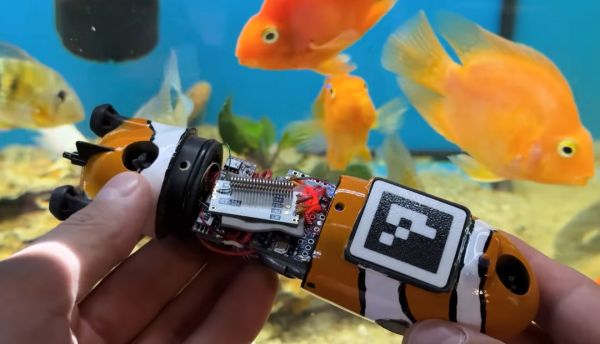
Everybody loves aquariums. There’s something soothing about watching the lil’ critters inside them swimming, crawling and wriggling about. But at the same time few people are up to the task of ensuring that said critters stay alive and happy in said aquarium. This is where small robots may be able to steal some fishy jobs, like a modern take on the gaudy fake aquariums of the 1990s. Cue [CPSDrone]’s mini-drone aquarium with mostly maintenance-free robotic fish.

These pose a few interesting engineering challenges, such as the replacing of feeding fish by having them scuttle back to their charging station like an aquatic Roomba, and giving them some level of intelligence to the point that they at least appear to be doing something fish-like.

Rather than give each robot fish full autonomy, they are instead controlled by a central system. This then raised the problem of radio frequency communication while underwater. The theory was that 433 MHz transceivers would still work for something the size of an aquarium before attenuation spoils things, which a quick test confirmed to be true.

This enabled the construction of a small microcontroller-carrying submarine as a proof of concept before diving into the final version, involving resin 3D printed enclosures that are made water-tight using rubber O-ring seals and UV-cured resin. All that was left now was to add the big control system, which takes up much of the rest of the video.

Sadly they didn’t implement the boids algorithm, as this is pretty good at creating realistic life-like motion, as show with this demonstration by [Ben Eater]. This algorithm is pretty simple, with each ‘creature’ obeying rules on coherence, separation and alignment, creating a pattern that can be observed among schools of fish as well as flocks of birds. Due to its simplicity you could conceivably even omit the central control system and just give each ‘fish’ enough sensors to keep track of its buddies.

Continue reading “Engineering Micro-Submarines To Replace Fish”

UDP Broadcasting And Easily Finding Network Services

Local area networks (LANs) that use technologies like Ethernet and Wi-Fi are incredibly useful for letting devices talk with each other. Yet a core problem here is knowing which devices are where on the network, as anyone who has ever tried to add a network printer or network share to their system can probably attest to. Unless you happen to know the IP address of the LAN device, the port, and protocol, the target device may as well be located on the Moon without further help, such as automatic network discovery in lieu of waddling over to the device and reading the label listing its IP address.

Over the decades quite a few ways have been developed to enable such network discovery, with many of them using UDP broadcast as the first step. By broadcasting a global message on the entire LAN, any device that has an actively listening UDP socket on that particular port can parse said message and decide whether it’s feeling sociable enough to reply.

The topic of UDP broadcasting is however not as straightforward as it may sound if you’re just getting started, including the existence of many opinions on the ‘right way’. There is also a massive divide between a sprawling service discovery protocol like mDNS and a light-weight one like that one that I had to implement a few years ago for an open source project.

Continue reading “UDP Broadcasting And Easily Finding Network Services”

Terminus Is A Text Only Phone Because Telephony Is Dead Anyway

This may say more about us than the current state of the telephone network, but unless your Grandma is still kicking, how many phone calls do you take that are actually worth picking up? Around here it’s one variety of scam or another, with the odd cold-calling salesperson to round it out.

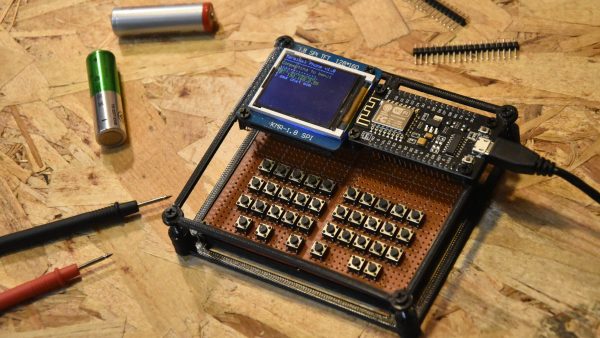
So when we saw [Bolan Xu]’s texting-only TERMINUS cell phone project, it took but a minute to decide that, yeah, we wouldn’t miss the telephone part of the phone very much either.

The trade-offs are immense when compared to your smartphone; there’s no voice, no web browser, no social media, and no camera. But on the flip side there’s also no spyware and no annoying spam calls. Besides, he’s built a QWERTY keyboard onto this thing, and that does seem to be what most of us miss in this era of black rectangles.

In terms of electronics, its rocking a tiny OLED display for you to read your messages on, driven by an ESP8266. When WiFi is available the plan was to bridge over the internet in an SMS version of VOIP, but [Bolan Xu] ended up installing a cellular modem in it anyway.

As you can tell from the skeletal case, this is very much a prototype, but it is a promising project. We’ve seen ESP-based phones before, but they tend to be a bit smarter, and run on ESP32 instead of the more modest ESP8266.

From Sugar To Ethanol Fuel With A Little Microbial Help

In these trying times it seems appropriate to work through some ‘what if ‘ scenarios, such as the local gas station suddenly not having any more gasoline to sell you, or said gas station ceasing to exist altogether. In that case it can be incredibly useful to be able to create your own gasoline alternative in the form of ethanol. As demonstrated by [Hyperspace Pirate] in a recent video this process is fairly straightforward once you have procured an appropriate feedstock, such as here sugar (sucrose).

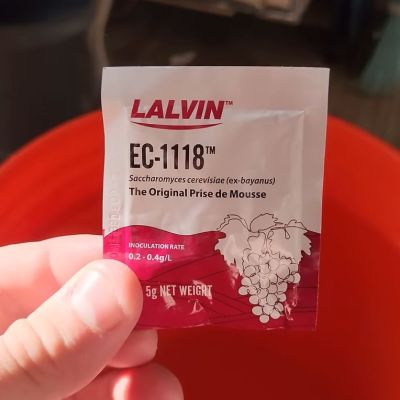
Although baker’s yeast (Saccaromyces cerevisiae) is more commonly associated with the production of ethanol-laced drinks, there’s nothing that says that you cannot distill out the approximately 10-15% ethanol that results from a yeast feeding frenzy and resulting waste products.
How to do this distillation step is explained in the video, with the mixture heated and put through a self-made reflux column to deal with the fact that the water/ethanol mixture is an azeotropic mixture, meaning that a lot of water is expected to make its way out of the condenser along with ethanol without this measure to condense as much of the water vapor before it can make its way to the top of the column.

Ultimately the conversion rate of plain white sugar to ethanol is about 54%, with the rest turning into CO2. With an appropriately converted combustion engine for running on 100% ethanol, it runs pretty well, though the final cost per liter of ethanol will heavily depend on your feedstock.

With the full costs of the electric heater of the distillation column taken into account – at 2.57 kWh/L – as well as the cost of the off-the-shelf sugar, [Hyperspace Pirate] with his Florida kWh cost of $0.12 paid around $2.62/L, or $9.91 per gallon. Even with how much prices at the gas pump have shot up recently, you’d pretty much need to find a free source of feedstock and otherwise optimize the process for it to make much sense, even in this economy.

That said, it’s crazy that the world of Mad Max doesn’t run on ethanol. If tomorrow a certain bubble were to implode and the global economy fell apart as a result, producing bioethanol would seem to be a highly marketable skill.

Continue reading “From Sugar To Ethanol Fuel With A Little Microbial Help”