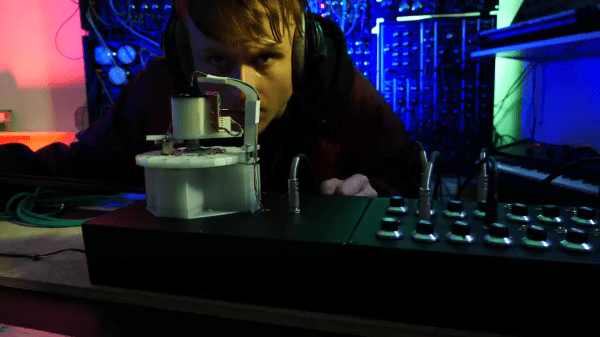
Musician and electronic musical machine builder [Sam Battle] has recreated the unusual Crystal Palace Audio Fader over at Look Mum No Computer. The Crystal Palace was a rotary fader developed by engineer Dave Young at the BBC Radiophonic Workshop back in the late 1960s. Doctor Who fans might recognize it from the “The Krotons” series theme music. It’s a wild mechanical mixer, which fades between sixteen different inputs to produce its output by using a variable speed rotating pickup.
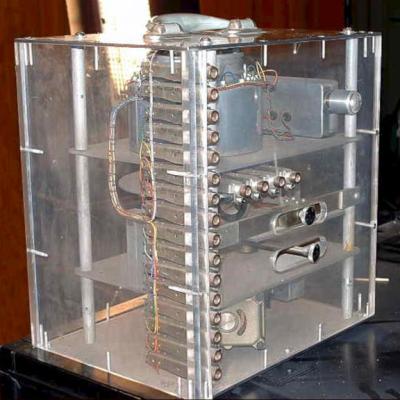
After Young built the prototype, three of these were made and put into cases cut out of scrap plexiglass) from a dumpster — hence they became known as Crystal Palaces after the 1851 glass and iron structure of the same name.
[Sam] decides to build this using some inductors and an old tape head. After proving out the concept on a breadboard, he mounts sixteen inductors on a 3D-printed circular frame. The rotating pickup transfers the signal via slip-rings at the top. An array of input jacks and level pots are mounted on the enclosure’s face plate, which contains a vector board full of op amps that drive the coils. Strictly speaking, the original fader used capacitive coupling, not inductive, but that doesn’t detract at all from this project. And as he states upfront, he intentionally didn’t dig too deep into the original, so as to put his own spin on the design.
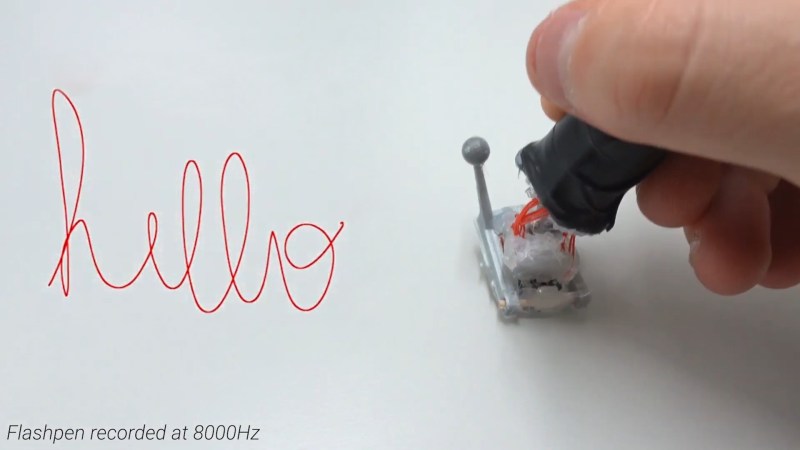
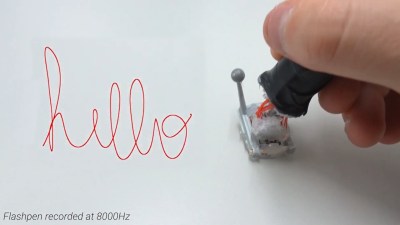 The fundamental technology behind the pen is simple, with the device using an optical flow sensor harvested from a high-end gaming mouse. This is a device that uses an image sensor to detect the motion of the sensor itself across a surface. Working at an update rate of 8 KHz, it eclipses other devices in the market from manufacturers such as Wacom that typically operate at rates closer to 200Hz. The optical sensor is mounted to a plastic joint that allows the user to hold the pen at a natural angle while keeping the sensor parallel to the writing surface. There’s also a reflective sensor on the pen tip which allows cameras to track its position in space, for use in combination with VR technology.