Human ears are capable of perceiving frequencies from roughly 20 Hz up to 20 kHz, at least when new. Correspondingly, our audio hardware is designed more or less to target these frequencies. However, there’s often a little extra capability at the upper edges, which [Jacek] shows can be exploited to exfiltrate data.
The hack takes advantage of the fact that most computers can run their soundcards at a sample rate of up to 48 kHz, which thanks to the Nyquist theorem means they can output frequencies up to around 24 kHz — still outside the range of human hearing. Computers and laptops often use small speaker drivers too, which are able to readily generate sound at this frequency. Through the use of a simple Linux shell script, [Jacek] is able to have a laptop output Morse code over ultrasound, and pick it up with nothing more than a laptop’s internal microphone at up to 20 meters away.
[Jacek] enjoys exploring alternative data exfiltration methods; he’s previously experimented with Ethernet leaks on the Raspberry Pi. Of course, with any airgap attack, the real challenge is often getting the remote machine to run the exfiltration script when there’s no existing remote admin access to be had. Video after the break.
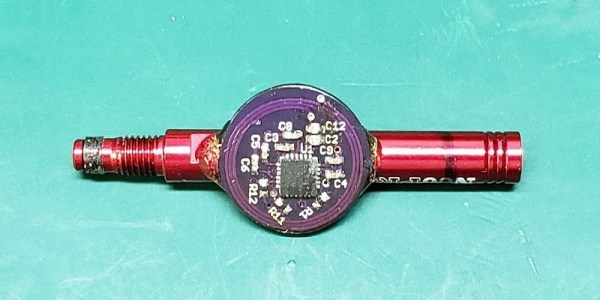
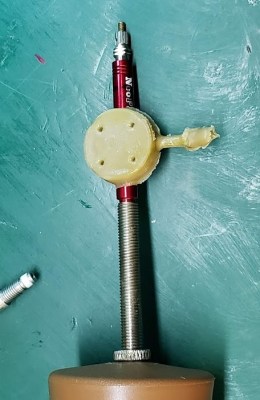
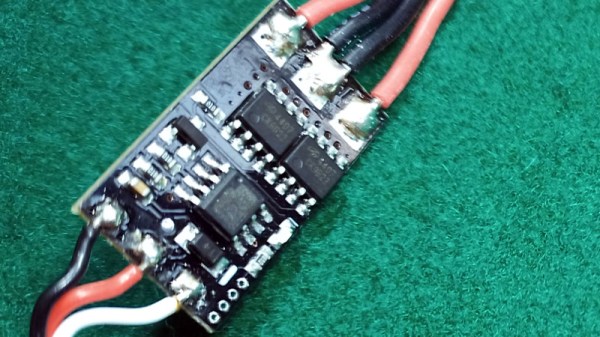
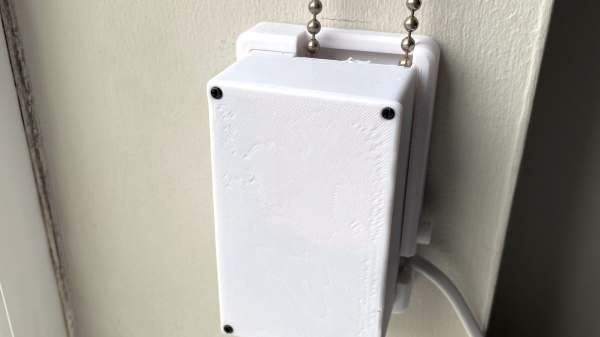
 The main part of this build is a motor and a ball chain gear – a wheel that captures the balls of a ball chain so that the chain can be pulled. The wheel was designed using Fusion3D and then printed out. The motor requires enough power to pull the chain — [HumanSkunk87] figures it needs to be able to pull about 2.5kg in order to raise the blind. After giving up on stepper motors, a DC motor with a worm gear was found to have enough torque to work. A WEMOS D1 Mini controls the motor controller that drives the ball chain wheel. Two micro switches tell the WEMOS when to stop at the bottom and top of the window.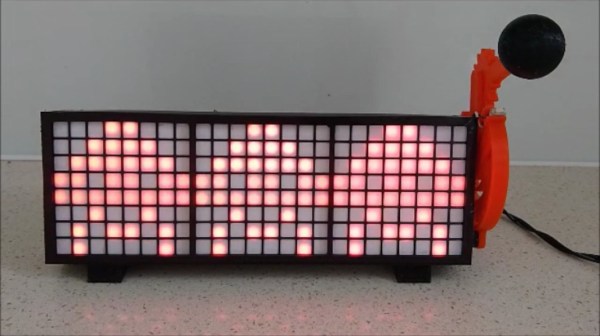
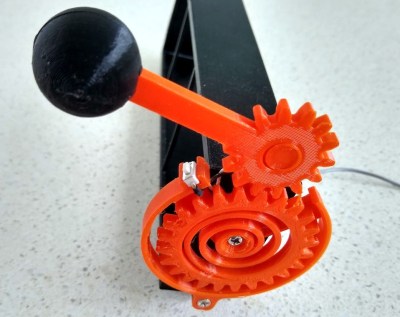 In this case, you’ll be losing all of your nickels to an Arduino Pro Mini. The handle is an upgrade to an earlier slot machine project that uses three 8×8 matrices and a custom driver board. When the spring-loaded handle is pulled, it strikes a micro switch to spins the reels and then snaps back into place. Between each pull, the current score is displayed across the matrix. There’s even a piezo buzzer for victory squawks. We only wish the button under the handle were of the clickier variety, just for the feels. Check out the short demo video after the break.