Seeking Enlightenment: The Quest To Restore Vision In Humans

Visual impairment has been a major issue for humankind for its entire history, but has become more pressing with society’s evolution into a world which revolves around visual acuity. Whether it’s about navigating a busy city or interacting with the countless screens that fill modern life, coping with reduced or no vision is a challenge. For countless individuals, the use of braille and accessibility technology such as screen readers is essential to interact with the world around them.

For refractive visual impairment we currently have a range of solutions, from glasses and contact lenses to more permanent options like LASIK and similar which seek to fix the refractive problem by burning away part of the cornea. When the eye’s lens itself has been damaged (e.g. with cataracts), it can be replaced with an artificial lens.

But what if the retina or optic nerve has been damaged in some way? For individuals with such (nerve) damage there has for decades been the tempting and seemingly futuristic concept to restore vision, whether through biological or technological means. Quite recently, there have been a number of studies which explore both approaches, with promising results.

Continue reading “Seeking Enlightenment: The Quest To Restore Vision In Humans”

Reverse Engineering Silicon From The First Pocket Calculator

We’ve seen so many explorations of older semiconductors at the hands of [Ken Shirriff], that we know enough to expect a good read when he releases a new one. His latest doesn’t disappoint, as he delves into the workings of one of the first hand-held electronic calculators. The Sharp EL-8 from 1969 had five MOS ICs at its heart, and among them the NRD2256 keyboard/display chip is getting the [Shirriff] treatment with a decapping and thorough reverse engineering.

The basic functions of the chip are explained more easily than might be expected since this is a relatively simple device by later standards. The fascinating part of the dissection comes in the explanation of the technology, first in introducing the reader to PMOS FETs which required a relatively high negative voltage to operate, and then in explaining its use of four-phase logic. We’re used to static logic that holds a state depending upon its inputs, but the technologies of the day all called for an output transistor that would pull unacceptable current for a calculator. Four phase logic solved this by creating dynamic gates using a four-phase clock signal, relying on the an output capacitor in the gate to hold the value. It’s a technology that lose out in the 1970s as later TTL and CMOS variants arrived that did not have the output current drain. Fascinating stuff!

[Ken] gave a talk at the Hackaday Superconference a couple of years ago, if you’ve not seen it then it’s worth a watch.

2020: As The Hardware World Turns

By pretty much any metric you care to use, 2020 has been an unforgettable year. Usually that would be a positive thing, but this time around it’s a bit more complicated. The global pandemic, unprecedented in modern times, impacted the way we work, learn, and gather. Some will look back on their time in lockdown as productive, if a bit lonely. Other’s have had their entire way of life uprooted, with no indication as to when or if things will ever return to normal. Whatever “normal” is at this point.

But even in the face of such adversity, there have been bright spots for our community. With traditional gatherings out of the question, many long-running tech conferences moved over to a virtual format that allowed a larger and more diverse array of presenters and attendees than would have been possible in the past. We also saw hackers and makers all over the planet devote their skills and tools to the production of personal protective equipment (PPE). In a turn of events few could have predicted, the 2020 COVID-19 pandemic helped demonstrate the validity of hyperlocal manufacturing in a way that’s never happened before.

For better or for worse, most of us will associate 2020 with COVID-19 for the rest of our lives. Really, how could we not? But over these last twelve months we’ve borne witness to plenty of stories that are just as deserving of a spot in our collective memories. As we approach the twilight hours of this most ponderous year, let’s take a look back at some of the most interesting themes that touched our little corner of the tech world this year.

Continue reading “2020: As The Hardware World Turns”

New Part Day: SD NAND Are Surface Mount Chips That Work Like An SD Card

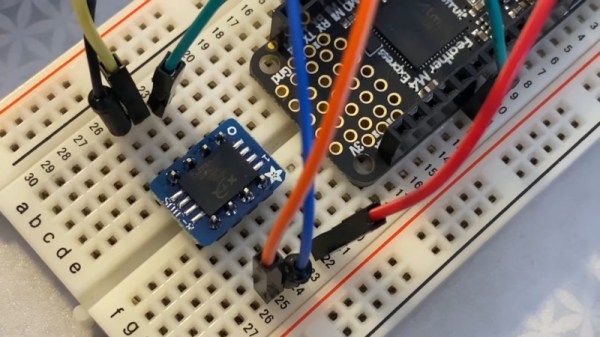
SD cards have long been a favorite with microcontroller hobbyists. Cheap, readily available, and easily interfaced, they remain a staple for small projects that need to store a lot of data. Now, they’re available in chip form! These are known as SD NAND parts that emulate the SD card interface itself.

[LadyAda] recently gave them a test-drive after spotting a tweet from [Greg Davill] (who we’re familiar with thanks to his excellent LED cubes). The devices are manufactured by XTX Technology and available from LCSC in a range of 1, 2, 4, and 8 GB sizes. [Ivan Grokhotkov] also illuminated a similar device from another maker in a reply to [Greg’s] original tweet, so there may be more sources out there.

These chips come in standard LGA8 surface mount package and can be easily soldered to a board, offering mechanical and manufacturing benefits versus using a normal SD or microSD card in a slot-type connector. Also, unlike other SMD flash memory parts, they handle all the file system details and wear levelling for you! With the inflation of SD card sizes, it’s also difficult to find these on the shelf in normal cards these days.

[Adafruit] plan to have a breakout for these parts out soon with a level shifter included for ease of use. We can imagine these chips finding their way into all manner of datalogger projects, since they can be ordered with other parts and permanently soldered into a design. If you’ve got a particularly good idea where these chips would prove useful, sound off in the comments. Video after the break.

Continue reading “New Part Day: SD NAND Are Surface Mount Chips That Work Like An SD Card”

The Black Magic Of A Disappearing Linear Actuator

Many of the projects we serve up on Hackaday are freshly minted, hot off the press endeavors. But sometimes, just sometimes, we stumble across ideas from the past that are simply too neat to be passed over. This is one of those times — and the contraption in question is the “Kataka”, invented by [Jens Sorensen] and publicised on the cover of the Eureka magazine around 2003.

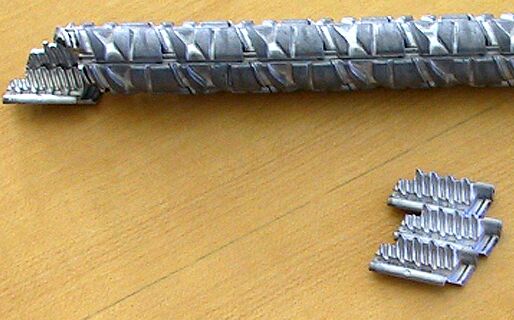
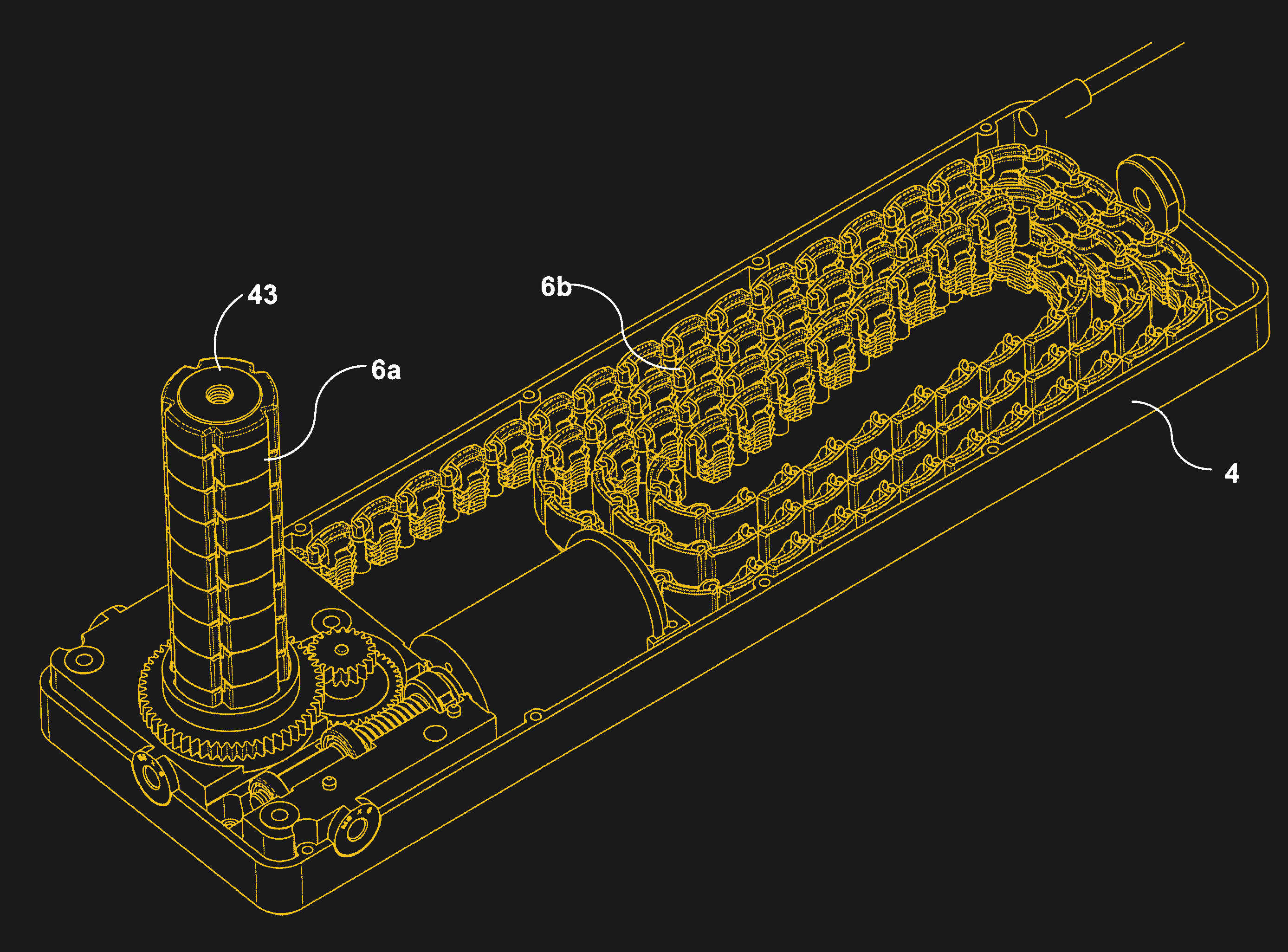
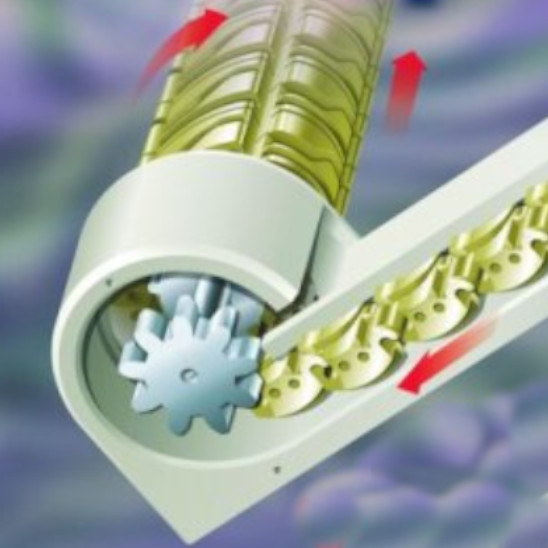
The device, trademarked as the Kataka but generically referred to as a Segmented Spindle, is a compact form of linear actuator that uses a novel belt arrangement to create a device that can reduce to a very small thickness, while crowing to seemingly impossible dimensions when fully extended. This is the key advantage over conventional actuators, which usually retract into a housing of at least the length of the piston.

It’s somewhat magical to watch the device in action, seeing the piston appear “out of nowhere”. Kataka’s youtube channel is now sadly inactive, but contains many videos of the device used in various scenarios, such as lifting chairs and cupboards. We’re impressed with the amount of load the device can support. When used in scissor lifts, it also offers the unique advantage of a flat force/torque curve.

Most records of the device online are roughly a decade old. Though numerous prototypes were made, and a patent was issued, it seems the mechanism never took off or saw mainstream use. We wonder if, with more recognition and the advent of 3D printing, we might see the design crop up in the odd maker project.

That’s right, 3D printed linear actuators aren’t as bad as you might imagine. They’re easy to make, with numerous designs available, and can carry more load than you might think. That said, if you’re building, say, your own flight simulator, you might have to cook up something more hefty.

Many thanks to [Keith] for the tip, we loved reading about this one!

Continue reading “The Black Magic Of A Disappearing Linear Actuator”

Think Your Laptop Is Anemic? Try An MSDOS One

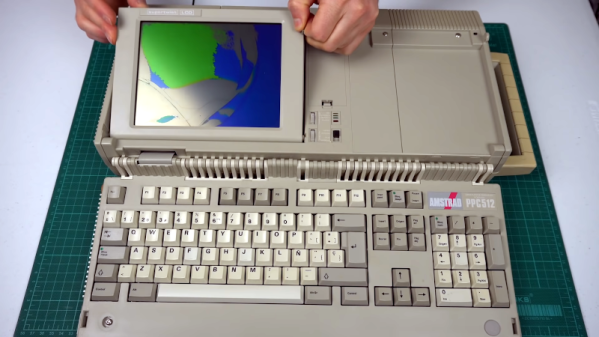
If someone gifted you a cheap laptop this holiday season, you might be a little put out by the 2GB of RAM and the 400 MHz CPU. However, you might appreciate it more once you look at [Noel’s Retro Lab’s] 4.8 Kg Amstrad PPC512 He shows it off inside and out in the video below.

Unlike a modern laptop, this oldie but goodie has a full keyboard that swings out of the main body. The space below the keyboard contains the LCD screen, which [Noel] is going to have to replace with an LCD from another unit that was in worse shape but had a good-looking screen. In this video, he gets as far as getting video output to an external monitor, but neither LCD shows any sign of life. But he’s planning more videos soon.

Continue reading “Think Your Laptop Is Anemic? Try An MSDOS One”

Twenty Seconds At 100 Megakelvins

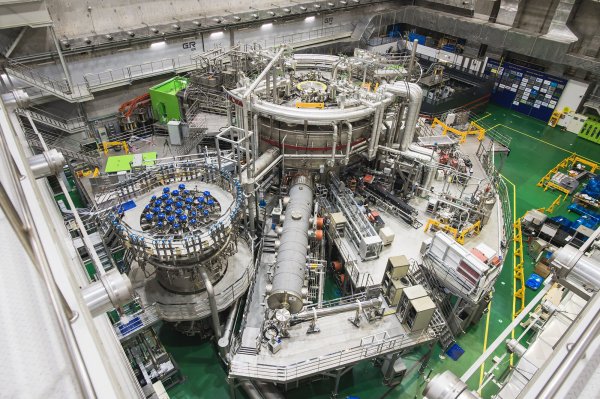
The Korea Superconducting Tokamak Advanced Research (KSTAR) magnetic fusion reactor claimed a new record last month — containing hydrogen plasma at 100 megakelvins for 20 seconds. For reference, the core temperature of the Earth’s Sun is a mere 15 megakelvins, although to be fair, it has been in operation quite a bit longer than 20 seconds.

South Korea is a member of the International Thermonuclear Experimental Reactor (ITER) team, a worldwide project researching the science and engineering of nuclear fusion. One of their contributions to the effort is the KSTAR facility, located in the city of Daejeon in the middle of the country (about 150 km south of Seoul).

It is a tokamak-style fusion research reactor using superconducting magnets to generate a magnetic flux density of 3.5 teslas and a plasma current of 2 megaamperes. These conditions are used to confine and maintain the plasma in what’s called the high-confinement mode, the conditions currently favored for fusion reactor designs. Since it went into operation in 2008, it has been creating increasingly longer and hotter “pulses” of plasma.

For all the impressive numbers, the toroidal reactor itself is not that huge. Its major diameter is only 3.6 meters with a minor diameter of 1 meter. What makes the facility so large is all the supporting equipment. Check out the video below — we really like the techniques they use in this virtual tour to highlight key components of the installation.

Continue reading “Twenty Seconds At 100 Megakelvins”