Sparklines For Your ESP32 Projects

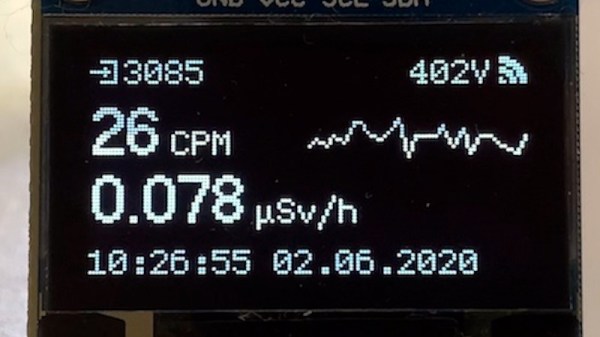
On a typical microcontroller project we may only have access to a relatively tiny screen. Information display can be a challenge, but it’s one that may be made easier by [0xPIT]’s ESParklines library for Espressif processors using the Arduino framework.

A sparkline is a simple line graph without annotations (like axes or units) intended to fit within the flow of text. They’re largely associated today with the statistician Edward Tufte, and if you’ve not encountered them or Tufte before then we suggest you’ll enjoy educating yourself.

It’s a simple enough library and it comes with example code. Usefully it maintains a data buffer all of its own allowing simple updating, and as well as the examples there is a YouTube video we’ve put below the fold showing graphs evolving as more information is added to them. We’re curious about one thing though, it’s billed as an ESP library, for either the ESP8266 or the ESP32, but we can’t find any ESP-specific code in there and neither could our friendly ESP-guru. Have we missed something? The comments are below if you can shed any light.
Continue reading “Sparklines For Your ESP32 Projects”

Vacuum Dust Collection With Self-Powered Relays

Like many people with multiple woodworking tools, [Will Stone] wanted to create a centralized dust collection system. But he quickly found that the devil was in the details, as he struggled to find an economic way to automatically kick on the vacuum when one of the tools started up. His final solution might be one of the most elegant, and surely the cheapest, we’ve ever come across.

As with other DIY systems we’ve seen over the years, [Will] is using a simple inductive current sensor to detect when AC power is being drawn by one of his tools. But where the similarity stops is that there’s nothing so pedestrian as a microcontroller reading the output of the sensor. He realized that when the coils in the sensor were energized they were putting out about 7 volts AC, which should be more than enough to trigger a relay.

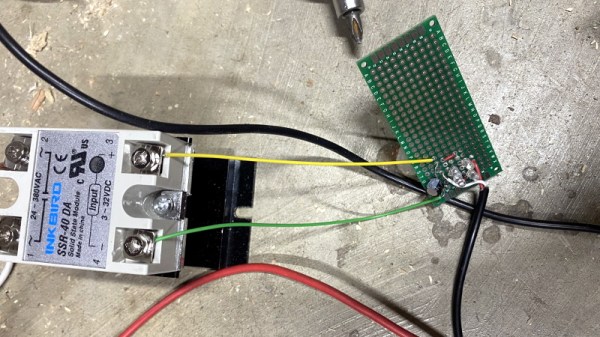
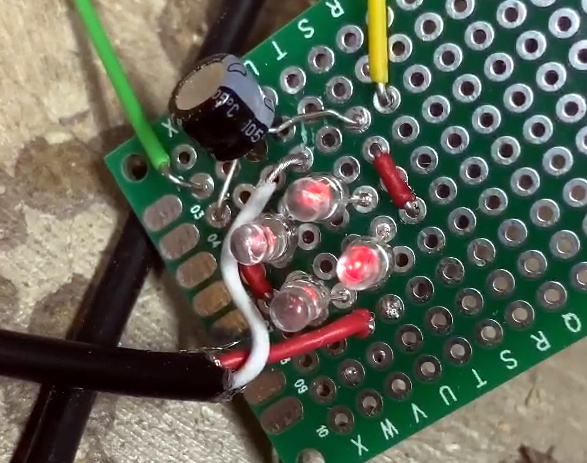
So he threw together a rectifier circuit on a piece of perfboard, using four LEDs in true hacker style. With the addition of a capacitor to smooth out the voltage, this little circuit is able to trip the 40 amp solid state relay controlling power to the vacuum using nothing more than the energy harvested from the sensor’s coil.

Using a current sensor is great when the tools are close enough to all be plugged into the same line, but that doesn’t help the folks with cordless tools or supersized shops. In that case, you might need to look into a sound-activated system.

Automatic Planet Finder Is Out Of This World

When the world is on your shoulders, it can be relaxing to remember that we’re just hairless monkeys hurtling through space on a big rock alongside a lot of other rocks. If you find yourself wondering where exactly the other major rocks are instead of worrying, we think that’s a good sign.

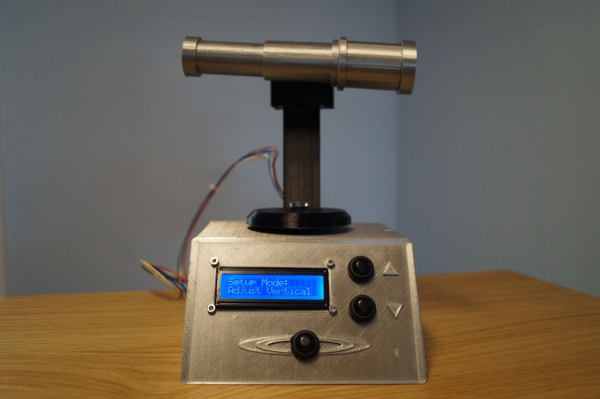
Wherever [snowbiscuit] lives, there’s a large planet finder in a public square somewhere that stopped locating rocks a long time ago. Hungry to watch such a thing in action, [snowbiscuit] built a great-looking tabletop version that uses the Horizontal Coordinate System to locate planets. Inside is a Raspberry Pi 3, which queries NASA for azimuth and altitude data and combines that data with a predetermined north reading to point out whatever planet was selected by spinning the printed telescope on top. The telescope itself is non-working, and returns to north after a few seconds to wait for input.

This project is wide open for remixing if you want to make your own. As lovely as it is now, designing around a slip ring would eliminate all those long wires and make it more sleek. Take a peek after the break.

Don’t stop your desktop space toy collection there — build an ISS-tracking lamp to go with it.

Continue reading “Automatic Planet Finder Is Out Of This World”

New Microscope Directly Images Protein Atoms

There’s an old joke that you can’t trust atoms — they make up everything. But until fairly recently, there was no real way to see individual atoms. You could infer things about them using X-ray crystallography or measure their pull on tiny probes using atomic force microscopes, but not take a direct image. Until now. Two laboratories recently used cryo-electron microscopy to directly image atoms in a protein molecule with a resolution of about 1.2 x 10⁻⁷ millimeters or 1.2 ångströms. The previous record was 1.54 ångströms.

Recent improvements in electron beam technology helped, as did a device that ensures electrons that strike the sample travel at nearly the same speeds. The latter technique resulted in images so clear, researchers could identify individual hydrogen atoms in the apoferritin molecule and the water surrounding it.

Continue reading “New Microscope Directly Images Protein Atoms”

Homebrew Coil Winder Makes Toroids A Snap To Wind

Anyone who has ever wound a toroidal coil by hand can tell you that it’s not exactly a fun job. Even with the kinds of coils used in chokes and transformers for ham radio, which generally have relatively few windings, passing all that wire through the toroid time after time is a pain. And woe unto anyone who guesses wrong on how much wire the job will take.

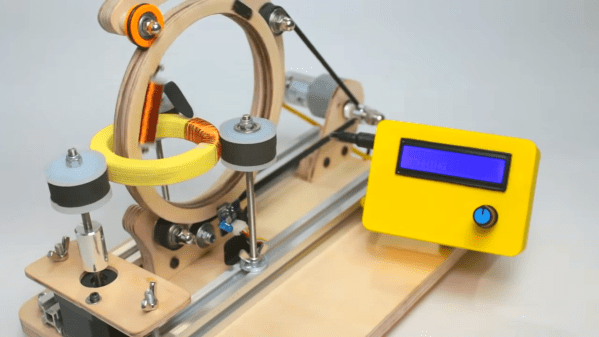
To solve those problems, [Sandeep] came up with this clever and effective toroid winder. The idea is to pass a small spool of magnet wire through the toroid’s core while simultaneously rotating the toroid to spread the windings out as evenly as possible. That obviously requires a winding ring that can be opened up to allow the toroid form to be inserted; [Sandeep] chose to make his winding ring out of plywood with a slit in it. Carrying the wire spool, the winding ring rotates on a C-shaped fixture that brackets the toroid, which itself rotates under stepper motor control on a trio of rollers. An Arduino controls the rotation of both motors, controlling the number of windings and their spread on the form. lacking a ferrite core for testing, [Sandeep] used a plywood ring as a stand-in, but the results are satisfying enough to make any manual coil-winder envious.

We love tools like this that make a boring job a snap. Whether it’s cutting wires for wiring harnesses or winding guitar pickups, tools like these are well worth the time spent to build them. But we suppose when it comes to toroid winding, one could always cheat.

Continue reading “Homebrew Coil Winder Makes Toroids A Snap To Wind”

Lattice Semiconductor Targets Bitstream Reverse Engineering In Latest Propel SDK License

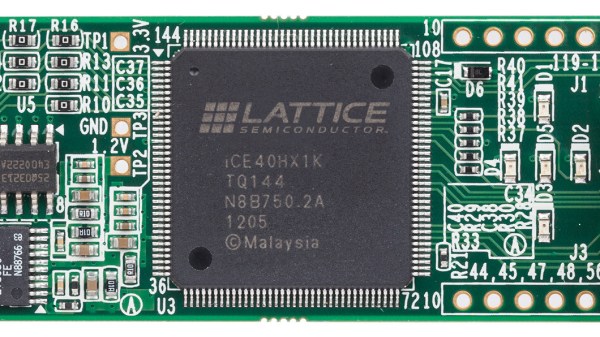
The topic of reverse engineering is highly contentious at best when it comes to software and hardware development. Ever since the configuration protocol (bitstream) for Lattice Semiconductor’s iCE40 FPGAs was published in 2015 through reverse engineering efforts, there has been a silent war between proponents of open bitstream protocols and FPGA manufacturers, with the Lattice ECP5’s bitstream format having been largely reverse-engineered at this point.

Update: About eight hours after this article was published, Lattice Semiconductor issued a statement retracting the EULA language that banned bitstream reverse engineering. Please check out Hackaday’s article about this reversal.

Most recently, it appears that Lattice has fired a fresh shot across the bow of the open source projects. A recently discovered addition to the Propel SDK, which contains tools to program and debug Lattice devices, specifically references bitstream reverse engineering. When logged in with an account on the company’s website the user must agree to the Lattice Propel License Agreement for Lattice Propel 1.0 prior to download. That document includes the following language:

In particular, no right is granted hereunder […] (3) for reverse engineering a bitstream format or other signaling protocol of any Lattice Semiconductor Corporation programmable logic device.

Continue reading “Lattice Semiconductor Targets Bitstream Reverse Engineering In Latest Propel SDK License”

Join The Movement With This Mini Cyberdeck

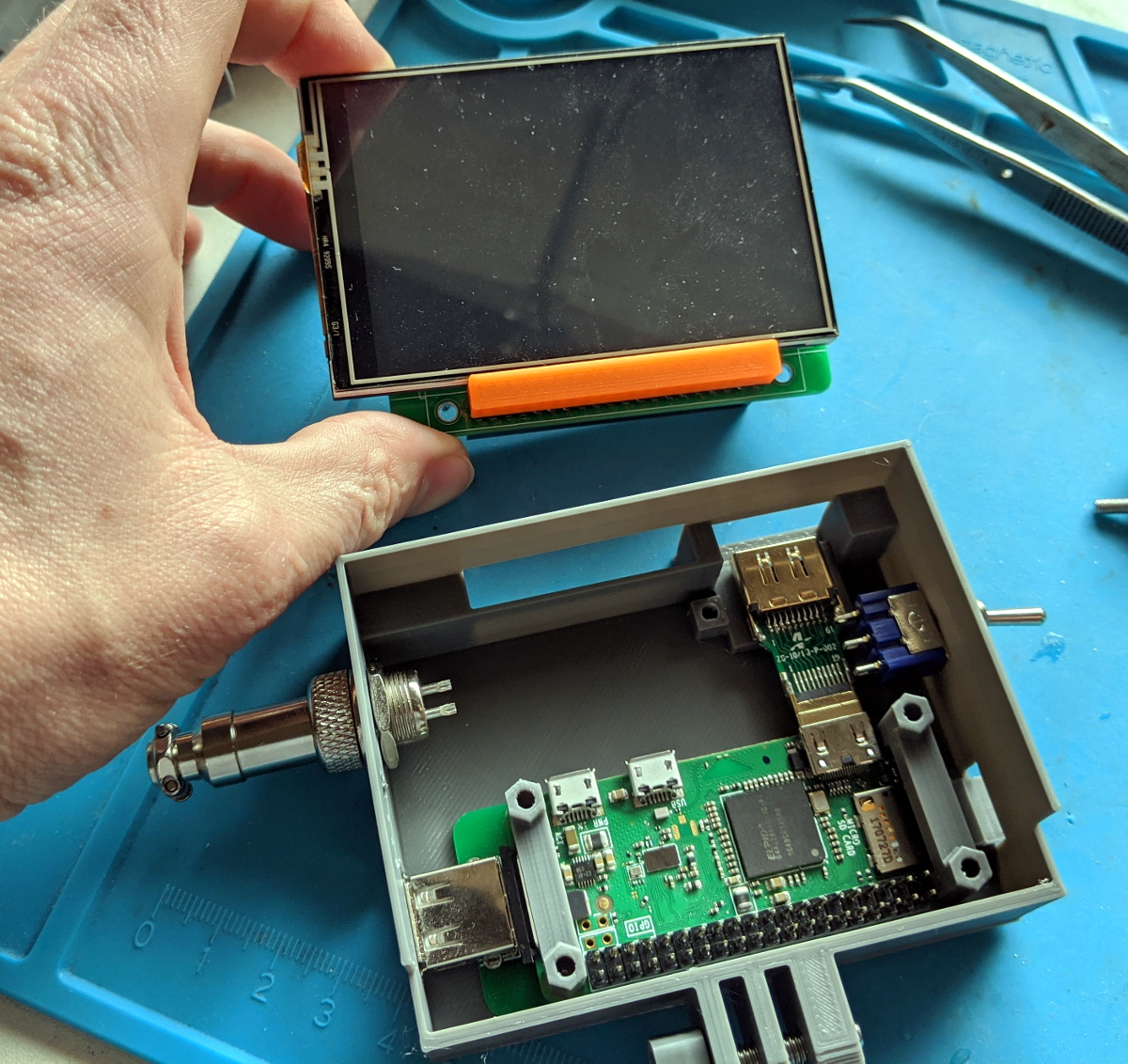
The global pandemic has given many people a lot more time at home, which has undoubtedly pushed an untold number of projects over the finish line. Unfortunately, it’s also disrupted global commerce and shipping to the point that getting parts can be a lot harder than we’d like. Which is why [facelesstech] decided to put together this exceptionally mobile cyberdeck out of things he already had laying around.

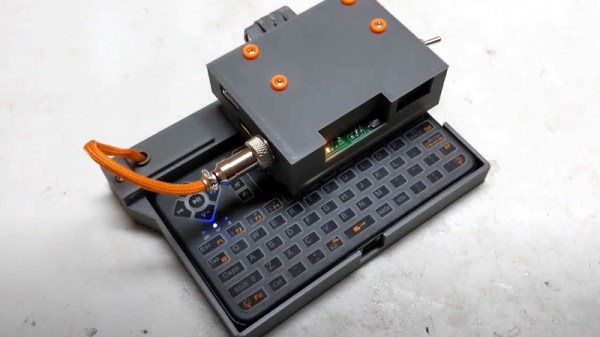
Now to be fair, his parts bin is perhaps a bit better stocked for this kind of thing than most. He’s built a couple of Raspberry Pi portables already, so the Pi Zero W, display, and battery management board were already kicking around. He just had to come up with a new 3D printed enclosure that holds it all together with a little bit of cyberpunk flair.

To that end, he’s done an excellent job of documenting the build and has released the STL files for the 3D printed components. All things considered, we’d say this is probably the most approachable cyberdeck design currently available; if you’ve been wondering what all the fuss is about with these bespoke little computers, this is an ideal project to get started with.

Keep in mind that the idea of a cyberdeck is to build something custom for yourself, so there’s no need to copy this build exactly. If you’re short on parts, you could forgo the battery powered aspect and just keep it tethered. The superfluous (but very cool) GX12 connectors could certainly be deleted as well, although at serious stylistic cost. You’ll probably need to order the specific keyboard that [facelesstech] designed the lower half of the device around, but it’s common enough that it shouldn’t be hard to track down. No matter which way you take it, this design is a great base to start from.

If you’re looking for something a bit more substantial and have the filament to burn, you might take a look at the VirtuScope to fulfill your offset screen needs.

Continue reading “Join The Movement With This Mini Cyberdeck”