Creepy Halloween Doll Might Make You Betsy Wetsy

If you want to terrify your neighborhood this Halloween, you might go for the old standbys like skeletons or zombies. But you don’t have to go gory to find glory. Consider the talking doll. Those things are creepy enough already, right? Well, [cabuu] says no, the doll should be animated with servos and have remote control. She should still be able to talk, just not when you expect her to.
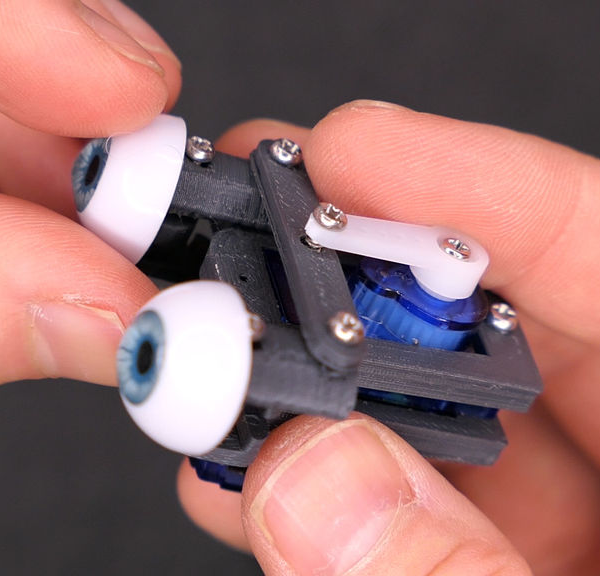
Forget pushing on her stomach, ’cause Baby’s got a Wemos D1 mini and her own Blynk app now.  A set of sliders in the app control a micro servo that animates her eyes, and another servo that twists her head from side to side. Her head doesn’t go all the way ’round, but that’s probably for the best. There are preset fright modes [cabuu] can set and forget until she springs to life via motion sensor.

We particularly like the bracket [cabuu] designed and printed that joins the eyeballs with the servo, along with his clever use of printed mate brackets to hold the servos in place within the head. If you think you can stomach it, there’s a demo video after the break. Stay tuned for total doll dissection after that as [cabuu] builds and inserts the terrifying tidbits.

We love hacks that combine innocence with insanity. Have you ever seen Thomas the Tank Engine singing Rick Astley?

Continue reading “Creepy Halloween Doll Might Make You Betsy Wetsy”

Developing Guidelines For Sustainable Spaceflight

In the early days of spaceflight, when only the governments of the United States and the Soviet Union had the ability to put an object into orbit, even the most fanciful of futurists would have had a hard time believing that commercial entities would one day be launching sixty satellites at a time. What once seemed like an infinite expanse above our heads is now starting to look quite a bit smaller, and it’s only going to get more crowded as time goes on. SpaceX is gearing up to launch nearly 12,000 individual satellites for their Starlink network by the mid-2020s, and that’s just one of the “mega constellations” currently in the works.

Just some of the objects in orbit around the Earth

It might seem like overcrowding of Earth orbit is a concern for the distant future, but one needs only look at recent events to see the first hints of trouble. On September 2nd, the European Space Agency announced that one of its research spacecraft had to perform an evasive maneuver due to a higher than acceptable risk of colliding with one of the first-generation Starlink satellites. Just two weeks later, Bigelow Aerospace were informed by the United States Air Force that there was a 1 in 20 chance that a defunct Russian Cosmos 1300 satellite would strike their Genesis II space station prototype.

A collision between two satellites in orbit is almost certain to be catastrophic, ending with both spacecraft either completely destroyed or severely damaged. But in the worst case, the relative velocity between the vehicles can be so great that the impact generates thousands of individual fragments. The resulting cloud of shrapnel can circle the Earth for years or even decades, threatening to tear apart any spacecraft unlucky enough to pass by.

Fortunately avoiding these collisions shouldn’t be difficult, assuming everyone can get on the same page before it’s too late. The recently formed Space Safety Coalition (SSC) is made up of more than twenty aerospace companies that realize the importance of taking proactive steps to ensure humanity retains the unfettered access to outer space by establishing some common “Rules of the Road” for future spacecraft.

Continue reading “Developing Guidelines For Sustainable Spaceflight”

Robot Joints Go Modular With This Actuator Project

[John Lauer] has been hard at work re-thinking robot arms. His project to create modular, open source actuators that can be connected to one another to form an arm is inspiring, and boasts an impressively low parts cost as well. The actuators are each self-contained, with an ESP32 and a design that takes advantage of the form factors of inexpensive modules and parts from vendors like Aliexpress.

Flex spline in action, for reducing backlash

Each module has 3D printed gears (with an anti-backlash flex spline), an RGB LED for feedback, integrated homing, active cooling, a slip ring made from copper tape, and a touch sensor dial on the back for jogging and training input. The result is a low backlash, low cost actuator that keeps external wiring to an absolute minimum.

Originally inspired by a design named WE-R2.4, [John] has added his own twist in numerous ways, which are best summarized in the video embedded below. That video is number three in a series, and covers the most interesting developments and design changes while giving an excellent overview of the parts and operation (the video for part one is a basic overview and part two shows the prototyping process, during which [John] 3D printed the structural parts and gears and mills out a custom PCB.)

Continue reading “Robot Joints Go Modular With This Actuator Project”

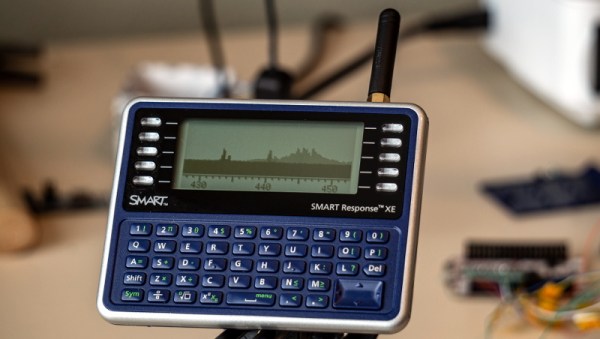
A Spectrum Analyzer For The Smart Response XE

Remember the Girl Tech IM-me? It was a hot-pink clearance rack toy that suddenly became one of the hottest commodities in the hacking world when it was discovered they could be used for all sorts of radio frequency shenanigans. Now they go for triple digits on eBay, if you can even find one. Well, we’re probably about to see the same thing happen to the Smart Response XE.

Thanks to the work of a hacker named [ea], this cheap educational gadget is finally starting to live up to the potential we saw in it back when a teardown revealed it was powered by an Arduino-compatible ATmega128RF chip. With a big screen, a decent QWERTY keyboard, and integrated wireless hardware, it seemed obvious that the Smart Response XE was poised to be the next must-have repurposed piece of kit.

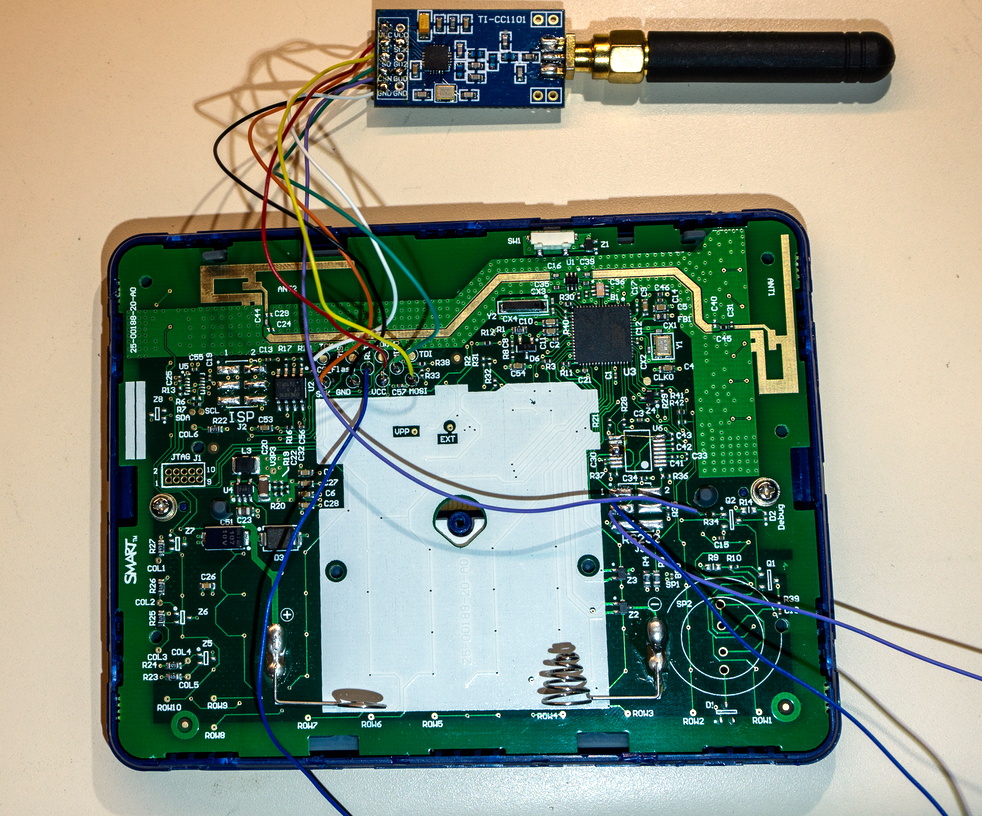
Though as it turns out, [ea] isn’t using the device’s built-in wireless hardware. Step one in this exceptionally well documented and photographed project is to tack a CC1101 transceiver module to the SPI pins on the ATmega128RF. Then with the appropriate firmware loaded up, that nice big screen will show you what’s happening on the 300 MHz, 400 Mhz and 900 MHz bands.

But the fun doesn’t stop there. With the CC1101-modified Smart Response XE, there’s a whole new world of radio hacks you can pull off. As a proof of concept, [ea] has also included a POCSAG pager decoder. Granted the RTL-SDR has already made pulling pager messages out of the air pretty easy, but there’s something to be said for being able to do it on something so small and unassuming.

If you can’t tell, we’re exceptionally interested in seeing what the community can do with the Smart Response XE. At the time of this writing, the going rate on eBay for a good condition unit looks to be about $10 USD, plus the $3 or so for the CC1101 module. But the prices went through the roof when we first posted about it, so get them cheap while you still can.

[Thanks to bburky for the tip.]

Vintage Transistor Radio Gets Internet Transplant

The invention of the transistor revolutionized radio, allowing receivers to be made far more compact and portable than ever before. In the middle of the 20th century, the devices exploded in popularity, and pocket transistor radios took the market by storm. [MisterM] had fond memories of such times, and when he found a 1970s Flirt radio at a car boot sale, it led to a cute little build.

The radio was stripped of its original hardware, with [MisterM] preferring internet radio to the terrestrial variety. In its place, a Raspberry Pi Zero was installed. This was fitted with a cavalcade of off-the-shelf modules to make it fit for pumping out the tunes. A Speaker PHAT was used for audio, while an Adafruit Micro Lipo board handled battery charging and a Pimoroni Lipo Shim served as the power supply. All this was bundled up inside the original casing.

The radio’s controls are a neat hack. The original volume and tuning dials were removed, sliced up, and glued onto two lever microswitches. This allows them to act as buttons instead. A new power switch was installed behind the original, and the Speaker PHAT’s LEDs were placed behind the tuning dial to act as a rudimentary display.

It’s a tidy build that repurposes an attractive vintage artefact into a device of the internet age, while remaining externally the same. [MisterM] has form in this space, with his vintage radio console build and video doorbell being particular highlights. Video after the break.

Continue reading “Vintage Transistor Radio Gets Internet Transplant”

An Algorithm For De-Biasing AI Systems

A fundamental truth about AI systems is that training the system with biased data creates biased results. This can be especially dangerous when the systems are being used to predict crime or select sentences for criminals, since they can hinge on unrelated traits such as race or gender to make determinations.

A group of researchers from the Massachusetts Institute of Technology (MIT) CSAIL is working on a solution to “de-bias” data by resampling it to be more balanced. The paper published by PhD students [Alexander Amini] and [Ava Soleimany] describes an algorithm that can learn a specific task – such as facial recognition – as well as the structure of the training data, which allows it to identify and minimize any hidden biases.

Testing showed that the algorithm minimized “categorical bias” by over 60% compared against other widely cited facial detection models, all while maintaining the same precision of detection. This figure was maintained when the team evaluated a facial-image dataset from the Algorithmic Justice League, a spin-off group from the MIT Media Lab.

The team says that their algorithm would be particularly relevant for large datasets that can’t easily be vetted by a human, and can potentially rectify algorithms used in security, law enforcement, and other domains beyond facial detection.

Build Yourself A Set Of Glowing Wings

Humans didn’t come with wings from the factory, and most efforts to fit them after the fact have been at least as far as flight is concerned, largely fruitless. That doesn’t mean you can’t cut a devastatingly sharp aesthetic though, and [Natalina’s] fiber optic wings are a great way to do just that. 

The wings are a leathercraft project, consisting of a harness worn around the torso. This serves as the mounting point for the fiber optics, as well as the RGB Critter flashlight used to drive the lightshow. Leather parts are lasercut to the right shape, making it easy to create the delicate feather shapes in the design. The pieces are then dyed appropriately and sewn together into the final shape. Bundles of optical fibers are then wound through the harness, sprouting from either shoulder of the wearer. EVA foam is used to help create the right shape for the wings, allowing the different layers to remain separated to create more visual depth.



It’s a build that looks absolutely striking at night, and unlike some other wing-based cosplays, doesn’t have as many drawbacks as far as crowds and transportation. It would make a killer look if you’re going as a Hacker Angel for Halloween this.

Makers certainly know how to craft some cutting-edge wearables. Got your own sweet build? Throw it at the tips line!