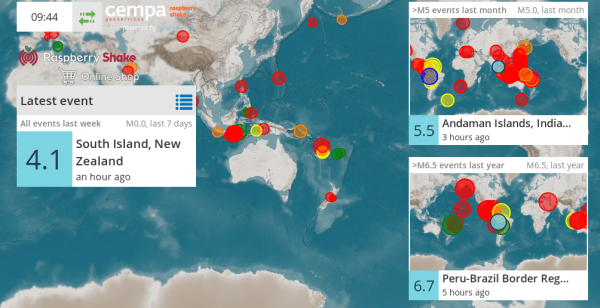
The Raspberry Pi’s goal, at least while it was being designed and built, was to promote computer science education by making it easier to access a working computer. What its low price tag also enabled was a revolution in distributed computing projects (among other things). One of those projects is the Raspberry Shake, a seismograph tool which can record nearby earthquakes.
Of course, the project just uses the Pi as a cost-effective computing solution. It runs custom software, but if you want to set up your own seismograph then you’ll also need some additional hardware. There are different versions of the Raspberry Shake, the simplest using a single Geophone which is a coil and magnet. Vibrations are detected by sensing the electric signal generated by the magnet moving within the coil of wire. Other models increase the count to three Geophones, or add in MEMS accelerometers, you can easily whip one of these up on your own bench.
The entire setup will fit nicely on a coffee table as well, making it much smaller (and cheaper) than a comparable professional seismograph. Once all of the Raspberry Shakes around the world were networked together, it gives an accurate, real-time view of seismic activity anywhere you can imagine. If you’ve ever been interested in geology or just want to see where the latest earthquake was, check out their projects. But you don’t need even a Raspberry Pi to see where the earthquakes are, thanks to a Hackaday Prize entry all you need is a Twitter account.
Thanks to [Rich Cochran] aka [AG6QR] for the tip!
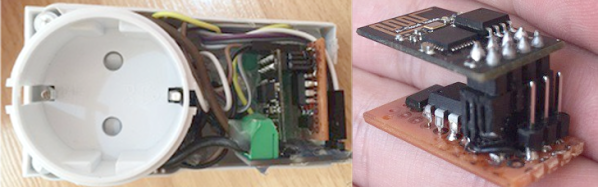
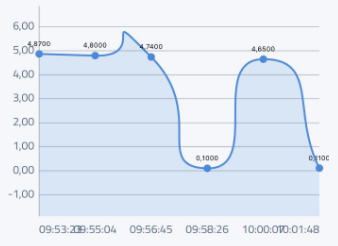 After contemplating a few solutions, he opted for one which wouldn’t offend the coffee gods. The machines use a high current to produce their heat, so he adapted some old remote control power sockets for the machines to plug into which would now monitor the current. A high current means the coffee is brewing and he knew that brewing takes one minute per cup, so the duration of the high current tells him the number of cups.