Shoehorning RS-232 Into A Minitel Terminal

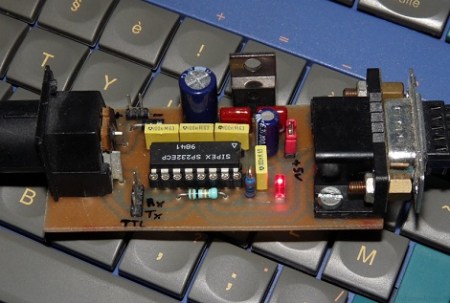
In the early 80s, millions of terminals were handed out to French telephone subscribers. Nearly 9 million of these Minitel dumb terminals were in use at one time, and with that degree of ubiquity, we’re surprised we haven’t heard of them before. These boxes were usually connected to the outside world through their internal 1200bps modem, but [O. Blt] came up with this build (Google Translate link) so he could connect to a local machine with an RS-232 port.

After digging up the pinout for the Minitel’s DIN-8 port, [O. Blt] designed a little board around a MAX232 chip scavenged from an old motherboard. Of course there was a need to get the terminal to do something, so [O. Blt] used the Minitel as a display and remote control for Winamp. The project was successful, but not very useful – at 1200 bps, the refresh is very, very slow.

American readers may remember connecting to the Minitel network with their Apple ][s and C64s with CommunityLink, but this service was driven out of the market by the giants of pre-web dial-up, Prodigy and Compuserve. In any case, after seeing the AZERTY and alphabetic keyboard layouts of these old boxes gives us a feeling of nostalgia for a time before everything dealing with computers was standardized.
We Know “Mario’s Early Years” Was A Let Down, But This Takes It A Bit Too Far.

[JJ Hendricks] wrote in to tell us about his SNES cartridge urinal. The fully functional urinal is constructed with 40 SNES cartridges and sealed up with polyurethane. The base of the whole operation is actually not a puddle of festering urine, but instead poured polyurethane that ensures proper flow through the drain. You heard right, this urinal actually flushes! As a bit of consolation [Hendricks] plainly states in the directions:No good games were damaged in the making of this video. All the video games used in this urinal were already broken or worthless sports games”. We have featured some SNES cartridge readers before, so now you have something to do with all the leftover hardware! Gross.

Continue reading “We Know “Mario’s Early Years” Was A Let Down, But This Takes It A Bit Too Far.”

BAMF2011: Keyboards Built From Scratch

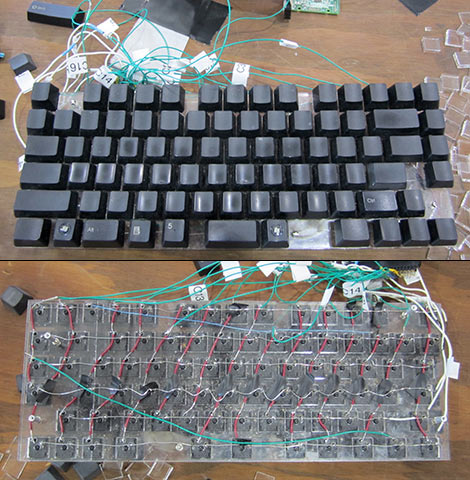
As the most direct interface between computer and programmer, keyboards can be a deeply personal, sometimes almost religious thing. Some find solace in their vintage IBM Model M, or luxurious leather keyboard, but maker [Carol Chen] took things into her own hands, quite literally. [Carol]’s Maker Faire exhibit has a half dozen specimens of interesting commercial tactile and ergonomic options…but [Chen]’s personal keyboard, where she commits to her work as a full-time coder, has been made to her own exacting specifications.

Continue reading “BAMF2011: Keyboards Built From Scratch”

BAMF2011: Bloxes, A Building Kit With A Nifty Pedigree

Not every cool hack needs to involve microcontrollers, LEDs or other bling. We were initially drawn to the Bloxes display simply because we love a good multipurpose construction set, whether it be Lego, 80/20 aluminum, or in this case, a system of interlocking cubes formed from six identical pieces of corrugated cardboard, cut and scored in such a manner as to form a surprisingly sturdy little building block. They can become simple furniture, groovy Logan’s Run-style room decor, or the all-important kids’ forts…then later dismantled and made into something else.

Continue reading “BAMF2011: Bloxes, A Building Kit With A Nifty Pedigree”

BAMF2011: ChipKIT Is Arduino To The Power Of 32

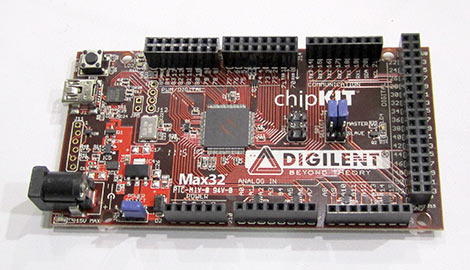
If you’ve been hungry for more power for your microcontroller projects, but reluctant to dump your investment in Arduino shields or the libraries and community knowledge that go with them all, Digilent has you covered. Their new chipKIT boards are built around the Microchip PIC32 MCU…a powerful 32-bit chip that until recently was left out of the cross-platform scene. A majority of code and quite a number of Arduino shields will work “out of the box” with the chipKIT, and the familiar development tools are available for all three major operating systems: Windows, Mac and Linux.

We first mentioned these a couple weeks ago, but the software was unavailable at the time. Seeing the development tools in action was quite unexpected…

Continue reading “BAMF2011: ChipKIT Is Arduino To The Power Of 32”

Making A 3D Printer Work Wirelessly

Looking for more ways to enhance his 3D printer, [JJ] decided to make it wireless. He got his hands on some $10 Bluetooth modules and figured this would be just the thing to make the link with his laptop.

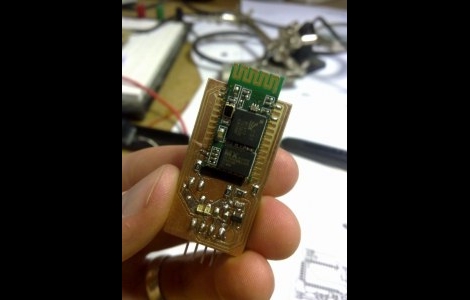
They came as surface mount modules, so the first thing he had to do was develop a breakout board that he could patch into his Ultimaker 3D printer. This provided a nice opportunity as he needed to do some level converting to make the 3.3V module play nicely with his 5V CNC electronics. The first version of the board turned out well but he had really a poor communications range. The second version, which is pictured above, hangs the module’s antenna off the edge of the breakout board and works a lot better.

We’ve embedded a clip after the break that walks through the development of this board. [JJ] shared the Eagle CAD files as a megaupload link, but we’ve also mirrored the file after the break for your convenience.

Continue reading “Making A 3D Printer Work Wirelessly”

Class-D Audio Amplifier Makes It From Breadboard To PCB

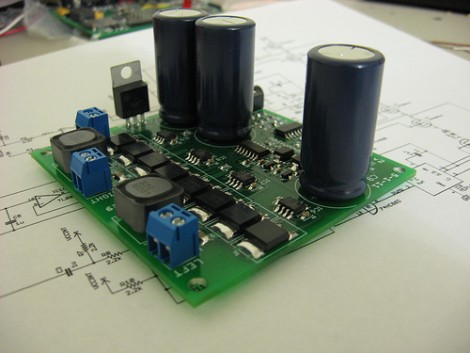
[Ben Laskowski’s] been working on a Class-D audio amplifier for several months. What you see above is the most recent version of the amp. A class-D amplifier uses transistor switching (or in this case MOSFET switching) to generate the pulse-width-modulated signal that drives the speaker. This is different from common amplifiers as it doesn’t generate the kind of heat that traditional amplifiers do, making it much more efficient.

After the break you can hear it demonstrated. It’s operating off of a single-supply laptop brick and we do hear a bit of a hum coming through the system. Still, we’re quite pleased at the power and quality the small board can put out. Take a look at a post from November to get a handle on what went into development. If you still hunger for more details, [Ben’s] shared the bulk of his prototyping materials in the github repository.

Continue reading “Class-D Audio Amplifier Makes It From Breadboard To PCB”