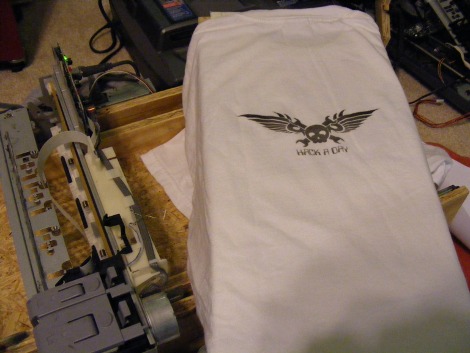
For those unaware, the little acronym above stands for Do-It-Yourself-Direct-To-Garment printing. In layman’s terms, printing your own shirts and designs. Commercial DTGs can cost anywhere from $5,000 to $10,000 which for the hobbyist who only wants a few shirts is ridiculous. So you would think this field of technology would be hacked to no end, but we’ve actually only seen one other fully finished and working DIYDTG. So we took it upon ourselves to build a DIYDTG as cheaply and as successfully as possible. Continue reading “How-to: DIYDTG”
Intelligent Ground Vehicle Competition 2010 Day One Report
The Intelligent Ground Vehicle Competition (IGVC) is the precursor to the DARPA Grand Challenge, and in many ways it is just as difficult. We have the pleasure of being at the competition this year with the Tennessee Technological University Autonomous Robotics Team. The teams at the competition pull off some amazing home-brew robotics, so we’ve decided to do a short section on some exemplary robotic hacking each day of the competition.
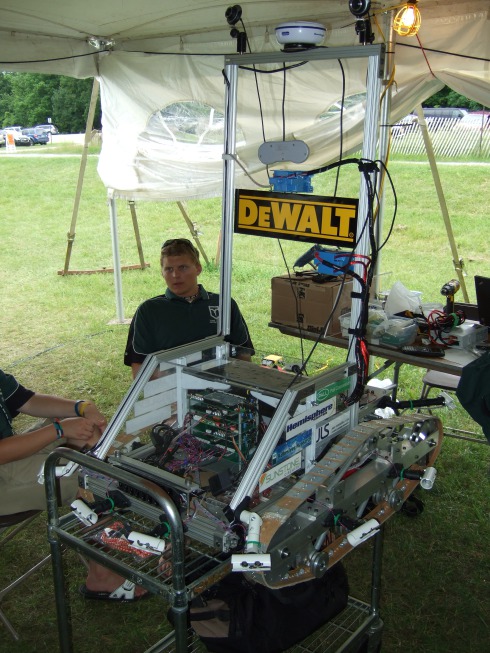
Today’s robot comes from the York College of Pennsylvania. The robot, dubbed “Green Lightning”, features an impressive set of custom made hardware.
We interviewed the team, and got a pretty thorough rundown of their robot with pictures after the jump. Continue reading “Intelligent Ground Vehicle Competition 2010 Day One Report”
Adding Compact Flash To An Old Sequencer

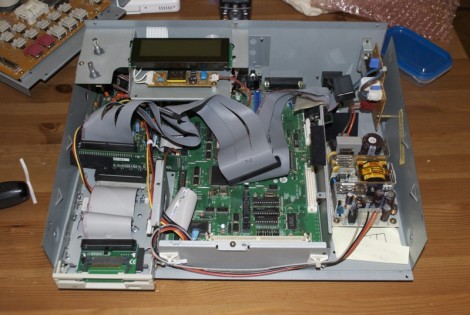
[Shoji] has a beloved sequencer that went out of production ten years ago. Unfortunately the storage options are also 10 year out-of-date as SCSI is the stock option for storing his loops. Using a series of adapters he added Compact Flash storage to his Akai MPC-2000 Classic. The board has a connector for 25-pin SCSI which he wired to a 25-pin to 50-pin SCSI adapter. From there he connects a SCSI to IDE board, and then an IDE to CF. Subsequent versions of the Akai Classic have floppy drives in the front left corner so he used this method to mount he CF slot. Now he’s got plenty of storage with very little change to the appearance of the looper.
3D Printed MakerBot

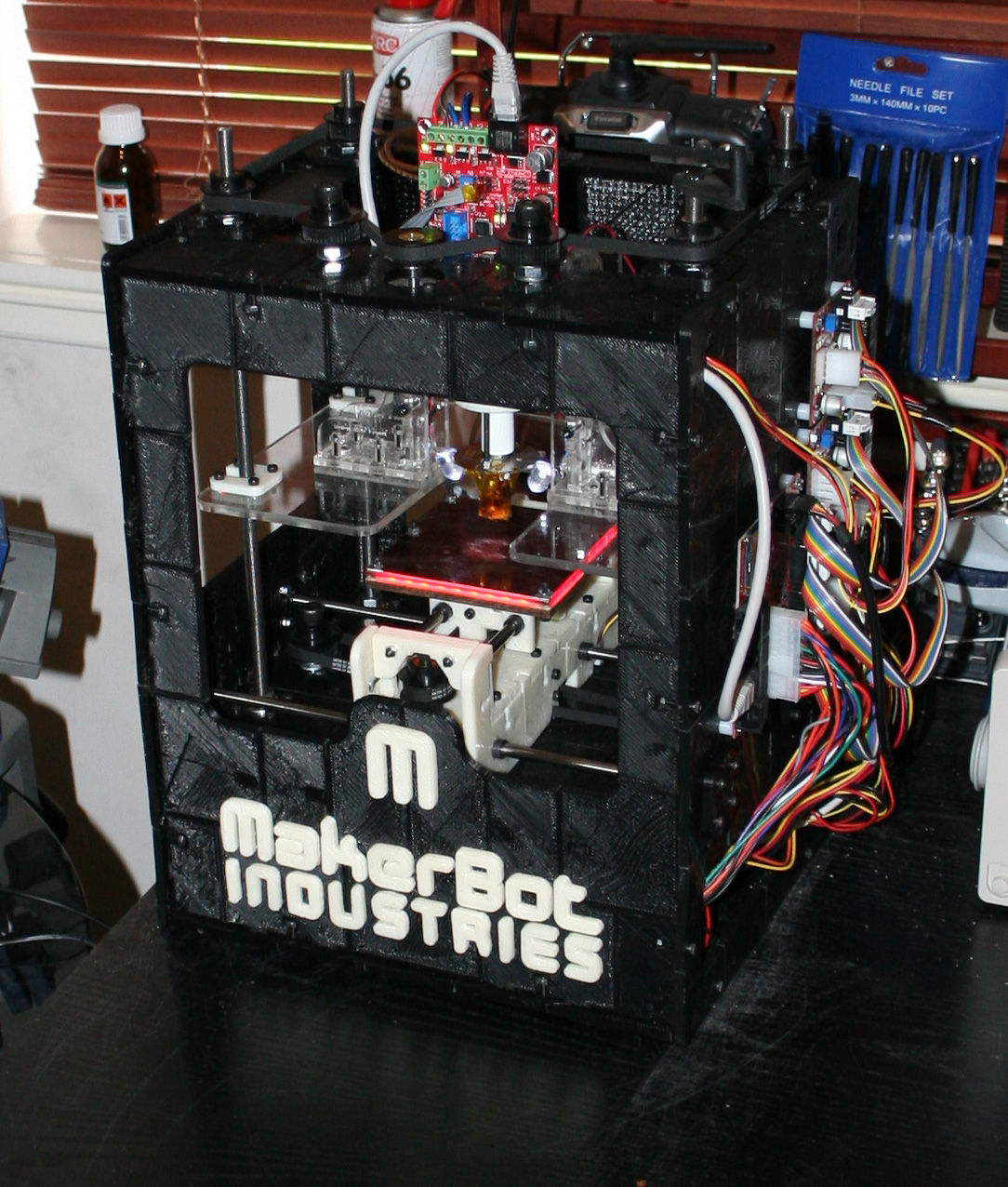
[Webca] has made a 3D printed MakerBot with his MakerBot. Using five pounds of plastic, the design replaces all of the plywood used to create a regular MakerBot. This complements the existing designs for the 3D printed extruders, dinos, and other parts already on Thingiverse. An interesting mile marker in the history of 3D printing. We might make one after we make a Mendel and tons of Hack a Day Badges. We also look forward to improvements people will contribute to the design such as using less plastic or a parameterized design to make a really big (or small) MakerBot.
BP Oil Blunders

We received a very interesting “hack” today from our good friend [Jonny Dryer] that really got us thinking, but first a little background.
For those that live only inside of a box on top of a mountain (we know who you are), there was an explosion of a British Petroleum oil rig about 40 miles southeast of Venice, LA. Being proclaimed by Carol Browner as “probably the biggest environmental disaster” – stated a month after the accident.
And the oil is still spewing. Now, we’re not ones for criticizing how this event is being handled; no, we left it to the experts.
Back to our point, [Jonny Dryer’s] sent us his plan for slowing the oil spill, by using liquid nitrogen, pretty genius if you ask us. And we were wondering what possible solutions other readers had come up with? Share your thoughts on this situation in the comments.
Motorcycle Current Gear Indicator

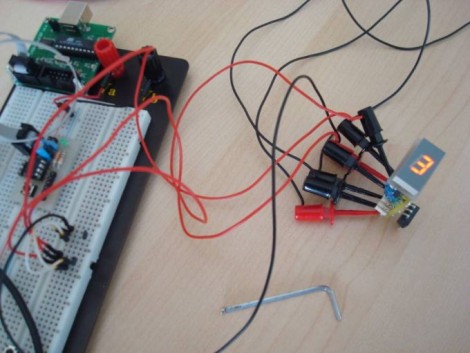
[Vassilis Papanikolaou] just finished building a gear indicator for a motorcycle. This quite a simple implementation compared to some of the other vehicle information displays we’ve taken a look at. You should be able to build and install your own without breaking the bank. An ATtiny25 microcontroller reads data from a couple of hall effect sensors and the neutral switch, then displays the current gear on a 7-segment display.
There’s a magnet on the shifter and two hall effect sensors at the position for ‘gear up’ and ‘gear down’ shifting. The AVR chip keeps track of these and even stores the last position in EEPROM when you shut the bike off. If the device somehow gets off track, it will automatically recalibrate itself next time you shift into neutral, thanks to the bike’s neutral sensor switch.
1000W Induction Heater
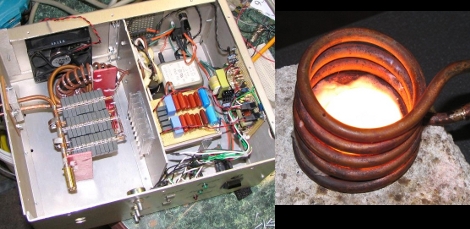
[Tim Williams] likes to heat things up with this induction heater he built. At peak it can use 1000W and as you can see in the video, that’s more than enough power to heat, burn, and melt a plethora of different objects. The case design uses a center divider to isolate switching noise from the magnetic field with the whole unit housed in aluminum because it won’t heat up from stray magnetic fields. He’s selling plans and kits in case you want one, but we just don’t know what we’d use it for.