Prevent Drunken Emails With Mail Goggles

Google introduced a new Labs feature named Mail Goggles. If you turn it on, on late night weekends, the feature will ask you to perform some math problems before you can send an email. We’re not sure how widespread a problem drunk emailing is, but maybe the delay will allow you to sober up and realize when you’re about to CC your entire company on a rant about your boss, or your adventures with the cute guy or girl in the office. It’s enabled for late nights on the weekends, but once you’ve turned it on, you can adjust the time in the General settings.

Install GPS In Your Dell Mini 9

[acabtp] has already started hacking on his Dell Mini 9. He wanted to add GPS functionality, but didn’t want a dongle or anything external. After ordering the smallest GPS unit he could find, he found a place to wire it in internally. The end result had no bearing on the external looks of the computer. I wonder if he used the modification guide dell released?

Marketed as direct competition for the EEEPC, we’ll probably start seeing a lot more hacks for these. We’ve already seen the EEEPC taken hacked more than we ever expected.

[thanks strider_mt2k]

Inexpensive Powerful Router Based Robot

[Andrey Mikhalchuk] Has posted some great instructions on how to build an inexpensive router based robot. Starting with a Linksys WRT54GL, he takes us through the process of disassembling and modifying it to directly control servos.  He has put together a custom version of OpenWRT Linux that you can download from his site.  After testing to make sure everything is functional, he goes through a quick and dirty chassis build.  As you can see from the picture above, there are lot of household items thrown in there such as rubber bands and zip ties.  After adding a camera mounted on two servos for x y movement, he fine tunes it and lets it go.

This project looks fairly simple, cheap, and fun.  It may look familiar as it is very similar to our Wifi Robot post from August.

[thanks Matt]

Boxee On The Apple TV

[blip.tv ?posts_id=1333256&dest=-1]

Boxee, the social XBMC, is now easy to install on your Apple TV. We first covered Boxee in June when the alpha was released. It’s great to see how much the project has advanced to this point. To install on the Apple TV, you first download a USB “patchstick” creator. The program puts a mac partition on the drive and copies over the necessary files. You reboot the Apple TV with the stick installed and it patches in both Boxee and XBMC. When you restart the the device it will have two new menu items and the rest of the system will be intact. [Dave Mathews] shows the entire process in the video above. He notes that they’re currently not taking advantage of the GPU, so 1080p is a little too much for the system.

Quantum Cryptography In-band Attack

Quantum cryptography is an emerging field, but low install base hasn’t kept researchers from exploring attacks against it. It’s an attractive technology because an attacker sniffing the key exchange changes the quantum state of the photons involved. All eavesdroppers can be detected because of this fundamental principal of quantum mechanics.

We’ve seen theoretical side-channel attacks on the hardware being used, but had yet to see an in-band attack until now. [Vadim Makarov] from the University of Science and Technology in Trondheim has done exactly that (Internet Archive). Quantum key distribution systems are designed to cope with noise and [Makarov] has taken advantage of this. The attack works by firing a bright flash of light at all the detectors in the system. This raises the amount of light necessary for a reading to register. The attacker then sends the photon they want detected, which has enough energy to be read by the intended detector, but not enough for the others. Since it doesn’t clear the threshold, the detectors don’t throw any exceptions. The attacker could sniff the entire key and replay it undetected.

This is a very interesting attack since it’s legitimate eavesdropping of the key. It will probably be mitigated using better monitoring of power fluctuations at the detectors.

[via I)ruid]

Use A PSP As An Extended Display

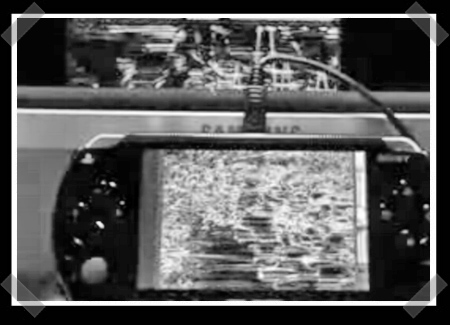
Follow along with this project and you could use your PSP as a display for your computer. The software, available for download on the site, gives you a 960×544 display. The data is compressed, sent to the PSP, then decompressed for display. Though that sounds clunky, the video after the break shows it working pretty smoothly with some Winamp visualization. Only 32 bit Windows XP or older is supported currently.

Continue reading “Use A PSP As An Extended Display”

Parts: MicroSD Memory Card Holders

SD cards add cheap persistent memory to your project, but the holder takes a lot of board space. A smaller option is the microSD flash format. MicroSD cards are compatible with regular SD cards, and most come with a free adapter. We looked at four holders for our mini web server. Which should you choose? Read about our experience below. Continue reading “Parts: MicroSD Memory Card Holders”