
Passive Network Tap

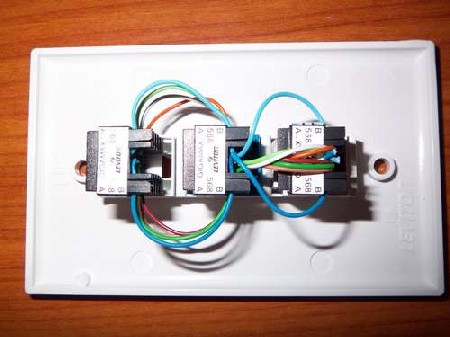
Making a passive network tap can be an easy and inexpensive undertaking as shown in this Instructable. Passive monitoring or port mirroring is needed because most networks use switches which isolate the network traffic and this does not allow for the entire network to be monitored.  This example uses a single tap, using multiple taps will provide access to the full-duplex data separately. By using two taps you are able to monitor inbound data that is passed through one tap, and outbound data that is passed through the other tap.  Separate taps are desired because most sniffer software handles half-duplex traffic only and requires two network cards for full-duplex.
Continue reading “Passive Network Tap” →

Apple Tries To Stop Sneaker Hackers

Apparently, Apple has decided that extending DRM to your Nike accessories will keep hackers at bay.  Sick of people cutting the sensors out of their Nike shoes for use on other apparell, they have applied for a patent. Ever noticed the warning that it’s illegal to pull the tag off of a mattress?  Did that stop you?

[via Slashdot]

Cheap USB LCD

Part of the pre-Vista hype was the idea of auxiliary displays. Laptop and desktop displays would provide additional information from your computer. The Vista SideShow feature hasn’t really caught on and the surplus hardware has started to drop in price. Take this PicoLCD for example: It’s a 4×20 character LCD with an IR receiver, multiple buttons, and a USB connection. The best part is: it has Linux drivers and an open source SDK. We know  a lot of you like wiring up HD44780 based screens, but it’s hard to pass up a $50 prepackaged solution with such nice extras.

[via Engadget]

Reverse Engineering Silicon Logic

[Karsten Nohl] has recently joined the team on Flylogic’s blog. You may remember him as part of the team that reverse engineered the crypto in MiFare RFID chips. In his first post, he starts out with the basics of identifying logic cells. By studying the specific layout of the transistors you can reproduce the actual logic functions of the chip. The end of post holds a challenge for next week (pictured above). It has 34 transistors, 3 inputs, 2 outputs, and time variant behavior. Also, check out the Silicon Zoo which catalogs individual logic cells for identification.

IPhone Screengrab Issues

This is unfortunately another story we missed out on while we were trying to keep things from burning down. We told you that [Jonathan Zdziarski] was going to demonstrate iPhone lock code bypassing in a webcast. The real surprise came when he pointed out that the iPhone takes a screenshot every time you use the home button. It does this so it can do the scaling animation. The image files are presumably deleted immediately, but as we’ve seen before it’s nearly impossible to guarantee deletion on a solid state device. There’s currently no way to disable this behavior. So, even privacy conscious people have no way to prevent their iPhone from filling up storage with screenshots of all their text message, email, and browsing activities. Hopefully Apple will address this problem just like they did with the previous secure erase issue. O’Reilly promises to publish the full webcast soon.

[via Gizmodo]

LED Coffee Table

Spark Fun’s centerpiece at Maker Faire back in May was this LED coffee table. They just recently posted about how it was constructed. The surface is made from 64 8×8 RGB LED matrix boards totaling 4096 LEDs. The eight rows are connected to a custom router board so that one SPI line can control the entire display. The main microcontroller is an Olimex LPC2106 dev board. It runs a four player cooperative pong game where multiple balls are added over time. Each player gets a classic Atari paddle for control. You can see a video of the table running a screensaver after the break. Continue reading “LED Coffee Table” →

Xbox 360 Wireless Visual Interface

[jon barber] pointed out another great project on the benheck forums that hasn’t gotten much attention. [techknott] built a wireless video interface for his Xbox 360. Think of it as a sort of video game thin client. It has the form-factor of a portable but doesn’t include the 360’s components. Instead it has a 1.2GHz A/V receiver and the guts of a wireless controller. The specific transmitter was chosen because it wouldn’t interfere with the 2.4GHz controller. The power supply is two 2600mAh batteries running at 7.5V with a built in charging circuit. The draw from the screen is ~500mA. The entire unit is 1 inch thick.









