Once upon a time, countries protected their domestic industries with tariffs on imports. This gave the home side a price advantage over companies operating overseas, but the practice has somewhat fallen out of fashion in the past few decades.
As far as interesting problems go, few can really compete with the perennial question: “Are we alone?” The need to know if there are other forms of intelligent life out there in the galaxy is deeply rooted, and knowing for sure either way would have massive implications.
But it’s a big galaxy, and knowing where to look for signals that might mean we’re not alone is a tough task. Devoting limited and expensive resources to randomly listen to chunks of the sky in the hopes of hearing something that’s obviously made by a technical civilization is unlikely to bear fruit. Much better would be to have something to base sensible observations on — some kind of target that has a better chance of paying off.
Luckily, a chance observation nearly 50 years ago has provided just that. The so-called Wow! Signal, much discussed but only occasionally and somewhat informally studied, has provided a guidepost in the sky, thanks in part to a citizen scientist with a passion for finding exoplanets.
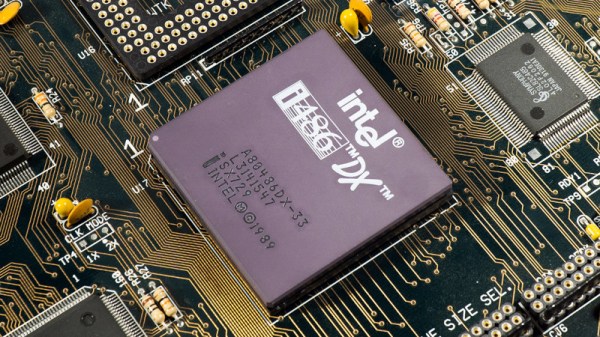
A footnote in the week’s technology news came from Linus Torvalds, as he floated the idea of abandoning support for the Intel 80486 architecture in a Linux kernel mailing list post. That an old and little-used architecture might be abandoned should come as no surprise, it’s a decade since the same fate was meted out to Linux’s first platform, the 80386. The 486 line may be long-dead on the desktop, but since they are not entirely gone from the embedded space and remain a favourite among the retrocomputer crowd it’s worth taking a minute to examine what consequences if any there might be from this move.
Is A 486 Even Still A Thing?
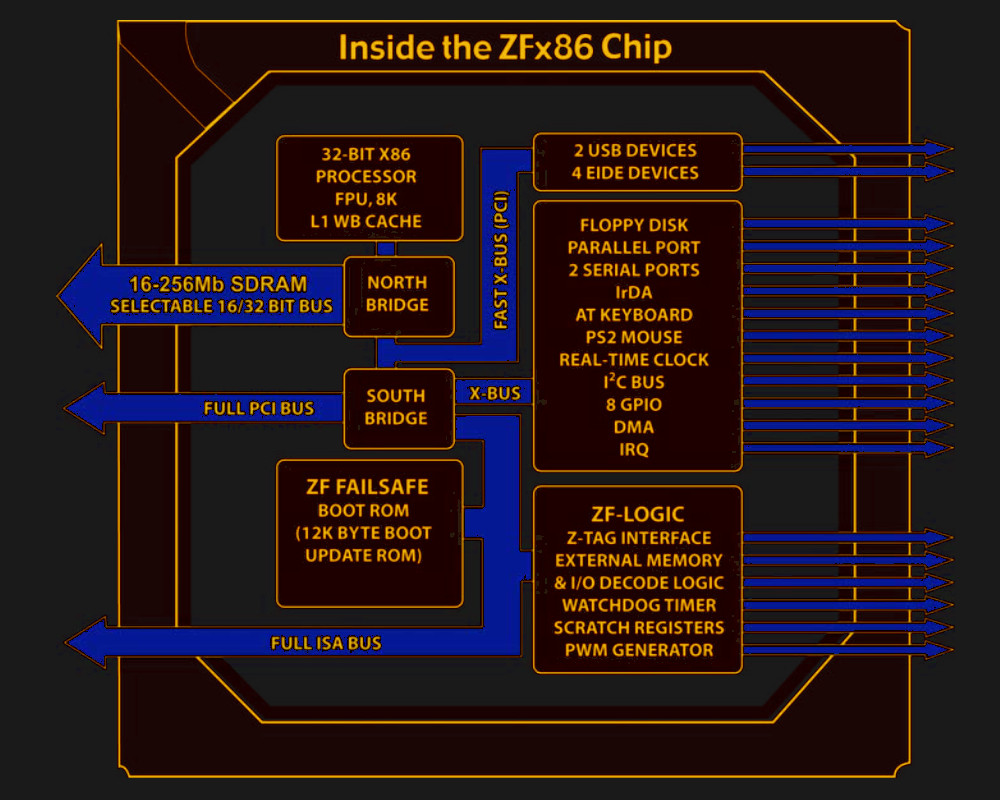
An entire 486 PC in a chip that only uses 1W, that would have been amazing in 1994!
The Intel 80486 was released in 1989, and was substantially an improved version of their previous 80386 line of 32-bit microprocessors with an on-chip cache, more efficient pipelining, and a built-in mathematical co-processor. It had a 32-bit address space, though in practice the RAM and motherboard constraints of the 1990s meant that a typical 486 system would have RAM in megabyte quantities. There were a range of versions in clock speeds from 16 MHz to 100 MHz over its lifetime, and a low-end “SX” range with the co-processor disabled. It would have been the object of desire as a processor on which to run WIndows 3.1 and it remained a competent platform for Windows 95, but by the end of the ’90s its days on the desktop were over. Intel continued the line as an embedded processor range into the 2000s, finally pulling the plug in 2007. The 486 story was by no means over though, as a range of competitors had produced their own take on the 486 throughout its active lifetime. The non-Intel 486 chips have outlived the originals, and even today in 2022 there is more than one company making 486-compatible devices. RDC produce a range of RISC SoCs that run 486 code, and according to the ZF Micro Solutions website they still boast of an SoC that is a descendant of the Cyrix 486 range. There is some confusion online as to whether DM&P’s Vortex86 line are also 486 derivatives, however we understand them to be descendants of Rise Technology’s Pentium clone. Continue reading “Bye Bye Linux On The 486. Will We Miss You?”→
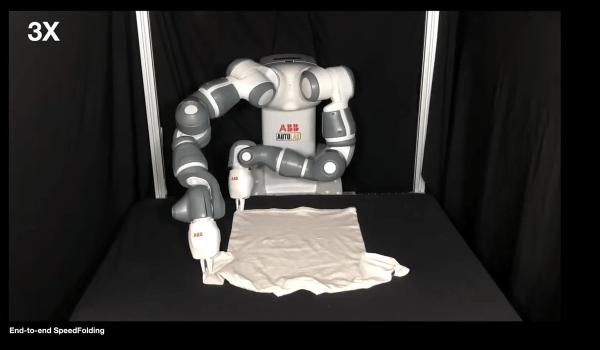
Robots are used in all sorts of industries on a wide variety of tasks. Typically, it’s because they’re far faster, more accurate, and more capable than we are. Expert humans could not compete with the consistent, speedy output of a robotic welder on an automotive production line, nor could they as delicately coat the chocolate on the back of a KitKat.
However, there are some tasks in which humans still have the edge. Those include driving, witty repartee, and yes, folding laundry. That’s not to say the robots aren’t trying, though, so let’s take a look at the state of the art.
Quantum computers present a unique threat to many aspects of modern information technology. In particular, many cryptographic systems could be at risk of compromise in the event a malicious actor came into possession of a capable quantum computer.
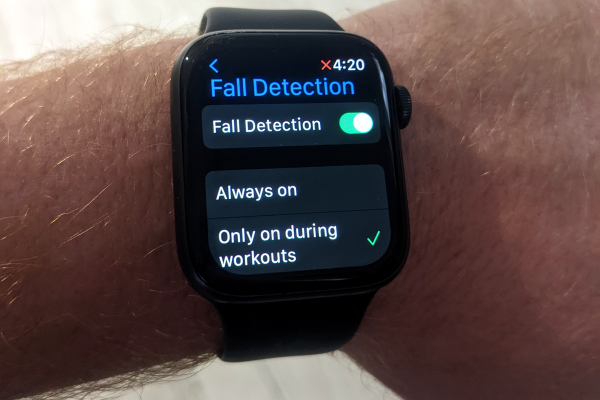
Apple has been busy adding new features to its smartphone and smartwatch offerings. Its new iPhone 14 and Apple Watch 8 now feature a safety system that contacts emergency services in the event the user is in a automobile accident.
As with so many new technologies though, the feature has fallen afoul of the law of unintended consequences. Reports are that the “crash detection system” is falsely triggering on rollercoasters and in other strange circumstances. Let’s take a look at how these systems work, and why this might be happening.
We have many kinds of pills available these days to treat all kinds of different disorders. Of course, the problem with pills is that they don’t work if you don’t take them. Even Worse, for some medicines, missing a dose can cause all kinds of undesirable withdrawl effects and set back a patient’s treatment.
Smart pills aim to fix this problem with a simple monitoring solution that can tell when a patient has taken their medication. They’re now publicly available and authorized for use, so let’s look at how they work.