The London Underground Is Too Hot, But It’s Not An Easy Fix

The London Underground is an iconic piece of Victorian era engineering. What started in 1863 quickly became a core piece of infrastructure that would define the modern character of the British capital. It’s grown and changed immensely in the many years that have passed. Sadly, increasing patronage and more trains have created problems that the original designers never envisaged.

Deep in those London tunnels lies an engineering challenge. The Tube is literally cooking itself. Every day, millions of commuters descend into a network of tunnels that have been absorbing heat since the reign of Queen Victoria. Those clay-lined tubes have been soaking up excess thermal energy like a giant underground radiator, and now they’re giving it back with interest. The tunnels are simply too hot, and cooling them down is inordinately difficult.

The Perfect Storm of Thermal Chaos

The Tube’s heat problem isn’t just about one thing gone wrong – it’s about everything gone wrong at once. When Victorian engineers designed these tunnels, cooling wasn’t a major consideration. The tight, compact tunnels were built deep, nestled in the clay beneath London. In the early days, temperatures in the Underground were considered comfortably low.

“The Underground’s the only spot for comfort when the days are hot; it is cooler below.” – London Underground poster, 1926

Originally, the clay surrounding the tunnels sat at around 14°C, acting as a heat sink for the network. However, over the years, with more trains coming and going and more heat pouring in, the temperature has risen. It now typically sits anywhere from 19° to 26 °C. That’s just the earth around the tunnels, though. Air temperatures are worse—hitting as high as 47°C during a 2006 heatwave. The problem has been a continual bugbear of the beloved Tube, with concerns that future heatwaves could see temperatures rise ever higher. Continue reading “The London Underground Is Too Hot, But It’s Not An Easy Fix”

Scratch And Sniff Stickers And The Gas Panic Of ’87

Ever wonder how those scratch and sniff stickers manage to pack a punch of aroma into what looks like ordinary paper? The technology behind it is deceptively clever, and has been used everywhere from children’s books to compact discs.

Most Scratch and Sniff stickers are simple nose-based novelties, though they’ve seen other uses as diagnostic tools, too. As Baltimore Gas and Electric discovered in 1987, though, these stickers can also cause a whole lot of hullabaloo. Let’s explore how this nifty technology works, and how it can go—somewhat amusingly—wrong.

The Science

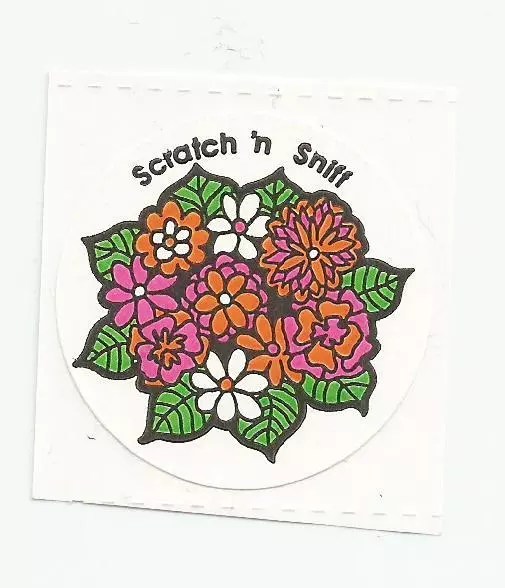
3M developed the scratch and sniff technology in the 1960s. It quickly gained iconic status in the decades that followed. via eBay

At its heart, scratch and sniff technology involves the microencapsulation of tiny smellable particles, which are then impregnated into stickers or other paper products. Microscopic amounts of aromatic materiale are trapped inside gelatin or plastic capsules, and then stuck to paper. When you scratch the surface, these capsules rupture, releasing their aromatic cargo into the air. It’s an elegant feat of materials engineering, originally developed by Gale W. Matson. Working at 3M in the 1960s, he’d been intending to create a new kind of carbonless copy paper.

Scratch and Sniff stickers soon became a popular novelty in the 1970s. The catchy name was perfect—it told you everything you need to know. A children’s book named Little Bunny Follows His Nose was one of the first widespread applications. Released in 1971, it  was entirely based around the whole scratch and sniff concept. Children could read along and scratch various illustrations of peaches, roses and pine needles to see what they smelled like. The book was reprinted multiple times, remaining in publication for over three decades.

Other popular media soon followed. Pop rock band The Raspberries put a scratch and sniff sticker on their album cover in 1972. Director John Waters would go on to release his 1981 film Polyester with an accompanying “Odorama” card, which featured multiple smells for viewers to sniff during the movie. The concept still resurfaces occasionally, though the gimmick is now well-worn. In 2010, Katy Perry’s Teenage Dream album smelled like cotton candy thanks to a scratch-and-sniff treatment on the Deluxe Edition, and King Gizzard & The Lizard Wizard put a similar touch on 2017’s Flying Microtonal Banana. Continue reading “Scratch And Sniff Stickers And The Gas Panic Of ’87”

Exploring The Sounds And Sights Of Alien Worlds

The 20th century saw humankind’s first careful steps outside of the biosphere in which our species has evolved. Whereas before humans had experienced the bitter cold of high altitudes, the crushing pressures in Earth’s oceans, as well as the various soundscapes and vistas offered in Earth’s biosphere, beyond Earth’s atmosphere we encountered something completely new. Departing Earth’s gravitational embrace, the first humans who ventured into space could see the glowing biosphere superimposed against the seemingly black void of space, in which stars, planets and more would only appear when blending out the intense light from the Earth and its life-giving Sun.

Years later, the first humans to set foot on the Moon experienced again something unlike anything anyone has experienced since. Walking around on the lunar regolith in almost complete vacuum and with very low gravity compared to Earth, it was both strangely familiar and hauntingly alien. Although humans haven’t set foot on Mars yet, we have done the next best thing, with a range of robotic explorers with cameras and microphones to record the experience for us here back on Earth.

Unlike the Moon, Mars has a thin but very real atmosphere which permits the travel of soundwaves, so what does the planet sound like? Despite what fictional stories like Weir’s The Martian like to claim, reality is in fact stranger than fiction, with for example a 2024 research article by Martin Gillier et al. as published in JGR Planets finding highly variable acoustics during Mars’ seasons. How much of what we consider to be ‘normal’ is just Earth’s normal?

Continue reading “Exploring The Sounds And Sights Of Alien Worlds”

Boss Byproducts: Corium Is Man-Made Lava

So now we’ve talked about all kinds of byproducts, including man-made (Fordite), nature-made (fulgurites), and one that’s a little of both (calthemites). Each of these is beautiful in its own way, but I’m not sure about the beauty and merit of corium — that which is created in a nuclear reactor core during a meltdown.

A necklace made to look like corium.
A necklace made to look like corium. Image via OSS-OSS

Corium has the consistency of lava and is made up of many things, including nuclear fuel, the products of fission, control rods, any structural parts of the reactor that were affected, and products of those parts’ reaction with the surrounding air, water, and steam.

If the reactor vessel itself is breached, corium can include molten concrete from the floor underneath. That said, if corium is hot enough, it can melt any concrete it comes in contact with.

So, I had to ask, is there corium jewelry? Not quite. Corium is dangerous and hard to come by. But that doesn’t stop artisans from imitating the substance with other materials.

Continue reading “Boss Byproducts: Corium Is Man-Made Lava”

Humans Can Learn Echolocation Too

Most of us associate echolocation with bats. These amazing creatures are able to chirp at frequencies beyond the limit of our hearing, and they use the reflected sound to map the world around them. It’s the perfect technology for navigating pitch-dark cave systems, so it’s understandable why evolution drove down this innovative path.

Humans, on the other hand, have far more limited hearing, and we’re not great chirpers, either. And yet, it turns out we can learn this remarkable skill, too. In fact, research suggests it’s far more achievable than you might think—for the sighted and vision impaired alike!

Continue reading “Humans Can Learn Echolocation Too”

Apollo-era PCB Reverse Engineering To KiCad

Earlier this year [Skyhawkson] got ahold of an Apollo-era printed circuit board which he believes was used in a NASA test stand. He took high quality photos of both sides of the board and superimposed them atop each other. After digging into a few obsolete parts from the 1960s, he was able to trace out the connections. I ran across the project just after making schematics for the Supercon badge and petal matrix. Being on a roll, I decided to take [Skyhawkson]’s work as a starting point and create KiCad schematics. Hopefully we can figure out what this circuit board does along the way.

The board is pretty simple:

  • approximately 6.5 x 4.5 inches
  • 22 circuit edge connector 0.156 in pitch
  • 31 ea two-terminal parts ( resistors, diodes )
  • 3 ea trimmer potentiometers
  • 7 ea transistors
  • parts arranged in 4 columns

Continue reading “Apollo-era PCB Reverse Engineering To KiCad”

Rendering of a JetZero blended wing body aircraft with US Air Force markings. (Credit: US Air Force)

Blended Wing Body Passenger Airplanes And The End Of Winged Tubes

The SR-71 with its blended wing body design. (Photo by Tech. Sgt. Michael Haggerty, US Air Force, 1988)

Ask someone to picture an airplane and they’re likely to think of what is essentially a tube with wings and a stabilizing tail tacked onto one end of said tube. Yet it is also no secret that the lift produced by such a tube is rather poor, even if they’re straightforward for loading cargo (static and self-loading) into them and for deciding where to put in windows. Over the decades a number of alternative airplane designs have been developed, with some of them also ending up being produced. Here most people are probably quite familiar with the US Air Force’s B-2 Spirit bomber and its characteristic flying wing design, while blended wing body (BWB) maintains a somewhat distinctive fuselage, as with for example the B-1 Lancer.

Outside of military airplanes BWBs are a pretty rare sight. Within the world of passenger airplanes the tube-with-wings pattern that the first ever passenger airplanes adopted has persisted with the newest designs, making it often tricky to distinguish one airplane from another. This could soon change, however, with a strong interest within the industry for passenger-oriented BWBs. The reason for this are the significant boosts in efficiency, quieter performance and more internal (useful) volume, which makes airline operators very happy, but which may also benefit passengers.

With that said, how close are we truly to the first BWB passenger airplane delivery to an airline?

Continue reading “Blended Wing Body Passenger Airplanes And The End Of Winged Tubes”