Visual 3D Print Finishing Guide

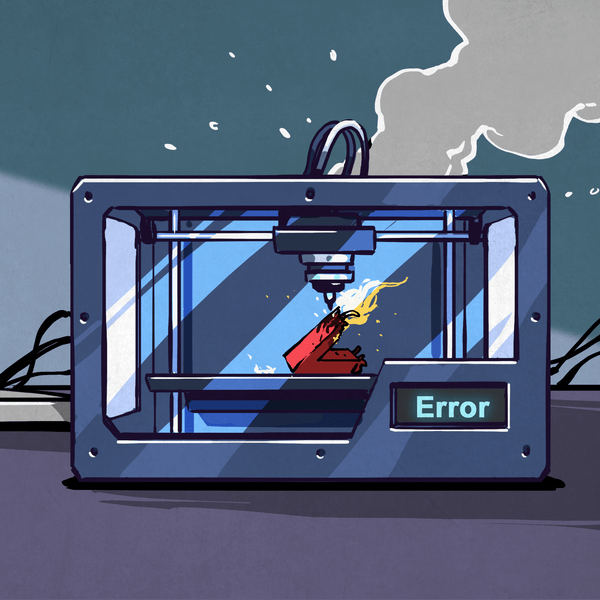
With 3D printers now dropping to record low prices, more and more people are getting on the additive manufacturing bandwagon. As a long time believer in consumer-level desktop 3D printing, this is a very exciting time for me; the creativity coming out of places like Thingiverse or the 3D printing communities on Reddit is absolutely incredible. But the realist in me knows that despite what slick promotional material from the manufacturers may lead you to believe, these aren’t Star Trek-level replicators. What comes out of these machines is often riddled with imperfections (from small to soul crushing), and can require considerable cleanup work before they start to look like finished pieces.

If all you hope to get out of your 3D printer are some decent toy boats and some low-poly Pokemon, then have no fear. Even the most finicky of cheap printers can pump those out all day. But if you’re looking to build display pieces, cosplay props, or even prototypes that are worth showing to investors, you’ve got some work cut out for you.

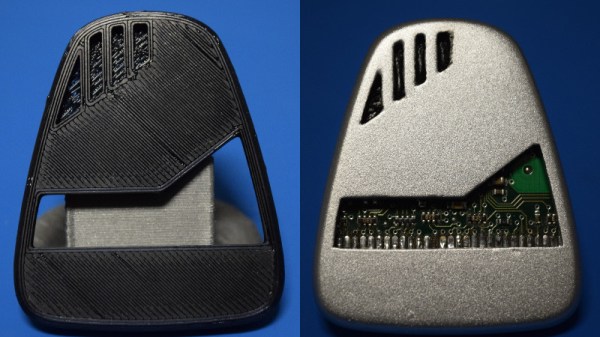
With time, patience, and a few commercial products, you can accomplish the ultimate goal: turning a 3D printed object into something that doesn’t look like it was 3D printed. For the purposes of this demonstration I’ll be creating a replica of the mobile emitter used by the “Emergency Medical Hologram” in Star Trek: Voyager. I can neither confirm nor deny I selected this example due to the fact that I’m currently re-watching Voyager on Netflix. Let’s make it look good.

Continue reading “Visual 3D Print Finishing Guide”

Maria Goeppert-Mayer: The Other Nobel Prize Winner

Maria Goeppert-Mayer was one of only two women to win the Nobel prize for physics thus far, the other being Marie Curie. And yet her name isn’t anywhere near as well known as Marie Curie’s. She also worked on the Manhattan Project and spent time during her long career with Enrico Fermi, Max Born, Edward Teller, and many other physics luminaries.

She was “other” in another way too. She followed her husband from university to university, and due to prevailing rules against hiring both husband and wife, often had to take a non-faculty position, sometimes even with no salary. Yet being the other, or plus-one, seemed to give her what every pure scientist desires, the freedom to explore. And explore she did, widely. She was always on the cutting edge, and all the time working with the leading luminaries of physics. For a scientist, her story reads like it’s too good to be true, which is what makes it so delightful to read about.

Continue reading “Maria Goeppert-Mayer: The Other Nobel Prize Winner”

Hackaday Links Column Banner

Hackaday Links: Supercon Sunday

This is not your normal Sunday links post. This is Superconference Sunday, and right now there are dozens of awesome projects floating around our conference in Pasadena. This links post will be mostly the projects from Supercon, but before that there’s some stuff we need to clear out of the queue:

Concerning other conferences, the Sparklecon site is up. Why go to Sparklecon? It’s a blast.

Tindie is worldwide! There were a bunch of Tindie sellers at the Maker Faire Adelaide this weekend. YouTuber MickMake is a friend of Tindie and we’re teaming up to give away a few prizes from Australian Tindie sellers. You can check out the full details here.

There’s an Internet of Things thing from 4D Systems. It’s an ESP8266 and a nice small display.

Well, crap. It might have finally happened. [Maxim Goryachy] and [Mark Ermolov] have obtained fully functional JTAG for Intel CSME via USB DCI. What the hell does that mean? It means you can plug something into the USB port of a computer, and run code on the Intel Management Engine (for certain Intel processors, caveats apply, but still…). This is doom. The Intel ME runs below the operating system and has access to everything in your computer. If this is real — right now we only have a screenshot — computer security is screwed, but as far as anyone can tell, me_cleaner fixes the problemAlso, Intel annoyed [Andy Tanenbaum].

With that out of the way, here’s some stuff from this weekend’s Supercon:

Continue reading “Hackaday Links: Supercon Sunday”

The Clutter Manifesto

My basement workshop is so crammed full of stuff I literally can’t use it. My workbench, a sturdy hardwood library table, is covered in junk to the point that I couldn’t find a square foot that didn’t have two layers of detritus on it — the top layer is big things like old projects that no longer work, boxes of stuff, fragile but light things perched on top. Underneath is the magma of bent resistors, snippets of LED strip, #4 screws, mystery fasteners I’ll never use, purple circuit boards from old versions of projects, and a surprising number of SparkFun and Adafruit breakouts that have filtered down from higher up in the heap.

When work on something I bring the parts up to the dining room and work on the table, which is great for many reasons — more space, better light, and superior noms access top the list. The down side is that I don’t devote any time to making my real shop into a viable working place, and it becomes a cluttered store room by default.

I am therefore focusing on a four-part plan to reclaim my work space from heaps of junk.

Continue reading “The Clutter Manifesto”

Linux Fu: System Administration Made Easier

Linux can have a somewhat split personality. If you use it as a desktop OS, it has a lot of GUI tools, although sometimes you still need to access the command line. If you use it as a headless server, though, you probably ought to know your way around the command line pretty well. This is especially true if you don’t want to litter up your hard drive (and CPU) with X servers and other peculiarities of the graphical user interface.

Personally, I like the command line, but I am realistic enough to know that not everyone shares that feeling. I’ll also admit that for some tasks — especially those you don’t do very often — it is nice to have some helpful buttons and menus. There are several administration tools that you might be interested in using to handle administration tasks on your Linux machines. I’m going to look at two of them you might want to experiment with that both use a Web browser to provide their interface.

Continue reading “Linux Fu: System Administration Made Easier”

Live Streams And Hack Chat From The Hackaday Superconference

Want to experience the Hackaday Superconference from the comfort of your own workshop? Just follow us on YouTube or on Facebook as two days of live streaming talks begin this Saturday morning.

This weekend is the Hackaday Superconference, the greatest hardware conference on Earth. While the Superconference is the most amazing gatherings of engineers and engineering enthusiasts, we realize that not everyone can make it out to our ultimate hardware conference. This year, we’re doing something special for everyone who can’t make it out — we’re opening up live streams and live chat to those who can’t attend. This is your chance to take part in the Superconference, even if you’re thousands of miles away.

You are invited to the chat room for the event. Join the Superconference chat right now and be part of the culture of the Hacker Village that springs to life during Supercon.

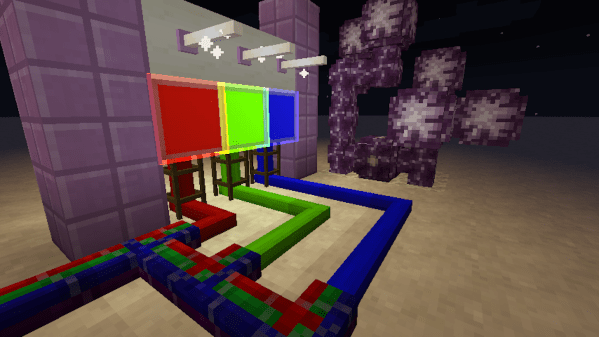
Minecraft And Forge: Try This Amazing Way To Visualize Logic

I’ve got virtual circuits on the mind lately. There are a myriad of tools out there that I could pick up to satisfy this compulsion. But the one I’m reaching for is Minecraft. I know what you’re thinking… a lot of people think Minecraft is getting long in the tooth. But chances are you never tried some of the really incredible things Minecraft can do when it comes to understanding logic structures. This goes way beyond simple circuits and easily hops back and forth over the divide between hardware logic and software logic.

Continue reading “Minecraft And Forge: Try This Amazing Way To Visualize Logic”