Ask Hackaday: What Ever Happened To The Hero Nerd?

Knowing absolutely nothing about you other than the fact that you’re currently reading Hackaday, I can predict with a high degree of certainty that we’re both fond of at least a few of the same movies. That’s not to say they’re necessarily our favorite works of art. Indeed, in some cases they may even be objectively bad films. But the memory of them has stuck with us — and by extension nearly everyone else in the hacker and maker community — for decades.

Even if you don’t remember all the little details, you’ll never forget the names: movies like WarGames, Ghostbusters, Back to the Future, and Short Circuit. Stories that showed smart people using their intellect and a bit of cobbled together hardware to triumph over the bad guys. The tech wasn’t always believable, sometimes it was downright farcical. But they made it seem real, and by the end of the story when they won the day using brains and a soldering iron rather than fists or a gun, the minutia of how it all worked wasn’t really that important anyway.
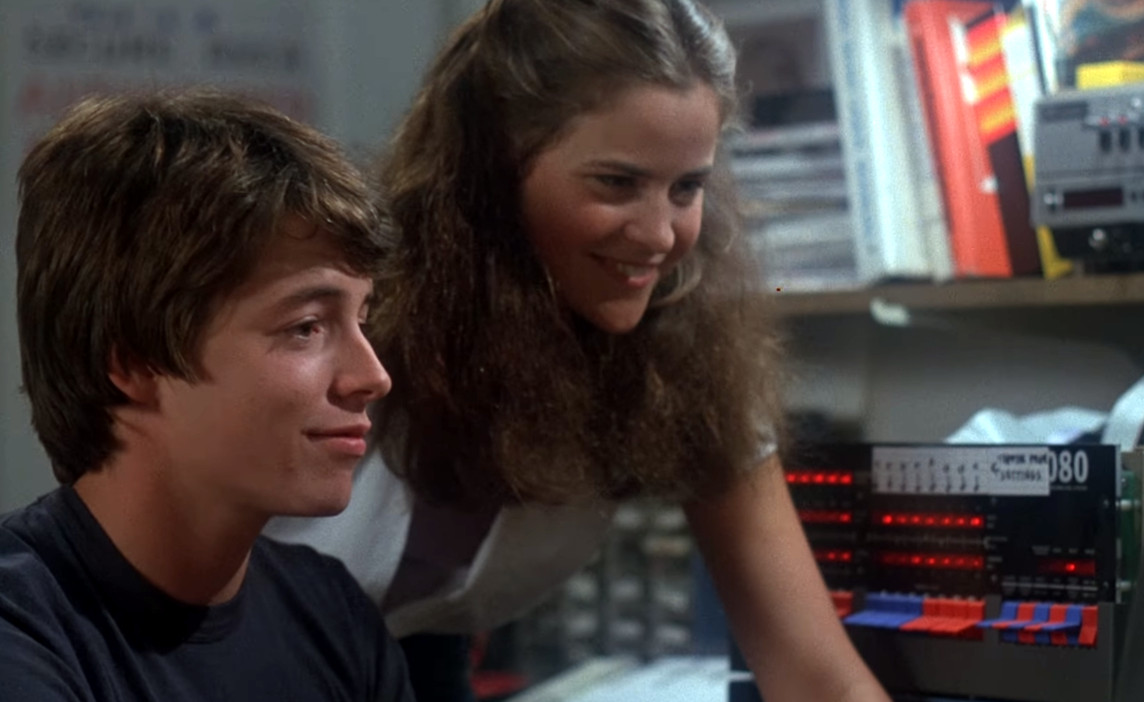
It’s not a stretch to say that films such as these helped put many of us on a path towards science and technology. For those with an interest in more cerebral pursuits, seeing a scientist or an engineer save the day was hugely influential. How many engineers got their start watching Scotty frantically eke just a bit more power out of the Enterprise?

But as we recently discussed some of these classic movies behind the scenes here at Hackaday, it struck us that all of the best examples we could come up with were now 20, 30, or even 40 years old. That’s not to say there aren’t a few contemporary standouts, but they mostly seem to be biopics or other historical dramatizations which don’t quite scratch the same itch. Even so, none of them appear to have had the cultural impact necessary to stand the test of time in the same way their predecessors have.

So where have all of Hollywood’s heroic nerds gone, and what does it mean for future generations if these niche role models are no longer represented?

Continue reading “Ask Hackaday: What Ever Happened To The Hero Nerd?”

Patterns Everywhere

I studied physics in college, and I’m always surprised how fundamental some of the concepts are. Take waves for example. You really wouldn’t expect the same underlying concept to be at work on surface of a pond, the string of a guitar, light passing through two slits, and then in the probabilistic behavior of electrons orbiting inside nuclei. But here we are, in a world filled with wave-like phenomena.

What little control theory I know, I’ve learned in the school of hard knocks. But it’s equally amazing that the same basic concepts govern the tuning of car shock absorbers, PID controllers, active audio filters, and other more complex systems where feedback matters. Crucial in all of these systems is the judicious balance of amplification and damping.

And last week on vacation, learning to drive a covered wagon pulled by a heavy draft horse, I saw the same patterns again. The horse likes to pull, and when the wagon comes over the crest of the top of a hill, it starts to roll forward into his harness, pushing him from behind. This makes the horse uneasy, and he slows down, the wagon pushes him harder, and positive feedback gets out of control.

The man who was teaching me to drive the wagon said, “it’s not like a car” in that you don’t tap the brakes to slow down and then let go. Rather, you hold on the brakes for a lot longer than you think is necessary – until the horse tells you that he feels like pulling again – and then you let up only a tiny bit at a time. Otherwise, you end up in the under-damped case, where you let the wagon go too much, it slows the horse, you slam the brakes, the horse pulls hard, and you let up on the brakes, and the cycle continues anew.

What he meant by “not like a car” was that the brakes aren’t just slowing down the wagon, they’re adding damping to keep the horse-wagon system from oscillating. Once that clicked in my mind, everything was smooth sailing. After a couple of days, I even started adding some feed-forward to my mental PID controller, letting the brakes go a little bit more when the horse was approaching the bottom of a hill, and he obviously wanted to pick up a little more speed before the grade ahead.

The horse seemed happy that I was finally getting it, but I don’t think he had any understanding of tuning PID loops. He did have me pondering, on a long stretch of rolling hills on a summer morning, if there were a good minimal set of patterns that explained a maximal breadth of phenomena. I’m starting with the physics of waves and the control of feedback systems, but what’s next?

Between-Device Sharing Still Sucks

Once upon a time, computing was simple. You had files on a floppy disk. If you wanted to take them to a different computer, you ejected the disk from one machine and put it in another. It wasn’t fast, but it was easy and intuitive. Besides, you probably only had one computer of your own, anyway.

Life has since gotten a lot more complex. You’ve got a desktop, a laptop, a work laptop, your personal and business phones, and a smart watch to boot. You live amongst a swirling maelstrom of terabytes of data. Despite all the technical advances that got you here, it’s still a pain to get a file from one device to another, even when they’re sitting on the same desk. Why?!

Continue reading “Between-Device Sharing Still Sucks”

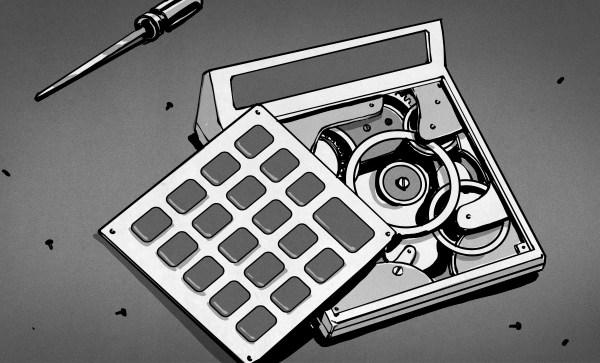
Ask Hackaday: Do We Need A 21st Century Calculator?

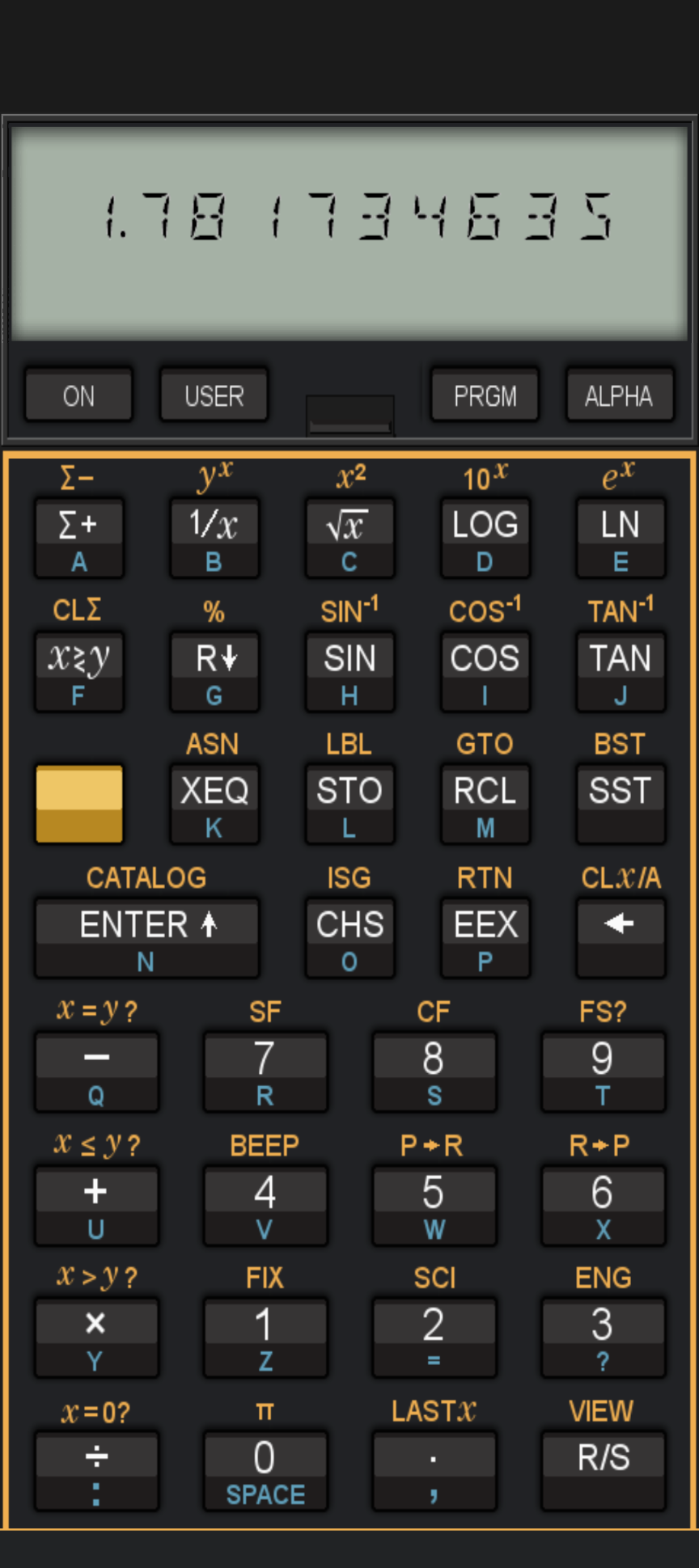
The HP-41C analog on my phone gives the right answer.

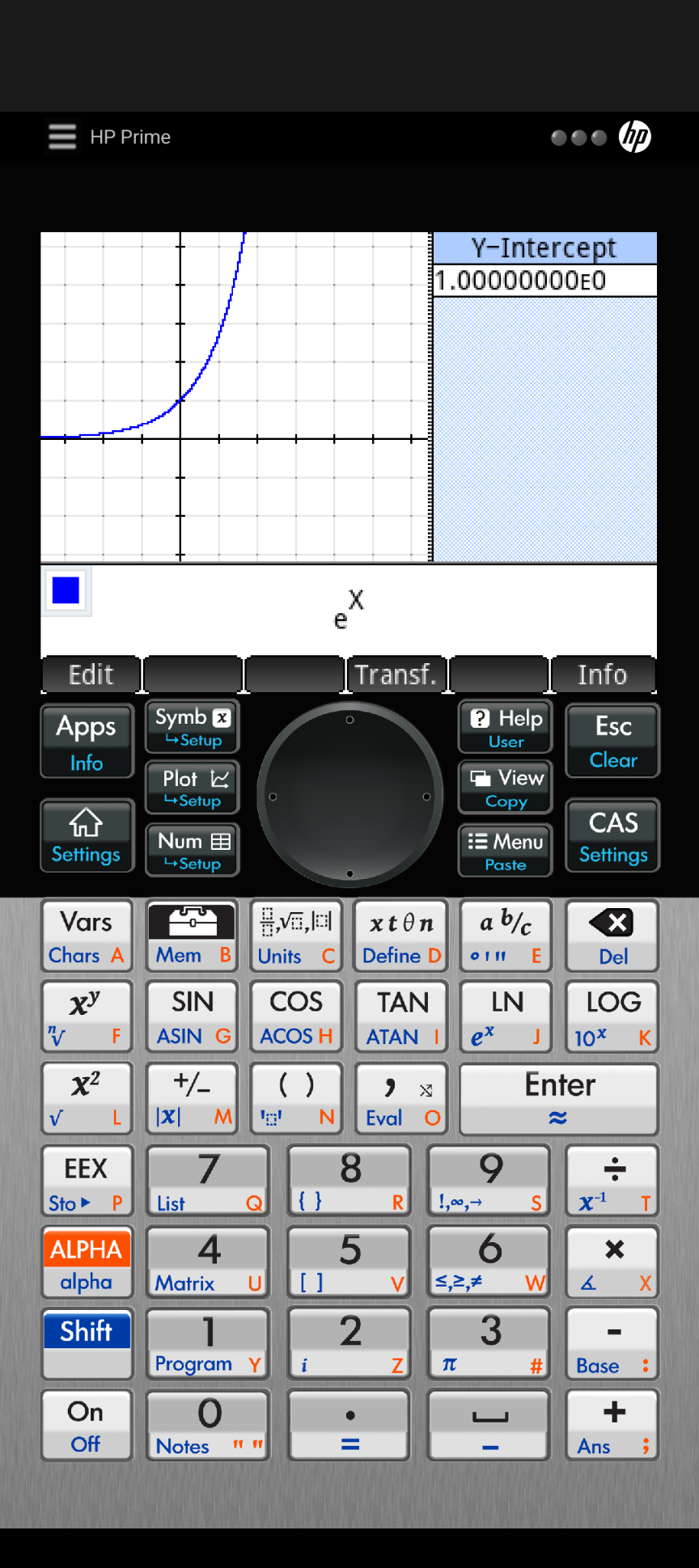
Three resistors in parallel: 4.7 k,Ω 22 kΩ, and 3.3 kΩ. Quick! What’s the equivalent value? You can estimate it, of course, but if you want the actual 1.8 kΩ (approximately) answer, you probably reached for some kind of calculating aid. I have two slide rules on my desk, and plenty more a few steps away, but I don’t use them much, honestly. I have a very old HP-41C — arguably the best calculator ever made — but I am usually afraid to use it as it is almost 50 years old and difficult to repair. I also have an HP-28S on my desk, a replica HP-41C, and a few others in desk drawers. There are also dozens of calculators on my desktop computer, my phone –including the official HP Prime app — and the web browser.

I often see newer calculators from HP, like the Prime G2, or “new” HP-like calculators like the ones from SwissMicros, and think I should pick one up. Well, technically, HP licensed their calculators to Moravia, so even a “real” HP calculator isn’t from HP anymore. But, in the end, I always realize that my need for a physical calculator is so diminished that I can’t justify buying anything new, and I can barely even spring for a $10 one at the thrift store unless it is a real collectible.

Mind you, I’m not talking about RPN versus algebraic. I could say the same thing for TI, Casio, or Sharp calculators. I just don’t know why I need one anymore, even though I still, for some strange reason, want them.

The Prime seems impressive, if I could ever find time to finish reading the manual.

For the record, I did use an HP-41C to check the resistor math, but it was in the form of an app on my phone, not a real calculator. On the same computer I’m writing this on, I have HP-41C emulators, the Prime emulator, and a bunch of other calculators. Yet I still pick up my phone and use the familiar key layout of the HP-41C. I don’t know why. The replica 41C, unfortunately, has a landscape-oriented keyboard, so while I like it, it doesn’t satisfy my finger’s muscle memory.

Which leads to this Ask Hackaday. Do you use a calculator? Why? If you don’t, do you use a fake calculator on your phone or computer? Or do you just send your math to Google or Wolfram? I suspect some of the answer will be generational. I was in high school before calculators started showing up in schools, but they took over quickly.

There is something satisfying about having a purpose-built device to do your math. No long boot sequence. No switching apps. No messages coming in while you are typing in numbers. For the ultimate convenience, you could wear it on your wrist. The Apollo mission that docked with a Russian spacecraft carried an HP-65, and nine early Space Shuttle missions used an HP-41C. But even astronauts now don’t have a standard-issue calculator. Pilots sometimes use electronic E6Bs, but many still use the mechanical version.

Of course, I do collect slide rules, so maybe I just need to accept that calculators are yet another tech relic to collect. But someone is still buying them. I’d like to be one of them.

Continue reading “Ask Hackaday: Do We Need A 21st Century Calculator?”

Copy Or Redesign?

We got asked a great question in the mailbag segment on the Podcast this week: are there hacks that we have read about on Hackaday that we use in our everyday life? The answer was absolutely yes, and I loved Tom’s take it often goes the other way – he sees a hack, tests it out, and then writes it up.

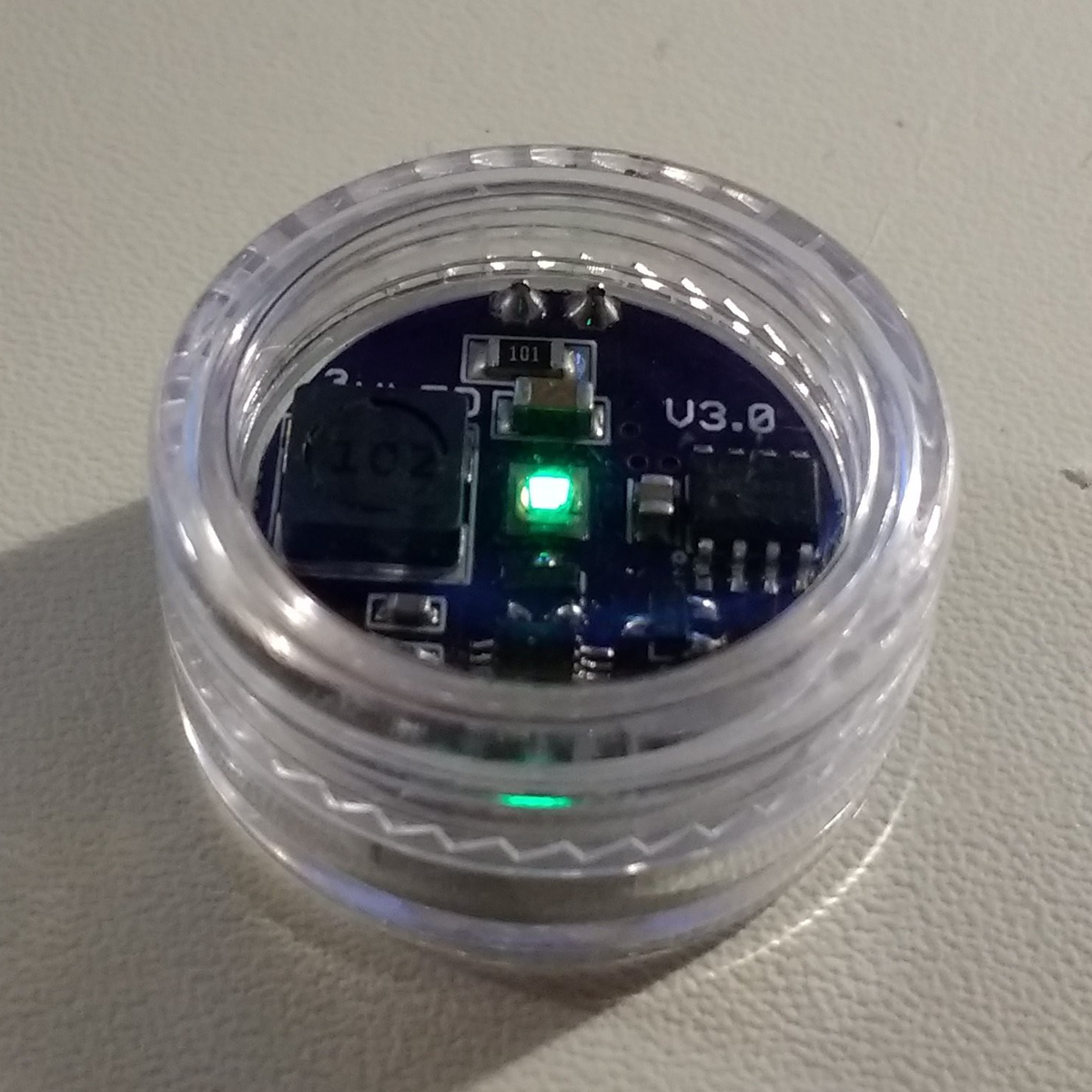
But I started looking around the office and I found more examples of projects that were absolutely inspired by projects I had seen on Hackaday, yet weren’t the same. I made a DIY mechanical keyboard because I saw someone else do it. There are a few home-made battery packs that I probably wouldn’t have attempted without having read about someone doing the same thing. I riffed on [Ted Yapo]’s Tritiled project, making a slightly inferior, but workable knockoff, and they’ve been glowing for many years now.

That got me to thinking about reproducing a project versus taking inspiration from it, and though I enjoy both, I’m find myself most often in the “inspiration” mode. I just can’t leave well enough alone, even when I’m fundamentally copying someone. NIH syndrome? Expediency? Probably both, and sometimes with a dose of hubris or feature creep.

Looking back at [Ted]’s TritiLED, though, I found some great examples in both the rebuild and redesign modes on Hackaday.io. [schlion]’s Making Ted Yapo’s TritiLED couldn’t be a clearer example of the former, and it’s great to look over his shoulder and appreciate all the lessons he learned along the way. [Stephan Walter]’s Yet another ultra low power LED is inspired by [Christoph Tack]’s Ultra low power LED, which is in turn inspired by [Ted]’s project, like a conceptual grandchild.

In a way, I look at this like with music: sometimes you play the notes the way they were written down, and sometimes you riff on someone else’s theme. Both are equally valid, and both owe a debt to the upstream source. Is Hackaday the hackers’ jazz club? And which of these modes do you find yourself working in most?

Peripherals Hacks

Custom peripheral projects are among the most rewarding. Especially if you’re like me and you sit at the computer eight hours per day, anything that you can use on a daily basis is super satisfying. This topic of DIY peripherals came up on the podcast while chatting with Kristina, who is no stranger to odd inputs herself.

We were talking about a trackball that had been modified to read twisting gestures, by a clever hijacking of the twin mouse sensors inside. If you do a lot of 3D modeling, you can absolutely get by with just a mouse and shift-ctrl-alt as modifiers, but it’s so much more immediate to use a dedicated 3D input device. (I’ve got an ancient serial Space Mouse just under my left hand as I type this.)

My old favorite, which I haven’t used in ages, is the guts of a 5” hard-drive platter stack that I turned into a scroll wheel. Unfortunately, I don’t have space for it on my desk anymore, but it was just so pleasing to scroll through a document with something that had some real chonky momentum to it.

And it’s easier than ever to make your own. The classic blocky macropad is a great introduction, but as long as you’re doing the design yourself, why not extend it, or at least make it fit your hand? Or take your flights of fancy even further away from the mainstream. Consider the Bluetooth mouse ring, for instance.

Point is, the software side of almost any peripheral device you can imagine is sorted out already, and interfacing with the hardware is equally simple. Peripheral hacks have such a low barrier to entry, but afford so many creative hardware possibilities. And nothing says “Jedi” like building your own lightsaber.

Ask Hackaday: Do You Need A Tablet?

There’s an old saying that the happiest days of a boat owner’s life are the day they buy the boat, and the day they sell it. For me, the happiest days of an Android tablet owner’s life are the day they buy a new one, and the day they buy a newer one. For some reason, I always buy tablets with great expectations, get them set up, and then promptly lose them in a pile on my desk, not to be seen again. Then a shiny new tablet gets my attention in a year or so, and the cycle repeats.

You might be thinking that I just buy cheap junk tablets. It is true that I have. But I have also bought new Galaxy and Asus tablets with the same result. Admittedly, I have owned several Surface Laptops and Pros, and I do use them. But I can’t remember the last time I have used one without the keyboard. They aren’t really tablets — they are just laptops that can also be heavy, awkward tablets.

Continue reading “Ask Hackaday: Do You Need A Tablet?”