Say what you will about suitcase computers, but at least most of them still have their keyboards with them. [danjovic] has this vintage Brazilian computer from the 1980s called a Gradiente Expert. These were MSX machines with Z80 chips that ran BASIC, DOS, and CP/M, and they looked like state-of-the-art dual-deck stereo systems. You can still find them pretty easily, but sadly, most of them have lost their rad mechanical keyboard with its giant arrow keys and proprietary connector.
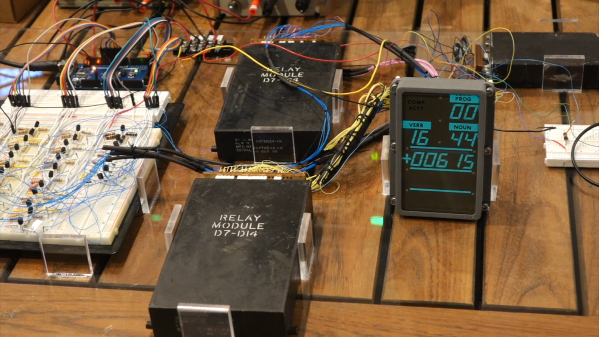
We love seeing old technology brought back to life, especially when it’s done in the context of how the device was originally intended to be used. And double points when it’s space gear, like what [Curious Marc] and his usual merry band of cohorts did when they managed to light up a couple of real Apollo DSKY displays.
The “Display and Keyboard” formed the human interface to the Apollo Guidance Computer, the purpose-built machine that allowed Apollo missions to fly to the Moon, land safely, and return to Earth. Complete DSKYs are hard to come by, but a lucky collector named [Marcel] was able to score a pair of the electroluminescent panels, one a prototype and one a flight-qualified spare. He turned them over to AGC guru [Carl Claunch], who worked out all the details of getting the display working again — a non-trivial task with a device that needs 250 volts at 800 Hertz.
The first third of the video below mostly concerns the backstory of the DSKY displays and the historical aspects of the artifacts; skip to around the 12:30 mark to get into the technical details, including the surprising use of relays to drive the segments of the display. It makes sense once you realize that mid-60s transistors weren’t up to the task, and it must have made the Apollo spacecraft a wonderfully clicky place. We were also intrigued by the clever way the total relay count was kept to a minimum, by realizing that not every combination of segments was valid for each seven-segment display.
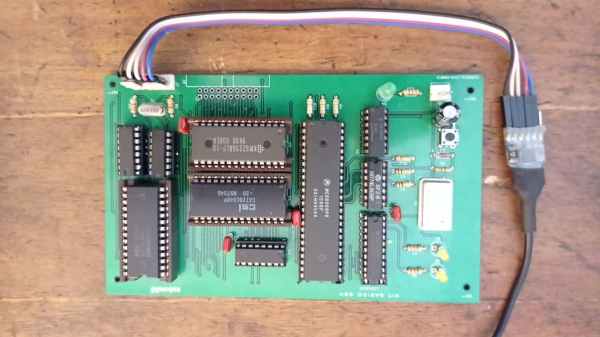
The 68000 chip was ubiquitous in the computing world well past its heyday in the 1980s. It was used as the basis for many PCs and video game consoles, and even in embedded microcontrollers. Now, one of its niche applications is learning about the internal functions of computers. 68000 builds are fairly common when building homebrew computers from scratch, but projects like these can be complicated and quickly get out of hand. This 68000 project, on the other hand, gets the job done with the absolute minimum of parts and really dives into the assembly language programming on these chips. (Google Translate from Spanish)
[osbox68] built this computer by first simulating its operation. Once he was satisfied with that, the next step was to actually build the device. Along with the MC68008 it only uses two other TTL chips, a respectable 32 kilobytes of ram, and additionally supports a serial port and an expansion bus. A few 74-series chips round out the build including a 74HC574 used for debugging support. With a custom PCB to tie everything together, it’s one of the most minimal 68000 builds we’ve seen that still includes everything needed to be completely functional.
After all, including the TTL and 74XX chips the entire circuit board only uses 10 integrated circuits and a few other passive elements for a completely functional retro computer. [osbox68] also includes complete schematics for building a PCB based on these chips to make construction that much easier. Of course, emulating an old microcontroller instead of using TTL components can save a lot of real estate on a PCB especially if you’re using something like an FPGA.
The world of antique furniture and the world of hackers rarely coincide, and perhaps the allure of the latest tech is greater for most of us than that of a Chipendale cabinet. But there are times when there are analagous situations in both worlds, so it’s worth taking a moment to consider something.
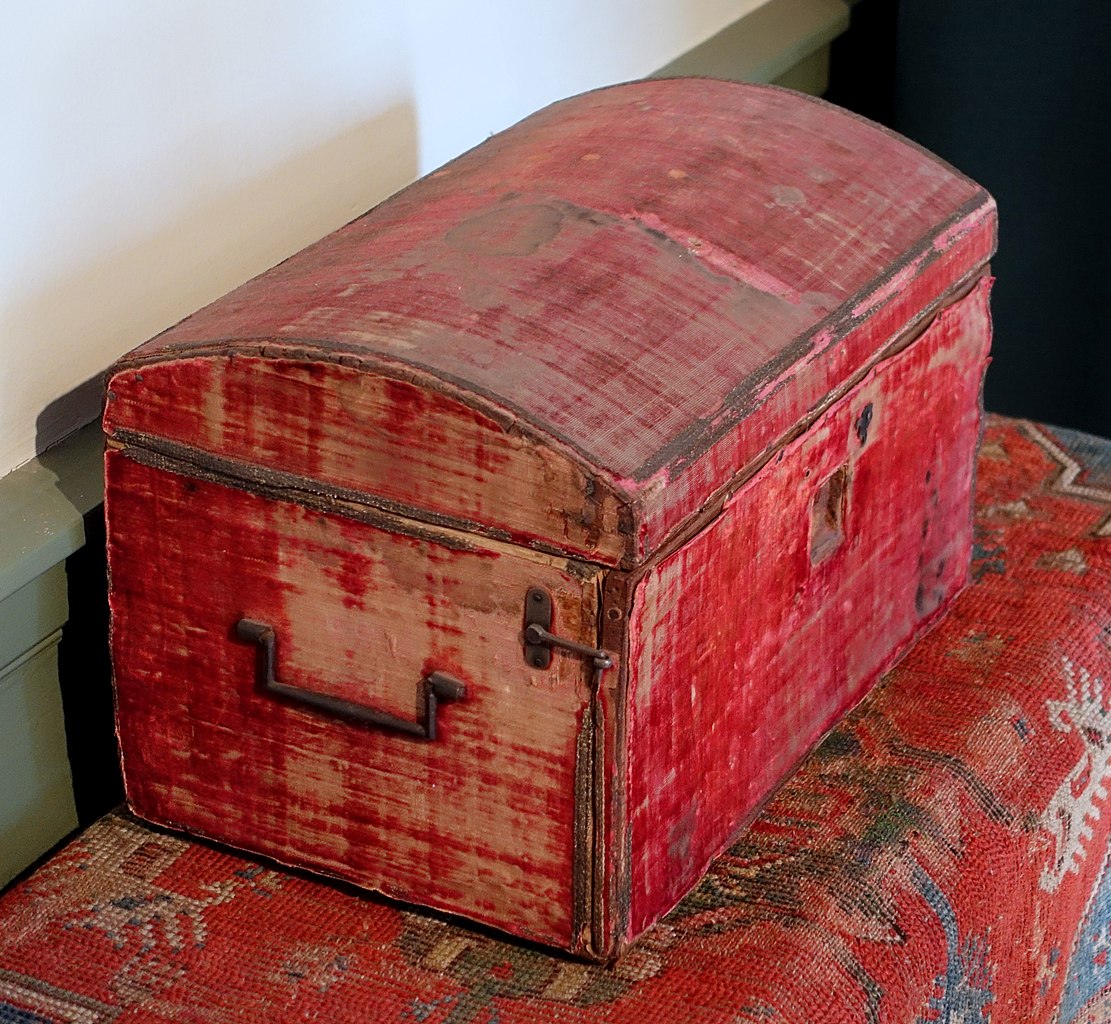
This late-17th-century dressing box would not be of such value or interest were a restoration to strip it of its patina. Daderot, CC0.
Antique furniture has survived for hundreds of years before being owned by today’s collectors. Along the way it picks up bumps and scrapes, wear, and even the occasional repair. Valuable pieces turn up all the time, having been discovered in dusty attics, cowsheds, basements, and all sorts of places where they may have been misused in ways that might horrify those who later pay big money for them. Thus there is a whole industry of craft workers in the field of furniture restoration whose speciality lies in turning the wreck of a piece of furniture into a valuable antique for the showroom.
The parallel in our community if you hadn’t already guessed, can be found in the world of retrocomputers. They are the antiques we prize, they come to us after being abused by kids and then left to languish in a box of junk somewhere. Their capacitors are leaking, their cases may be cracked or dirty, and they often possess the signature look of old ABS mouldings, their characteristic yellowing. This is caused by the gradual release of small quantities of bromine as the fire retardant contained within the plastic degrades under UV light, and causes considerable consternation among some retrocomputing enthusiasts. Considerable effort goes into mitigating it, with the favourite technique involving so-called Retr0bright recipes that use hydrogen peroxide to bleach away the colour.
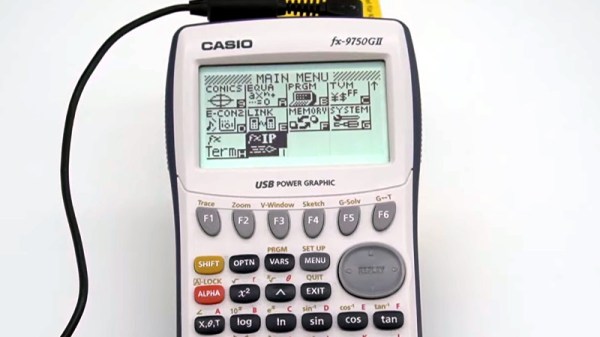
Over the years we’ve become used to seeing some impressive hacks of high-end calculator software and hardware, most often associated with the Z80-based models from Texas Instruments. But of course, TI are far from the only player in this arena. It’s nice for a change to see a Casio receiving some attention. The Casio fx series of graphical calculators can now communicate with the world, thanks to the work of [Manawyrm] in porting a TCP/IP stack to them.
As can be seen in the video below, lurking in the calculator’s menu system is an IRC client, there is also a terminal application and a webserver which you can even visit online (Please be aware that it’s only a calculator though, so an onslaught of Hackaday readers clicking the link may bring it down). The Casio doesn’t have a network interface of its own, so instead, it speaks SLIP over the serial port. In this endeavor, it uses a UART driver sourced from [TobleMiner].
It’s always good to see a neglected platform get some love, and also to note that this is an unusual outing for an SH4 CPU outside its most familiar home in the Sega Dreamcast. It’s a surprise then to read that the SH4 in a calculator of all products, is a custom version that lacks an FPU. This deficiency doesn’t mean it can’t be overclocked though, as this very old Hackaday article describes.
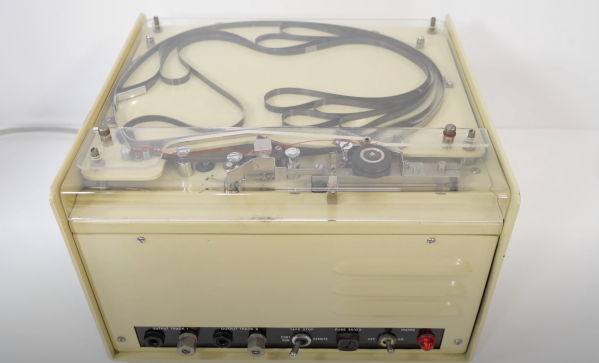
In their heyday, these sorts of devices formed the backbone of audio feedback. Messages from Father Christmas were recorded and could be reached when calling a number. Sound effects in theme parks that were activated when a ride activated some hidden switch. Anything where the sound effect needed to play on some sort of trigger.
An interesting thing to note is that this is not a reel-to-reel system. The tape is of the standard 1/4″ magnetic variety, perhaps a little thicker for extra durability. It instead sits in the top of the machine; coiling and uncoiling like a two-dimensional lava lamp. Additionally, there’s nothing clever about detecting the beginning or end of the audio loop (as there were four copies of the same recording on this particular tape). In fact, everything about this machine speaks of reliability as the most important design consideration. A reel-to-reel system would just add more points of failure.
After a little bit of diagnosing, [Techmoan] managed to get the device running again and found the message on the tape to be from the phone system, informing the listener that the line is no longer in service. This banal message is perhaps the best testament to the ubiquity of devices like these.
Good news, everyone! The results of the Reinvented Retro contest are in, and the creators of these three groovy projects have each won a $200 online shopping spree to Digi-Key. We asked you to gaze deeply into your stuff piles and come up with a way to modernize a cool, old piece of hardware, and we left it up to you to decide how cool and how old.
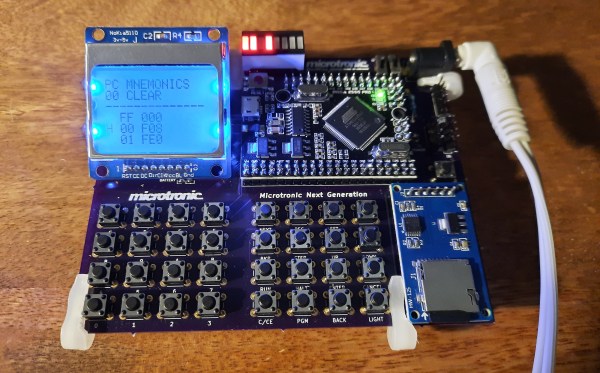
No matter your personal vintage, you have probably used or even built an educational computer like [Michael Wessel]’s next-generation Microtronic. This is a re-creation of an early 1980s West German 4-bit microprocessor trainer called the Busch 2090 Microtronic Computer System. You may have never heard of it, but [Michael] swears it’s one of the best ever made. Years ago, [Michael] made a talking Arduino-based Microtronic emulator and has grown the concept into a prize-winning system that uses an ATMega2560 Pro Mini and a Nokia 5110 display. As a bonus, it doubles as a cassette interface emulator that plugs into the 2090’s expansion port. Take some time to dive into the YouTube videos or go straight for the gerbers and make your own.
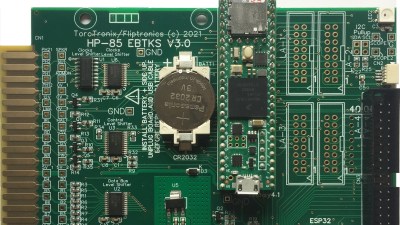
EBTKS – a tape drive replacement for HP Series80 computers
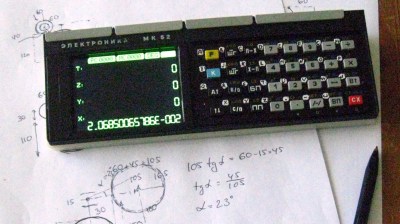
Resurrected MK-52 calculator now does things it could never have dreamed of
Retrocomputing fans will love EBTKS, a project that seeks to circumvent the disintegrating tape drives in HP85A and other early 1980s HP computers by emulating them and delivering 20,000 virtual tapes via SD card. The project began as a solid state replacement using a Teensy and an ESP32, but [Philip] and the team realized they could do a whole lot more than that. The full list of features includes 70 new keywords and both disk and tape drive emulation. Everything is explained in detail on the project’s main documentation site, where you’ll also find a handy user guide.
If you have a soft spot for old Soviet gear, check out [ptrav]’s MK-52 Resurrection. [ptrav] took an early 90s-vintage calculator with a busted vacuum fluorescent display and breathed new life into it with an ESP32 and a 320×240 TFT screen. The point isn’t to merely resurrect the MK-52, but rather to create a phoenix of programmable Soviet calculating power that rises from the ashes and realizes its hardware unleashed potential. As part of the software development path, [ptrav] also built a fully-functional simulator in C# which you can check out on GitHub.
A Most Honorable Mention
It’s always so difficult to pick winners from among all the amazing projects we see. For this contest, we’ve chosen [Michael Gardi]’s WDC-1 — aka the Paperclip Computer — for an honorable mention. And that means more than just a published pat on the back — [Michael] has won a $25 gift card for Tindie. Way to go, [Michael]!
This WDC-1 is a bit of an inverse take on the reinvented retro concept. Instead of new tech in an old box, [Michael] employed modern PCB fabrication and 3D printing to house the upgraded homebrew guts of this 50+ year-old computer design.
Congratulations to all the winners, and a big thank you to all 138 entrants for your faux nostalgia-inspiring builds. Take some time this weekend to check them out, and get your alternate reality on.

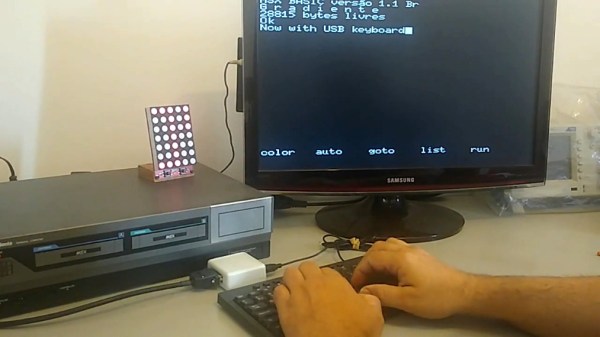
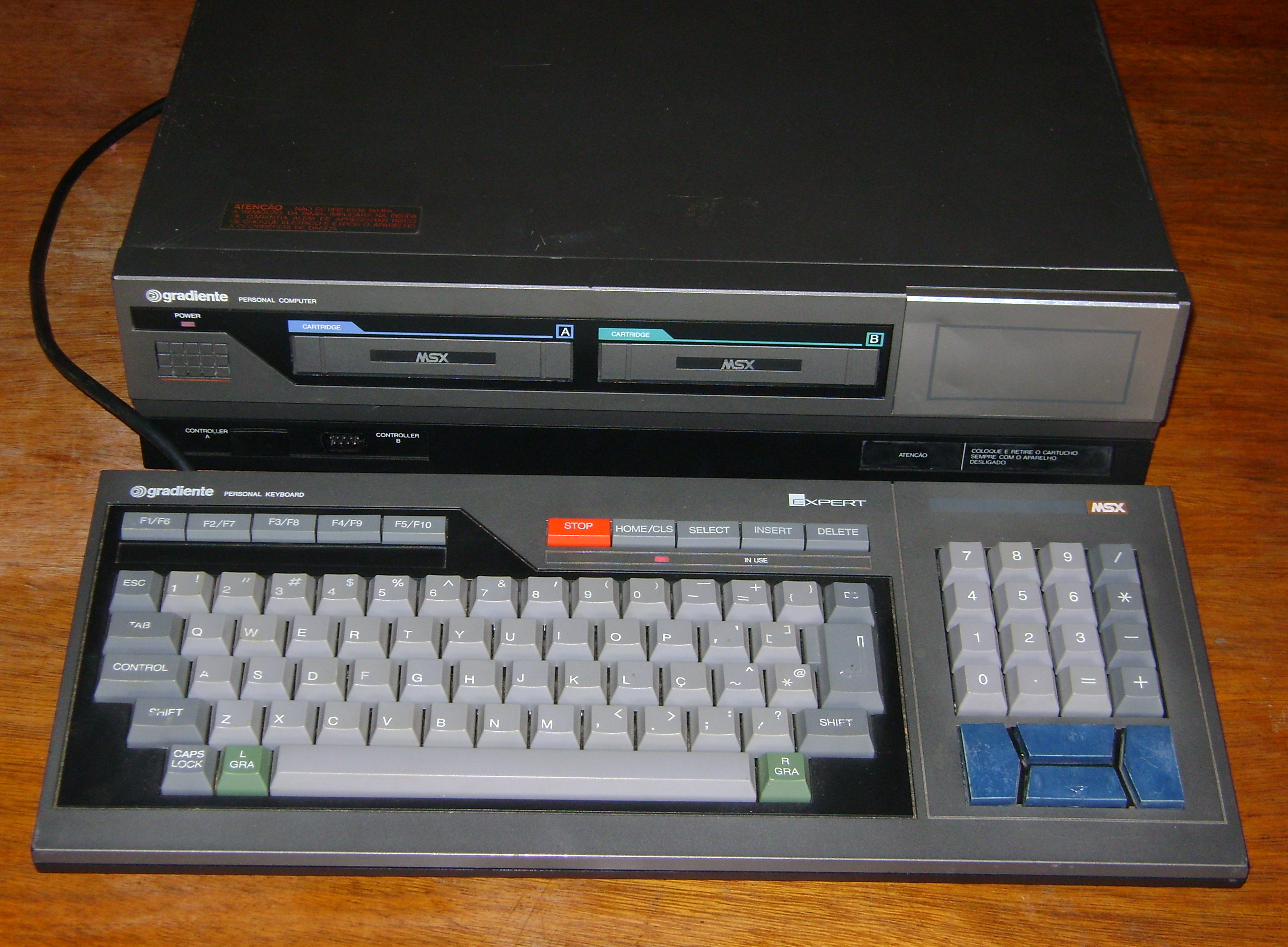 If you now want to get one of these awesome pieces of computing history and would like to be able to talk to it, [danjovic] has you covered with the open-source EXPS/2 keyboard adapter. It will allow you to connect either a PS/2 keyboard or a USB keyboard in fallback mode to the Expert using an ATMega328P and a bespoke DIN-13 to DB-13 cable. As it turns out, there’s a wealth of information on MSX keyboard matrices out there.