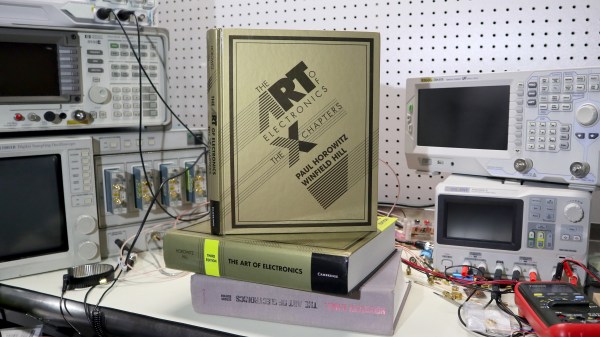
The Truth Is In There: The Art Of Electronics, The X-Chapters

If you’ve been into electronics for any length of time, you’ve almost certainly run across the practical bible in the field, The Art of Electronics, commonly abbreviated AoE. Any fan of the book will certainly want to consider obtaining the latest release, The Art of Electronics: The x-Chapters, which follows the previous third edition of AoE from 2015. This new book features expanded coverage of topics from the previous editions, plus discussions of some interesting but rarely traveled areas of electrical engineering.

For those unfamiliar with it, AoE, first published in 1980, is an unusually useful hybrid of textbook and engineer’s reference, blending just enough theory with liberal doses of practical experience. With its lively tone and informal style, the book has enabled people from many backgrounds to design and implement electronic circuits.

After the initial book, the second edition (AoE2) was published in 1989, and the third (AoE3) in 2015, each one renewing and expanding coverage to keep up with the rapid pace of the field. I started with the second edition and it was very well worn when I purchased a copy of the third, an upgrade I would recommend to anyone still on the fence. While the second and third books looked a lot like the first, this new one is a bit different. It’s at the same time an expanded discussion of many of the topics covered in AoE3 and a self-contained reference manual on a variety of topics in electrical engineering.

I pre-ordered this book the same day I learned it was to be published, and it finally arrived this week. So, having had the book in hand — almost continuously — for a few days, I think I’ve got a decent idea of what it’s all about. Stick around for my take on the latest in this very interesting series of books.

Continue reading “The Truth Is In There: The Art Of Electronics, The X-Chapters”
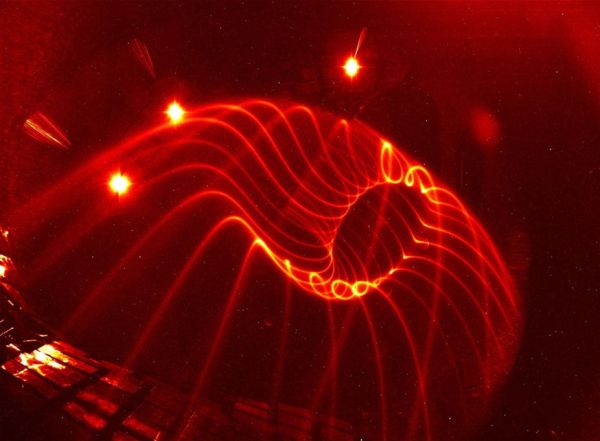
Nuclear Fusion At 100: The Hidden Race For Energy Supremacy

It’s hardly a secret that nuclear fusion has had a rough time when it comes to its image in the media: the miracle power source that is always ‘just ten years away’.  Even if no self-respecting physicist would ever make such a statement, the arrival of commercial nuclear fusion power cannot come quickly enough for many. With the promise of virtually endless, clean energy with no waste, it does truly sound like something from a science-fiction story.

Meanwhile, in the world of non-fiction, generations of scientists have dedicated their careers to understanding better how plasma in a reactor behaves, how to contain it and what types of fuels would work best for a fusion reactor, especially one that has to run continuously, with a net positive energy output. In this regard, 2020 is an exciting year, with the German Wendelstein 7-X stellarator reaching its final configuration, and the Chinese HL-2M tokamak about to fire up.

Join me after the break as I look into what a century of progress in fusion research has brought us and where it will take us next.

Continue reading “Nuclear Fusion At 100: The Hidden Race For Energy Supremacy”

New Year Habits – What Do You Do For Data Storage?

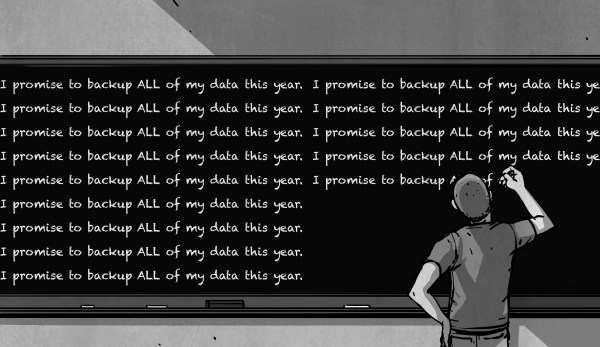
2020 is a year of reflection and avoiding regret, and one of the biggest practices we all know we should do better is back up our data. Inevitably there will be a corruption or accident, and we mourn the loss of some valuable data and vow to never let it happen again, and then promptly forget about good data retention practices.

I believe life is about acquiring memories, so it makes sense to me to try to archive and store those memories so that I can reflect on them later, but data storage and management is a huge pain. There’s got to be a better way (cue black and white video of clumsy person throwing up arms in disgust).

Nice Cloud You Have There; Shame if Something Happened to It

The teens of the century saw a huge shift towards cloud storage. The advantages of instantly backing up files and using the cloud as the primary storage for all your devices is appealing. It’s now easier to transfer files via the cloud than with a cable. With Google Docs and WordPress we have our most important documents and writing stored as database blobs on someone else’s servers. Facebook and Google and Flickr record all of our memories as photo albums. Unlimited storage is common, and indexing is so good that we can find photos with a vague description of their contents.

These things are instantly accessible, but lack permanence. Gone are newspaper clippings and printed photos discovered in a shoebox. When we aren’t in control of those services, they can disappear without any warning. Even some big offerings have packed up shop, leaving people scrambling to back up data before the servers were shut down. Google Plus is closed, Yahoo  Groups is closed, MySpace lost all content created prior to 2016, GeoCities closed in 2009, and Ubuntu One closed in 2014. It’s safe to say that no online content is safe from deletion. It’s also safe to say that cloud storage is a difficult location from which to extract your data.

With the risk of data leaks and privacy violations occurring daily, it’s also safe to say that some of your files should probably not be stored in the cloud in the first place. So, how do we do it well, and how do we get in the habit of doing it regularly?

Continue reading “New Year Habits – What Do You Do For Data Storage?”

Raspberry Pi 4 And The State Of Video Game Emulation

The modern ideal of pixel art is a fallacy. Videogame art crammed onto cartridges and floppy discs were beholden to the CRT display technology of their day. Transmitting analog video within the confines of dingy yellow-RCA-connector-blur, the images were really just a suggestion of on-screen shapes rather than clearly defined graphics. Even when using the superior RGB-video-over-SCART cables, most consumer grade CRT televisions never generated more than about 400 lines, so the exacting nature of digitized plots became a fuzzy raster when traced by an electron beam. It wasn’t until the late 90s when the confluence of high resolution PC monitors, file sharing, and open source emulation software that the masses saw pixels for the sharp square blocks of color that they are.

More importantly, emulation software is not restricted to any one type of display technology any more than the strata of device it runs on. The open-source nature of videogame emulators always seems to congregate around the Lowest Common Denominator of devices, giving the widest swath of gamers the chance to play. Now, that “L.C.D.” may very well be the Raspberry Pi 4. The single board computer’s mix of tinker-friendly IO at an astonishingly affordable entry price has made it a natural home for emulators, but at fifty bucks what options unlock within the emulation scene?

Continue reading “Raspberry Pi 4 And The State Of Video Game Emulation”

Anti-Bacterial Plastic Wrap Clings To Hope Of Stopping Superbugs’ Spread

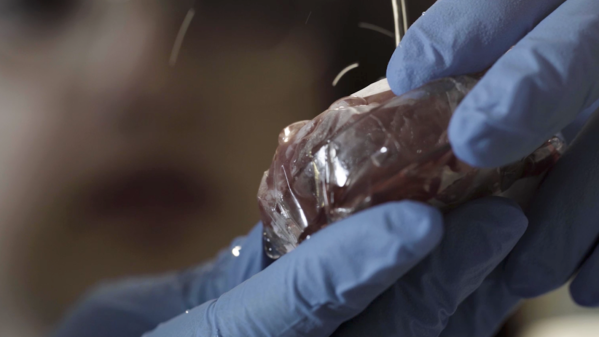
Researchers at McMaster University in Ontario have developed a plastic wrap that repels viruses and bacteria, including some of the scariest antibiotic-resistant superbugs known to science. With the help of a scanning electron microscope, the researchers were able to watch superbugs like MRSA and Pseudomonas bounce right off the surface.

The wrap can be applied to things temporarily, much like that stuff you wrestle from the box and stretch over your leftovers. It can also be shrink-wrapped to any compatible surface without losing effectiveness. The ability to cover surfaces with bacteria-shielding armor could have an incredible impact on superbug populations inside hospitals. It could be shrink-wrapped to all kinds of things, from door handles to railings to waiting room chair armrests to the pens that everyone uses to sign off on receiving care.

Continue reading “Anti-Bacterial Plastic Wrap Clings To Hope Of Stopping Superbugs’ Spread”

The Barcode Revolution: Welcome To Our Automated World

Featured in many sci-fi stories as a quicker, more efficient way to record and transfer information, barcodes are both extremely commonplace today, and still amazingly poorly understood by many. Originally designed as a way to allow for increased automation by allowing computer systems to scan a code with information about the item it labels, its potential as an information carrier is becoming ever more popular.

Without the tagging ability of barcodes (and their close cousin: RFID tags), much of today’s modern world would grind to a halt. The automated sorting and delivery systems for mail and parcels, entire inventory management systems, the tracing of critical avionics and rocketry components around the globe, as well as seemingly mundane but widely utilized rapid checkout at the supermarket, all depends on some variety of barcodes.

Join me on a trip through the past, present and future of the humble barcode.

Continue reading “The Barcode Revolution: Welcome To Our Automated World”

Happy 50th Birthday To All You Epoch Birthers

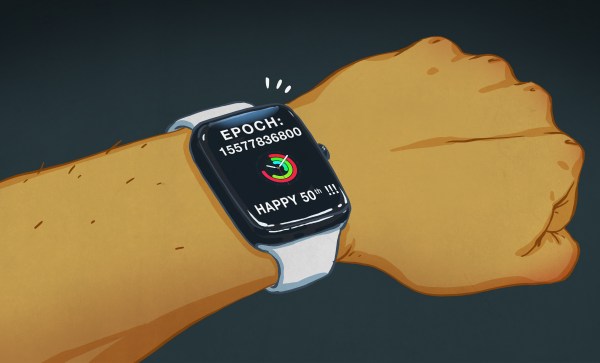
Good morning everyone, and what a lovely start to the new year it is, because it’s your birthday! Happy birthday, it’s your 50th! What’s that you say, you aren’t 50 today? (Looks…) That’s what all these internet databases say, because you’ve spent the last decade or so putting 1970-01-01 as your birth date into every online form that doesn’t really need to know it!

It’s been a staple for a subset of our community for years, to put the UNIX epoch, January 1st 1970, into web forms as a birth date. There are even rumours that some sites now won’t accept that date as a birthday, such is the volume of false entries they have with that date. It’s worth taking a minute though to consider UNIX time, some of its history and how its storage has changed over the years.

Continue reading “Happy 50th Birthday To All You Epoch Birthers”