A Field Guide To Transmission Lines

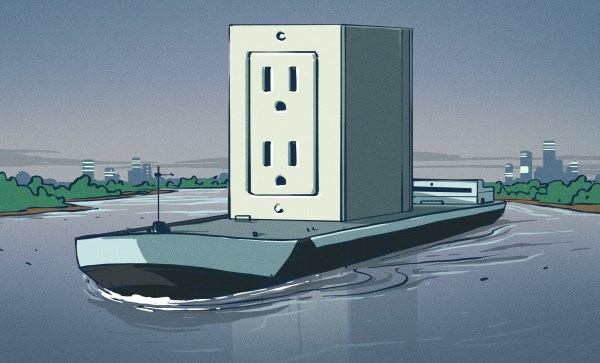
The power grid is a complicated beast, regardless of where you live. Power plants have to send energy to all of their clients at a constant frequency and voltage (regardless of the demand at any one time), and to do that they need a wide array of equipment. From transformers and voltage regulators to line reactors and capacitors, breakers and fuses, and solid-state and specialized mechanical relays, almost every branch of engineering can be found in the power grid. Of course, we shouldn’t leave out the most obvious part of the grid: the wires that actually form the grid itself.

Continue reading “A Field Guide To Transmission Lines”

Takata’s Deadly Airbags: An Engineering Omnishambles

Engineers are, for the time being, only human. This applies even more so to executives, and all the other people that make up a modern organisation. Naturally, mistakes are made. Some are minor, while others are less so. It’s common knowledge that problems are best dealt with swift and early, and yet so often they are ignored in the hopes that they’ll go away.

You might have heard the name Takata in the news over the last few years. If that name doesn’t ring a bell you’ve likely heard that there was a major recall of airbag-equipped vehicles lately. The story behind it is one of a single decision leading to multiple deaths, scores of injuries, a $1 billion fine, and the collapse of a formerly massive automotive supplier.

Continue reading “Takata’s Deadly Airbags: An Engineering Omnishambles”

Rare Earth Metals Caught In Trade War

It seems these days that the news is never good. Speaking from experience, that’s really nothing new; there’s always been something to worry about, and world leaders have always been adept at playing the games that inevitably lead to disturbing news. Wars always result in the very worst news, of course, and putting any kind of modifier in front of the word, like “Cold” or “proxy”, does little to ameliorate the impact.

And so the headlines have been filled these last months with stories of trade wars, with the primary belligerents being the United States and China. We’ve covered a bit about how tariffs, which serve as the primary weapons in any trade war, have impacted the supply of electronic components and other materials of importance to hackers.

But now, as the trade war continues, a more serious front is opening up, one that could have serious consequences not just to the parties involved but also to the world at large. The trade war has escalated to include rare earth metals, and if the threats and rumors currently circulating come to fruition, the technologies and industries that make up the very core of modern society will be in danger of grinding to a halt, at least temporarily.

Continue reading “Rare Earth Metals Caught In Trade War”

The Fascinating World Of Solder Alloys And Metallurgy

Solder is the conductive metal glue that one uses to stick components together. If you get the component and the PCB hot enough, and melt a little solder in the joint, it will stay put and conduct reliably. But it’s far from simple.

There are many different solder alloys, and even the tip of the soldering iron itself is a multi-material masterpiece. In this article, we’ll take a look at the metallurgy behind soldering, and you’ll see why soldering tip maintenance, and regular replacement, is a good idea. Naturally, we’ll also touch upon the role that lead plays in solder alloys, and what the effect is of replacing it with other metals when going lead-free. What are you soldering with? Continue reading “The Fascinating World Of Solder Alloys And Metallurgy”

Atomic Power Gets Small

There was a time when nuclear power plants were going to save the world. Barring accidents, the plants are clean and generate a lot of power. However, a few high-profile accidents and increased public awareness of some key issues have made nuclear power a hard sell, at least in the United States. The fastest growing nuclear power-related business in the US — according to sources — is companies decommissioning nuclear power plants. However, there’s a move afoot to make nuclear power a viable solution again. The company behind it says their plants will be cheaper to build, cheaper to operate, and are much safer than conventional plants. Are those claims reasonable?

Continue reading “Atomic Power Gets Small”

Life After IRC – Your Move, Mozilla!

Last year marked the 30th anniversary of the Internet Relay Chat protocol (IRC) and it is hard to imagine that [Jarkko Oikarinen] could have foreseen the impact his invention would one day have on the world as we know it. How it would turn from a simple, decentralized real-time communication system for university-internal use into a global phenomenon, connecting millions of users all over the world, forming its own subculture, eventually reaching mainstream status in some parts of the world — including a Eurodance song about a bot topping European music charts.

Those days of glory, however, have long been gone, and with it the version of an internet where IRC was the ideal choice. What was once a refuge to escape the real world has since become the fundamental centerpiece of that same real world, and our ways of communicating with each other has moved on with it. Nevertheless, despite a shift in mainstream and everyday communication behavior, IRC is still relevant enough today, and going especially strong in the open source community, with freenode, as one of the oldest networks, being the most frequently used one, along some smaller ones like OFTC and Mozilla’s own dedicated network. But that is about to change.

Last month, Mozilla’s envoy [Mike Hoye] announced the decommissioning of irc.mozilla.org within “the next small number of months, and moving all communication to a new, or at least different system. And while this only affects Mozilla’s own, standalone IRC network and projects, and not the entire open source community, it is a rather substantial move, considering Mozilla’s overall reach and impact on the internet itself — past, present, and now even more the future. Let’s face it, IRC has been dying for years, but there is also no genuine alternative available yet that could truly replace it. With Mozilla as driving force, there is an actual chance that they will come up with a worthy replacement that transforms IRC’s spirit into the modern era.

Continue reading “Life After IRC – Your Move, Mozilla!”

Zork And The Z-Machine: Bringing The Mainframe To 8-bit Home Computers

Computer games have been around about as long as computers have. And though it may be hard to believe, Zork, a text-based adventure game, was the Fortnite of its time. But Zork is more than that. For portability and size reasons, Zork itself is written in Zork Implementation Language (ZIL), makes heavy use of the brand-new concept of object-oriented programming, and runs on a virtual machine. All this back in 1979. They used every trick in the book to pack as much of the Underground Empire into computers that had only 32 kB of RAM. But more even more than a technological tour de force, Zork is an unmissable milestone in the history of computer gaming. But it didn’t spring up out of nowhere.

DEC PDP-10 Flip Chip module

The computer revolution had just taken a fierce hold during the second World War, and showed no sign of subsiding during the 1950s and 1960s. More affordable computer systems were becoming available for purchase by businesses as well as universities. MIT’s Laboratory for Computer Science (LCS) was fortunate to have ties to ARPA, which gave MIT’s LCS and AI labs (formerly part of Project MAC) access to considerable computing resources, mostly in the form of DEC PDP systems.

The result: students at the MIT Dynamic Modeling Group (part of LCS) having access to a PDP-10 KA10 mainframe — heavy iron at the time. Though this PDP-10 was the original 1968 model with discrete transistor Flip Chip modules and wire-wrapping, it had been heavily modified, adding virtual memory and paging support to expand the original 1,152 kB of core memory. Running the MIT-developed Incompatible Timesharing System (ITS) OS, it was a highly capable multi-user system.

Naturally, it got mostly used for playing games.
Continue reading “Zork And The Z-Machine: Bringing The Mainframe To 8-bit Home Computers”