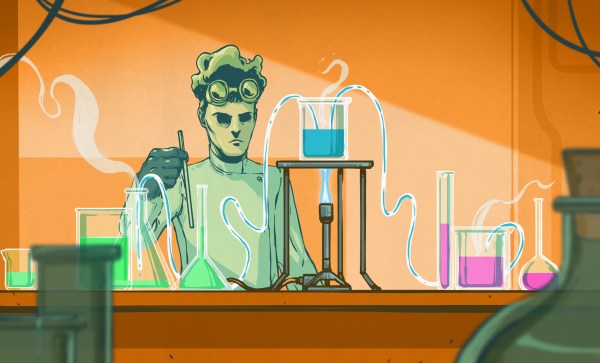
Most of us probably have some vivid memories of high school or college chemistry lab, where the principles of the science were demonstrated, and where we all got at least a little practice in experimental methods. Measuring, diluting, precipitating, titrating, all generally conducted under safe conditions using stuff that wasn’t likely to blow up or burn.
But dropwise additions and reaction volumes measured in milliliters are not the stuff upon which to build a global economy that feeds, clothes, and provides for eight billion people. For chemistry to go beyond the lab, it needs to be scaled up, often to a point that’s hard to conceptualize. Big chemistry and big engineering go hand in hand, delivering processes that transform the simplest, most abundant substances into the things that, for better or worse, make life possible.
To get a better idea of how big chemistry does that, we’re going to take a look at one simple molecule that we’ve probably all used at one time or another: the common artificial flavoring wintergreen. It’s an innocuous ingredient in a wide range of foods and medicines, but the infrastructure required to make it and all its precursors is a snapshot of just how important big chemistry really is.
Along with many other natural phenomena, lightning is probably familiar to most. Between its intense noise and visuals, there is also very little disagreement that getting hit by a lightning strike is a bad thing, regardless of whether you’re a fleshy human, moisture-filled plant, or conductive machine. So it’s more than a little bit strange that the underlying cause of lightning, and what makes certain clouds produce these intense voltages along ionized air molecules, is still an open scientific question.
Many of us have probably learned at some point the most popular theory about how lightning forms, namely that lightning is caused by ice particles in clouds. These ice particles interact to build up a charge, much like in a capacitor. The only issue with this theory is that this process alone will not build up a potential large enough to ionize the air between said clouds and the ground and cause the lightning strike, leaving this theory in tatters.
A recent study, using data from Earth-based radio telescopes, may now have provided fascinating details on lightning formation, and how the charge may build up sufficiently to make us Earth-based critters scurry away to safety when dark clouds draw near.
For British teenagers in the 1980s, the delights of 8-bit computers such as the Sinclair Spectrum, Commodore 64, or BBC Micro were firmly restricted to the offline arena. We would read about the BBS scene on the other side of the Atlantic, but without cheap local calls and with a modem costing a small fortune, the chances of us ever experiencing one was zero. When we took the British school rite of passage of a trip to France though, we were astounded to see that every French person was not merely online, but that they were doing so with a neat little all-in-one terminal. We’d just been introduced to the French Minitel system, and in that minute shared a glimpse of the future.
Un Réseau Trés Français
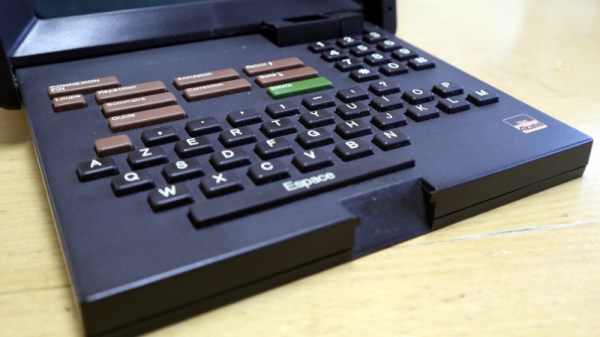
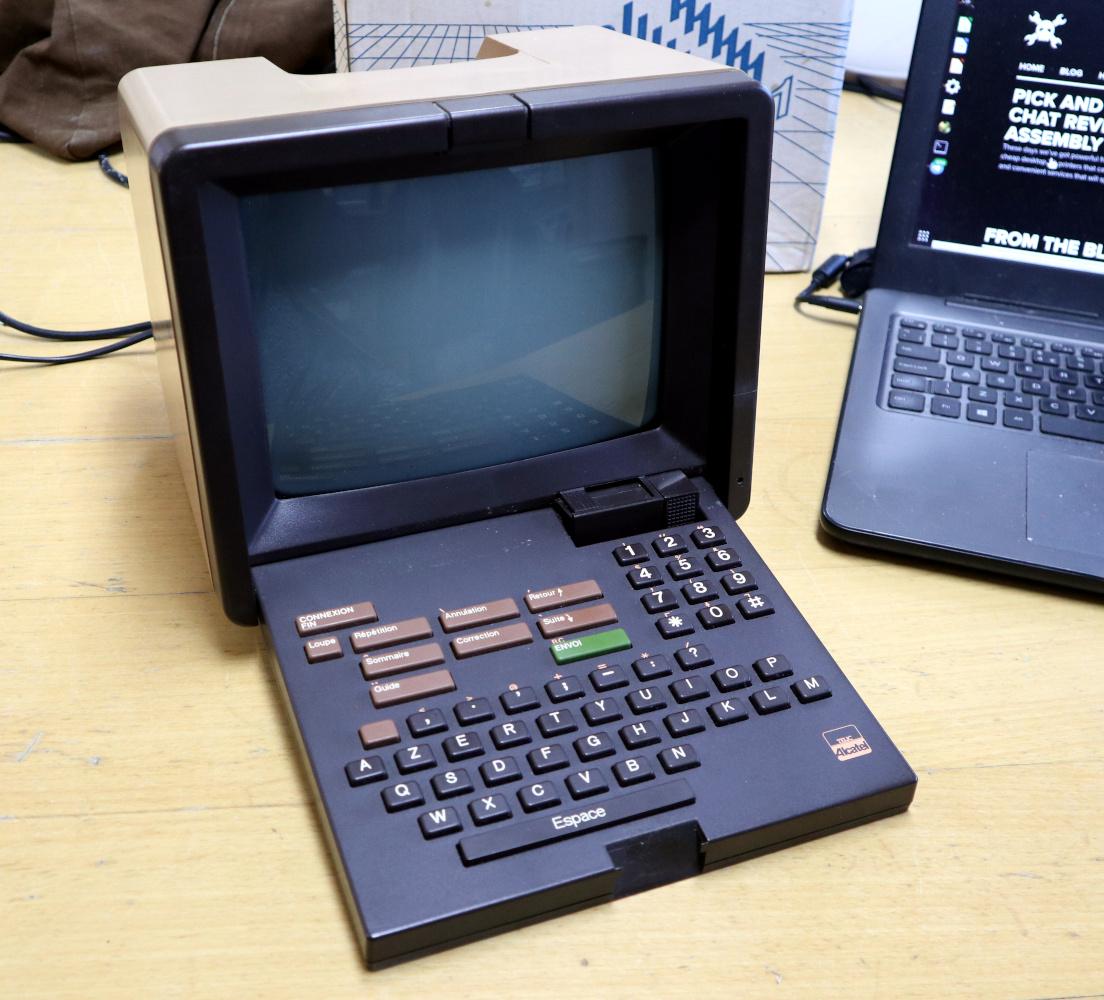
My Alcatel Minitel terminal
In the 1970s and 1980s, so-called videotext systems, terminal-based phoneline access to information services on central computers, were seen as an obvious next step for telephone network operators with an interest in profitable new products. In most countries this resulted in services such as the UK’s Prestel, a subscription service relying on costly hardware, but France Télécom instead pursued the bold path of making the terminals free to subscribers with free access to phone listings and yellow pages, but a business model based on pay-to-use premium services.
Thus, through the 1980s all French households had a Minitel terminal beside the phone, and the service became a runaway success. Ever since seeing Minitel terminals as a tourist I’d been fascinated by the service, so here in the 2020s when a friend was visiting their family in France I asked whether he could pick up an old Minitel terminal for me. Thus I found myself parting with around $25 and being rewarded with a slightly battered Minitel cardboard box containing one of the familiar brown Alcatel terminals. I certainly wasn’t expecting one in its original packaging. Continue reading “Teardown: Alcatel Telic 1 Minitel Terminal”→
For big-ticket purchases, I tend to do a lot of research before I open my wallet. I like to at least have the illusion that when I send my money off to a far-away stranger, I’m likely to get back something of equal value in a reasonable timeframe that does what I want it to do. So I tend more toward the “analysis paralysis” end of the spectrum, where I pore over so many specs and reviews that I end up buying nothing.
While that sounds like a bad thing, and sometimes is, I find that it tends to help me avoid rashly spending money on things that aren’t going to work for me. This is especially true in the area of tools, where while I’m trapped in my analysis loop, I often find a workaround or substitute that’s good enough to get the job done.
For some things, though, there is no substitute, and when you start working with SMD components that you’d have a hard time telling from a grain of salt, you’re probably going to need a microscope. I recently determined that this was where I was in my electronics journey, and now that I’ve worked my way through the analysis and procurement phase of the process, I thought I’d share my first impressions of my microscope, and what it’s like to get used to working with one.
Since NASA’s Mariner spacecraft made the first up-close observations of Mars in 1964, humanity has lobbed a long line of orbiters, landers, and rovers towards the Red Planet. Of course, it hasn’t all been smooth sailing. History, to say nothing of the planet’s surface, is littered with Martian missions that didn’t quite make the grade. But we’ve steadily been getting better, and have even started to push the envelope of what’s possible with interplanetary robotics through ambitious craft like the Ingenuity helicopter.
Yet, after nearly 60 years of studying our frigid neighbor, all we have to show for our work boils down to so many 1s and 0s. That’s not to say the data we’ve collected, both from orbit and on the surface, hasn’t been extremely valuable. But scientists on Earth could do more with a single Martian rock than any robotic rover could ever hope to accomplish. Even still, not so much as a grain of sand has ever been returned from the planet’s dusty surface.
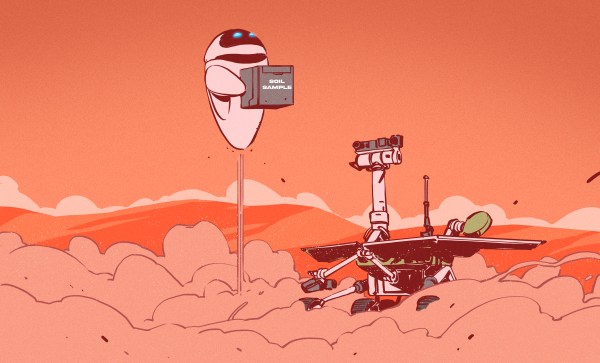
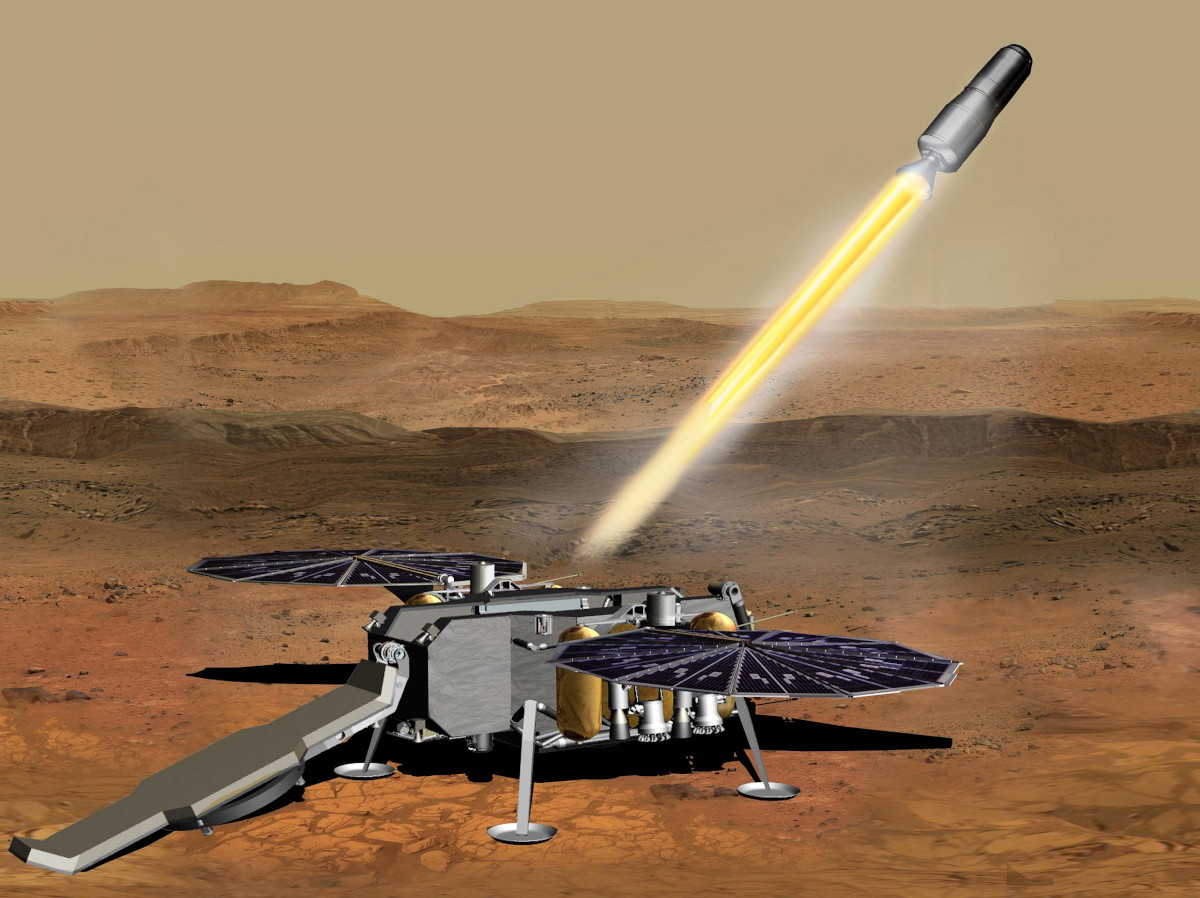
But if everything goes according to plan, that’s about to change. Within the next decade, NASA and the European Space Agency (ESA) hope to bring the first samples of Martian rocks, soil, and atmospheric gases back to Earth using a series of robotic vehicles. While it’s still unclear when terrestrial scientists should expect delivery of this interplanetary bounty, the first stage of the program is already well underway. The Perseverance rover has started collecting samples and storing them in special tubes for their eventual trip back to Earth. By 2028, another rover will be deployed to collect these samples and load them into a miniature rocket for their trip to space.
Launching the Mars Ascent Vehicle (MAV).
Just last week NASA decided to award the nearly $200 million contract to build that rocket, known officially as the Mars Ascent Vehicle (MAV), to aerospace giant Lockheed Martin. The MAV will not only make history as the first rocket to lift off from a celestial body other than the Earth, but it’s arguably the most critical component of the sample return mission; as any failure during launch will mean the irrevocable loss of all the samples painstakingly recovered by Perseverance over the previous seven years.
To say this mission constitutes a considerable technical challenge would be an understatement. Not only has humanity never flown a rocket on another planet, but we’ve never even attempted it. No matter what the outcome, once the MAV points its nose to the sky and lights its engines, history is going to be made. But while it will be the first vehicle to make the attempt, engineers and scientists have been floating plans for a potential Martian sample return mission for decades. Continue reading “NASA Taps Lockheed To Bring Back A Piece Of Mars”→
Electric vehicles promise efficiency gains over their gas-fuelled predecessors, but the issue of recharging remains a hurdle for many eager to jump on board with the technology. The problem is only magnified for those that regularly street park their vehicles or live in apartments, without provision to charge a vehicle overnight at home.
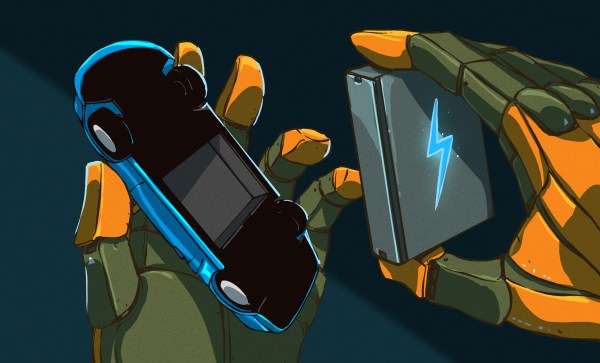
Battery swapping promises to solve that issue, letting drivers of EVs change out their empty battery for a freshly charged one in a matter of minutes. The technology has been widely panned and failed to gain traction in the US.
However, as it turns out, battery swapping for EVs is actually thing in China, and it’s catching on at a rapid rate.
I’ve had a fairly varied early part of my career in the semiconductors business: a series of events caused me to jump disciplines a little bit, and after one such event, I landed in the test engineering department at Philips Semiconductors. I was tasked with a variety of oddball projects, supporting engineering work, fixing broken ATE equipment, and given a absolute ton of training: Good times! Here’s a story that comes straight off the oddball pile.
We needed to assemble a crack team of experts and high-tail it to deepest darkest Wales, and sort out an urgent production problem. The brief was that the wafer probe yield was disastrous and the correlation wafer was not giving the correct results. Getting to the punch line is going to require some IC fabrication background, but if you like stories about silicon, or red-bearded test engineers, it’s worth it. Continue reading “Hair Today Gone Tomorrow: Four Men Go To Fix A Wafer Prober”→