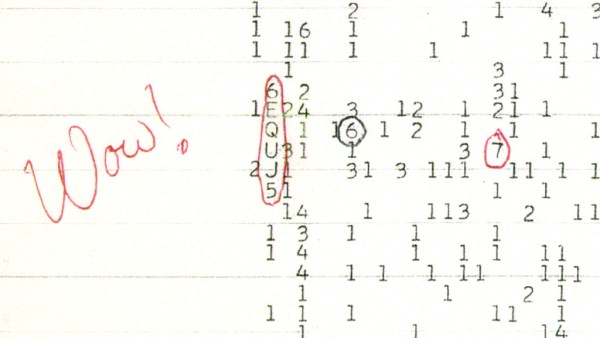
On a balmy August evening in 1977, an enormous radio telescope in a field in the middle of Ohio sat silently listening to the radio universe. Shortly after 10:00 PM, the Earth’s rotation slewed the telescope through a powerful radio signal whose passage was noted only by the slight change in tone in the song sung every twelve seconds by the line printer recording that evening’s data.
When the data was analyzed later, an astronomer’s marginal exclamation of the extraordinarily powerful but vanishingly brief blip would give the signal its forever name: the Wow! Signal. How we came to hear this signal, what it could possibly mean, and where it might have come from are all interesting details of an event that left a mystery in its wake, one that citizen scientists are now looking into with a fresh perspective. If it was sent from a region of space with habitable planets, it’s at least worth a listen.
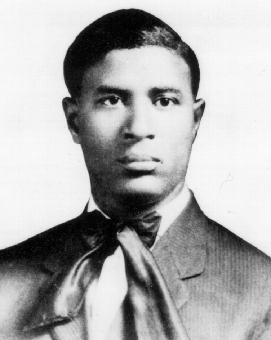
Some people invent with the intent of seeking fame and prestige. Few inventors seem to truly care about other people the way that Garrett Augustus Morgan did. His inventions saved many lives, including those of a few people who were rescued by Garrett himself after an explosion tore through a tunnel beneath Lake Erie.
Though he had little formal education, Garrett’s curiosity took him into many fields from sewing machine repair to gas masks to transportation problems. He achieved great success and improved many lives along the way.
Garrett Augustus Morgan was born March 4th, 1877 in Claysville, Kentucky. He was the seventh of eleven children born to Sydney and Elizabeth Morgan, who had both been slaves. His mother was part Native American.
Armed with a sixth grade education and ten cents in his pocket, Garrett left home at fourteen look for work, which was common for kids his age at the time. He first landed in Cincinnati and spent a few years working as a handyman.
In 1895 he moved to Cleveland and started repairing sewing machines. This is where he developed his taste for the way things work. After a decade or so, he opened his own sewing machine shop. He had gotten married in the meantime, and a few years later, he and his wife Mary Anne, a seamstress, opened a discount ladies clothing store and hired thirty-two employees to make all the suits, coats, and dresses in-house.
One day Garrett was sewing a woolen fabric that kept getting scorched by the extremely high speed of the sewing machine needle. He experimented with a few chemicals to coat the needle and keep it cool. As the story goes, he wiped his hands off on a piece of cloth and went to lunch. When he came back, the wavy fibers in the fabric had been completely straightened by the chemical.
Curious, he tried the solution on his neighbor’s dog’s fur, and it straightened that, too. Then he worked up the nerve to try it on his own hair, and discovered the hair relaxer. He turned the solution into a cream and established the G.A. Morgan Hair Refining Company to sell his hair relaxer to African Americans. The company was terrifically successful and Garrett earned enough money from sales to keep inventing.
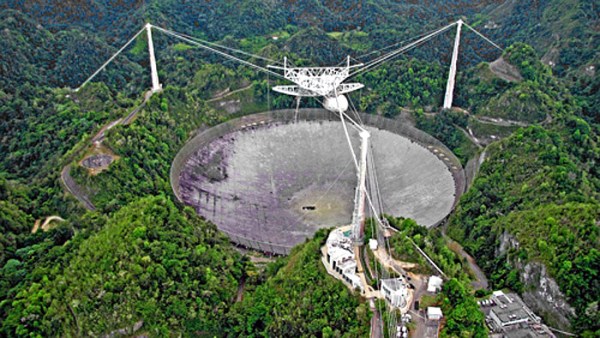
Few telescopes will get an emotional response from the general public when it is ultimately announced that they will be decommissioned. In the case of the Arecibo Observatory in Arecibo, Puerto Rico, the past months has seen not only astronomers but also countless people across the world wait with bated breath after initial reports of damage to the radio telescope’s gigantic dish.
When the National Science Foundation announced that they would be decommissioning the telescope, there was an understandable outpouring of grief and shock. Not only is Arecibo a landmark in Puerto Rico, it is the telescope from iconic movies such as GoldenEye (1995) and Contact (1997). Its data fed public programs such as the Seti@Home and Einstein@Home projects.
Was Arecibo’s demise truly unavoidable, and what does this mean for the scientific community?
The rest of the media were reporting on an asteroid named 16 Psyche last month worth $10 quintillion. Oddly enough they reported in July 2019 and again in February 2018 that the same asteroid was worth $700 quintillion, so it seems the space rock market is similar to cryptocurrency in its wild speculation. Those numbers are ridiculous, but it had us thinking about the economies of space transportation, and what atoms are worth based on where they are. Let’s break down how gravity wells, distance, and arbitrage work to figure out how much of this $10-$700 quintillion we can leverage for ourselves.
The value assigned to everything has to do with where a thing is, AND how much someone needs that thing to be somewhere else. If they need it in a different place, someone must pay for the transportation of it.
In international (and interplanetary) trade, this is where Incoterms come in. These are the terms used to describe who pays for and has responsibility for the goods between where they are and where they need to be. In this case, all those materials are sitting on an asteroid, and someone has to pay for all the transport and insurance and duties. Note that on the asteroid these materials need to be mined and refined as well; they’re not just sitting in a box on some space dock. On the other end of the spectrum, order something from Amazon and it’s Amazon that takes care of everything until it’s dropped on your doorstep. The buyer is paying for shipping either way; it’s just a matter of whether that cost is built into the price or handled separately. Another important term is arbitrage, which is the practice of taking a thing from one market and selling it in a different market at a higher price. In this case the two markets are Earth and space.
The transport of goods with cargo ships and especially container ships is the backbone of today’s economies, with about 90% of non-bulk cargo transported with them. This is in addition to the large number of oil tankers and LNG carriers. Unfortunately, due to their use of diesel engines they are also responsible for about 3.5% of the world’s CO2 emissions, in addition to 18 – 30% of nitrogen oxide and 9% of sulfur oxides.
Although the switch to low-sulfur diesel (ULSD) and the use of speed limits has reduced some of these pollutants, the shipping industry sees itself faced with the necessity to decarbonize in order to meet the obligations of the Paris Agreement. This essentially means finding a way to switch from diesel engines to an alternative which has comparable or better fuel costs, produces no or almost no pollutants and will not negatively affect logistics.
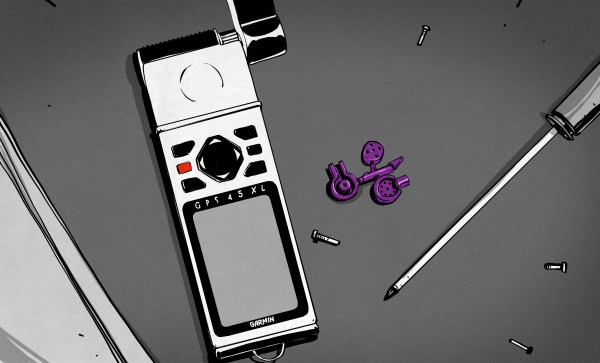
It all started with an 88-ton Arburg RP300 injection molding machine in the basement, and a bit of inattention. Larry Berg wanted a couple custom plastic plugs for his Garmin GPS, so he milled out a mold and ran a few. But he got distracted, and came back an hour later to find that his machine had made 400. Instead of throwing them away, he mailed them away for free, but then he found that people started throwing money at him to make more. People all over the world.
This is how the Purple Open Project turned into an global network of GPS geeks, selling molded alternatives to the oddball Garmin plugs for pledges to pay an unspecified amount, and ended up producing over 350,000 plugs over 16 years before he passed away in 2012. This is the story of a hacker’s hacker, who wanted to be able to connect his GPS to his computer and use it the way he wanted, and accidentally created an international business.
One of the big stories last week was the announcement of results from clinical trials that suggest a new COVID-19 vaccine developed through the joint effort of the American and German companies Pfizer and BioNTech is strongly effective in providing immunity from the virus. In the midst of what is for many countries the second spike of the global pandemic this news has been received with elation as well as becoming the subject of much political manoeuvring.
While we currently have two vaccine candidates with very positive testing results, one of the most interesting things for us is the need to keep doses of the Pfizer/BioNTech vaccine extremely cold until they are administered. Let’s dig into details of the refrigeration problem at hand.