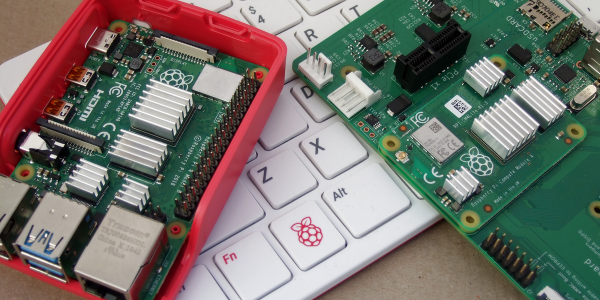
PC Cases Are Still Stuck In The Dark Ages, But We Can Fix This

In the dawning of the IBM PC era, the computer case was a heavy, stout thing. These were industrial machines, built with beefy paddle power switches, and weighing as much as a ton of bricks. Painted in only the ugliest beige, they set the tone for PC design for the next couple of decades.

At the turn of the millennium, the winds of change swept through. The Apple iMac redefined the computer as a hip, cool device, and other manufacturers began to reconsider their product aesthetics. Around the same time, the casemodding scene took off in earnest, with adherents building ever wilder battle stations for internet clout and glory.

With all the development that has gone in the last 40 years of the PC platform, we’ve seen great change and improvement in almost every area. But in building a new rig this past month, this writer discovered there’s one element of the modern PC that’s still trapped in the past.

Continue reading “PC Cases Are Still Stuck In The Dark Ages, But We Can Fix This”

Ask Hackaday: Is Windows XP Source Code Leak A Bad Thing?

News comes overnight that the Windows XP source code has been leaked. The Verge says they have “verified the material as legitimate” and that the leak also includes Windows Server 2003 and some DOS and CE code as well. The thing is, it has now been more than six years since Microsoft dropped support for XP, does it really matter if the source code is made public?

The Poison Pill

As Erin Pinheiro pointed out in her excellent article on the Nintendo IP leak earlier this year (perhaps the best Joe Kim artwork of the year on that one, by the way), legitimate developers can’t really make use of leaked code since it opens them up to potential litigation. Microsoft has a formidable legal machine that would surely go after misuse of the code from a leak like this. Erin mentions in her article that just looking at the code is the danger zone for competitors.

Even if other software companies did look at the source code and implement their own improvements without crossing the legal line, how much is there still to gain? Surely companies with this kind of motivation would have reverse engineered the secret sauce of the long dead OS by now, right?

Spy vs. Spy

The next thing that comes to mind are the security implications. At the time of writing, statcount pegs Windows XP at a 0.82% market share which is still going to be a very large number of machines. Perhaps a better question to consider is what types of machines are still running it? I didn’t find any hard data to answer this question, however there are dedicated machines like MRIs that don’t have easy upgrade paths and still use the OS and there is an embedded version of XP that runs on point-of-sale, automated teller machines, set-top boxes, and other long-life hardware that are notorious for not being upgraded by their owners.

Continue reading “Ask Hackaday: Is Windows XP Source Code Leak A Bad Thing?”

Dynamic Soaring: 545 MPH RC Planes Have No Motor

The fastest remote-controlled airplane flight ever recorded took place in 2018, with a top speed of 545 miles/hour. That’s 877 km/h, or Mach 0.77!

What was the limiting factor, preventing the pilot-and-designer Spencer Lisenby’s plane from going any faster? The airstream over parts of the wing hitting the sound barrier, and the resulting mini sonic booms wreaking havoc on the aerodynamics. What kind of supercharged jet motor can propel a model plane faster than its wings can carry it? Absolutely none; the fastest RC planes are, surprisingly, gliders.

Dynamic soaring (DS) was first harnessed to propel model planes sometime in the mid 1990s. Since then, an informal international competition among pilots has pushed the state of the art further and further, and in just 20 years the top measured speed has more than tripled. But dynamic soaring is anything but new. Indeed, it’s been possible ever since there has been wind and slopes on the earth. Albatrosses, the long-distance champs of the animal kingdom, have been “DSing” forever, and we’ve known about it for a century.

DS is the highest-tech frontier in model flight, and is full of interesting physical phenomena and engineering challenges. Until now, the planes have all been piloted remotely by people, but reaching new high speeds might require the fast reaction times of onboard silicon, in addition to a new generation of aircraft designs. The “free” speed boost that gliders can get from dynamic soaring could extend the range of unmanned aerial vehicles, when the conditions are right. In short, DS is at a turning point, and things are just about to get very interesting. It’s time you got to know dynamic soaring.

Continue reading “Dynamic Soaring: 545 MPH RC Planes Have No Motor”

Community Testing Suggests Bias In Twitter’s Cropping Algorithm

With social media and online services are now huge parts of daily life to the point that our entire world is being shaped by algorithms. Arcane in their workings, they are responsible for the content we see and the adverts we’re shown. Just as importantly, they decide what is hidden from view as well.

Important: Much of this post discusses the performance of a live website algorithm. Some of the links in this post may not perform as reported if viewed at a later date. 

The initial Zoom problem that brought Twitter’s issues to light.

Recently, [Colin Madland] posted some screenshots of a Zoom meeting to Twitter, pointing out how Zoom’s background detection algorithm had improperly erased the head of a colleague with darker skin. In doing so, [Colin] noticed a strange effect — although the screenshot he submitted shows both of their faces, Twitter would always crop the image to show just his light-skinned face, no matter the image orientation. The Twitter community raced to explore the problem, and the fallout was swift.

Continue reading “Community Testing Suggests Bias In Twitter’s Cropping Algorithm”

Hard Disk Drives Have Made Precision Engineering Commonplace

Modern-day hard disk drives (HDDs) hold the interesting juxtaposition of being simultaneously the pinnacle of mass-produced, high-precision mechanical engineering, as well as the most scorned storage technology. Despite being called derogatory names such as ‘spinning rust’, most of these drives manage a lifetime of spinning ultra-smooth magnetic storage platters only nanometers removed from the recording and reading heads whose read arms are twitching around using actuators that manage to position the head precisely above the correct microscopic magnetic trace within milliseconds.

Despite decade after decade of more and more of these magnetic traces being crammed on a single square millimeter of these platters, and the simple read and write heads being replaced every few years by more and more complicated ones, hard drive reliability has gone up. The second quarter report from storage company Backblaze on their HDDs shows that the annual failure rate has gone significantly down compared to last year.

The question is whether this means that HDDs stand to become only more reliable over time, and how upcoming technologies like MAMR and HAMR may affect these metrics over the coming decades.

Continue reading “Hard Disk Drives Have Made Precision Engineering Commonplace”

Axe Hacks: New Sounds For Your Electric Guitar Beginning From What Makes Them Tick

Creating music is a perfect hobby for anyone into hacking, and the amount of musical hacks and self-made instruments we come across here makes that supremely evident. It’s just a great match: you can either go full-on into engineering mode as music is in the end “just” applied physics, or simply ignore all of the theory and take an artistic approach by simply doing whatever feels right. The sweet spot is of course somewhere in between — a solid grasp of some music theory fundamentals won’t hurt, but too much overthinking eventually will.

The obvious choice to combine a favorite pastime like electronics or programming with creating music would be in the realm of electronic music, and as compelling as building synthesizers sounds, I’ll be going for the next best thing instead: the electric guitar. Despite its general popularity, the enormous potential that lies within the electric guitar is rarely fully utilized. Everyone seems to just focus on amp settings and effect pedals when looking for that special or unique sound, while the guitar itself is seen as this immutable object bestowed on us by the universe with all its predestined, magical characteristics. Toggle a pickup switch, and if we’re feeling extra perky, give that tone pot a little spin, that’s all there is to it.

The thing is, the guitar’s electrical setup — or wiring — in its stock form simply is as boring and generic as it can get. Sure, it’s a safe choice that does the job well enough, but there’s this entirely different world of tonal variety and individual controllability locked inside of it, and all it really takes is a screwdriver and soldering iron to release it. Plus, this might serve as an interesting application area to dive into simple analog electronics, so even if guitars aren’t your thing yet, maybe this will tickle your creativity bone. And if bass is more your thing, well, let me be ignorant and declare that a bass is just a longer guitar with thicker, lower-tuned strings, meaning everything that follows pretty much applies to bass as well, even if I talk about guitars.

However, in order to modify something, it helps to understand how it functions. So today, we’ll only focus on the basics of an electric guitar, i.e. what’s inside them and what defines and affects their tone. But don’t worry, once we have the fundamentals covered, we’ll be all settled to get to the juicy bits next time.

Continue reading “Axe Hacks: New Sounds For Your Electric Guitar Beginning From What Makes Them Tick”

Exploring The Clouds Of Venus; It’s Not Fantasy, But It Will Take Specialized Spacecraft

By now, you’ve likely heard that scientists have found a potential sign of biological life on Venus. Through a series of radio telescope observations in 2017 and 2019, they were able to confirm the presence of phosphine gas high in the planet’s thick atmosphere. Here on Earth, the only way this gas is produced outside of the laboratory is through microbial processes. The fact that it’s detectable at such high concentrations in the Venusian atmosphere means we either don’t know as much as we thought we did about phosphine, or more tantalizingly, that the spark of life has been found on our nearest planetary neighbor.

Venus, as seen by Mariner 10 in 1974

To many, the idea that life could survive on Venus is difficult to imagine. While it’s technically the planet most like Earth in terms of size, mass, composition, and proximity to the Sun, the surface of this rocky world is absolutely hellish; with a runaway greenhouse effect producing temperatures in excess of 460 C (840 F). Life, at least as we currently know it, would find no safe haven on the surface of Venus. Even the Soviet Venera landers, sent to the planet in the 1980s, were unable to survive the intense heat and pressure for more than a few hours.

While the surface may largely be outside of our reach, the planet’s exceptionally dense atmosphere is another story entirely. At an altitude of approximately 50 kilometers, conditions inside the Venusian atmosphere are far more forgiving. The atmospheric pressure at this altitude is almost identical to surface-level pressures on Earth, and the average temperature is cool enough that liquid water can form. While the chemical composition of the atmosphere is not breathable by Earthly standards, and the clouds of sulfuric acid aren’t particularly welcoming, it’s certainly not out of the realm of possibility that simple organisms could thrive in this CO2-rich environment. If there really is life on Venus, many speculate it will be found hiding in this relatively benign microcosm high in the clouds.

In short, all the pieces seem to be falling into place. Observations confirm a telltale marker of biological life is in the upper levels of the Venusian atmosphere, and we know from previous studies that this region is arguably one of the most Earth-like environments in the solar system. It’s still far too early to claim we’ve discovered extraterrestrial life, but it’s not hard to see why people are getting so excited.

But this isn’t the first time scientists have turned their gaze towards Earth’s twin. In fact, had things gone differently, NASA might have sent a crew out to Venus after the Apollo program had completed its survey of the Moon. If that mission had launched back in the 1970s, it could have fundamentally reshaped our understanding of the planet; and perhaps even our understanding of humanity’s place in the cosmos.

Continue reading “Exploring The Clouds Of Venus; It’s Not Fantasy, But It Will Take Specialized Spacecraft”