Building new things in an existing city is hard. Usually, new development means tearing down existing structures. Doing so for apartment complexes or new skyscrapers is one thing, but infrastructure is much more complicated, both from an engineering perspective and an economical one. Not only do people not want to foot the tax bill for things they may not see an immediate benefit from, but it can be difficult to find the space for bigger roads, more pipelines, or subway tunnels in a crowded urban area. It’s even harder for infrastructure that most consider an eyesore, like a power plant or electric substation. It’s no surprise then that some of the largest cities in the world have been making use of floating power plants rather than constructing them on dry land.
The latest city to entertain a bid for a new floating power plant (FPP) is New York, which is seeking to augment its current fleet of barge-based power stations already in operation. It already operates the largest FPP in the world at Gowanus in Brooklyn, which is able to output 640 MW of electricity. There’s also a 320 MW plant nearby as well, and the new plants would add eight 76 MW generators to New York City’s grid.
Let’s take a look at what goes into these barge-based generator designs.
Some hacks are born of genius or necessity, and others from our sheer ham-fisted incompetence. This is not a story about the first kind. But it did give me an excuse to show how easy it is to design WiFi-connected devices that work the way you want them to, rather than the way the manufacturer had in mind.
It started out as a sensible idea – consumer electronics in Vietnam have many different electric plug types for mains AC power: A, C, G, F, and I are fairly present, with A and C being most common. For a quick review of what all those look like, this website sums it up nicely. There are universal power adapters available of course, but they tend to fit my most common type (C) poorly, resulting in intermittent power loss whenever you sneeze. So I figured I should replace all the plugs on my devices to be A-type (common to those of you in North America), as it holds well in all the power bar types I have, mainly leftover server PDUs.
This was very straightforward until I got to my desk lamp. Being a fancy Xiaomi smart lamp, they had opted to hide a transformer in the plug with such small dimensions that I failed to notice it. So instead of receiving a balmy 12 volts DC, it received 220 volts AC. With a bright flash and bang, it illuminated my desk one final time.
Back in the good old days of carburetors and distributors, the game was all about busting door locks and hotwiring the ignition to boost a car. Technology rose up to combat this, you may remember the immobilizer systems that added a chip to the ignition key without which the vehicle could not be started. But alongside antitheft security advances, modern vehicles gained an array of electronic controls covering everything from the entertainment system to steering and brakes. Combine this with Bluetooth, WiFi, and cellular connectivity — it’s unlikely you can purchase a vehicle today without at least one of these built in — and the attack surface has grown far beyond the physical bounds of bumpers and crumple zones surrounding the driver.
Cyberattackers can now compromise vehicles from the comfort of their own homes. This can range from the mundane, like reading location data from the navigation system to more nefarious exploits capable of putting motorists at risk. It raises the question — what can be done to protect these vehicles from unscrupulous types? How can we give the user ultimate control over who has access to the data network that snakes throughout their vehicle? One possible solution I’m looking at today is the addition of internet killswitches.
If the current Administration of the United States has their way, humans will return to the surface of the Moon far sooner than many had expected. But even if NASA can’t meet the aggressive timeline they’ve been given by the White House, it seems inevitable that there will be fresh boot prints on the lunar surface within the coming decades. Between commercial operators and international competition, we’re seeing the dawn of a New Space Race, with the ultimate goal being the long-term habitation of our nearest celestial neighbor.
An Apollo astronaut covered in lunar dust
But even with modern technology, it won’t be easy, and it certainly won’t be cheap. While commercial companies such as SpaceX have significantly reduced the cost of delivering payloads to the Moon, we’ll still need every advantage to ensure the economical viability of a lunar outpost. One approach is in situ resource utilization, where instead of transporting everything from Earth, locally sourced materials are used wherever possible. This technique would not only be useful on the Moon, but many believe it will be absolutely necessary if we’re to have any chance of sending a human mission to Mars.
One of the most interesting applications of this concept is the creation of a building material from the lunar regolith. Roughly analogous to soil here on Earth, regolith is a powdery substance made up of grains of rock and micrometeoroid fragments, and contains silicon, calcium, and iron. Mixed with water, or in some proposals sulfur, it’s believed the resulting concrete-like material could be used in much the same way it is here on Earth. Building dwellings in-place with this “lunarcrete” would be faster, cheaper, and easier than building a comparable structure on Earth and transporting it to the lunar surface.
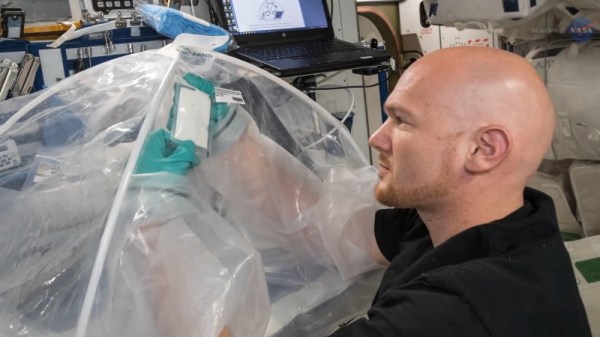
Now, thanks to recent research performed aboard the International Space Station, we have a much better idea of what to expect when those first batches of locally-sourced concrete are mixed up on the Moon or Mars. Of course, like most things related to spaceflight, the reality has proved to be a bit more complex than expected.
It’s fair to say that 2019 has not been a good year for the aircraft manufacturer Boeing, as its new 737 MAX aircraft has been revealed to contain a software fault that could cause the aircraft to enter a dive and crash. Now stories are circulating of another issue with the 737, some of the so-called “Pickle forks” in the earlier 737NG aircraft have been found to develop cracks.
It’s a concerning story and there are myriad theories surrounding its origin but it should also have a reassuring angle: the painstaking system of maintenance checks that underpins the aviation industry has worked as intended. This problem has been identified before any catastrophic failures have occurred. It’s not the story Boeing needs at the moment, but they and the regulators will no doubt be working hard to produce a new design and ensure that it is fitted to aircraft.
The Role of the Pickle Fork
For those of us who do not work in aviation though it presents a question: what on earth is a pickle fork? The coverage of the story tells us it’s something to do with attaching the wing to the fuselage, but without a handy 737 to open up and take a look at we’re none the wiser.
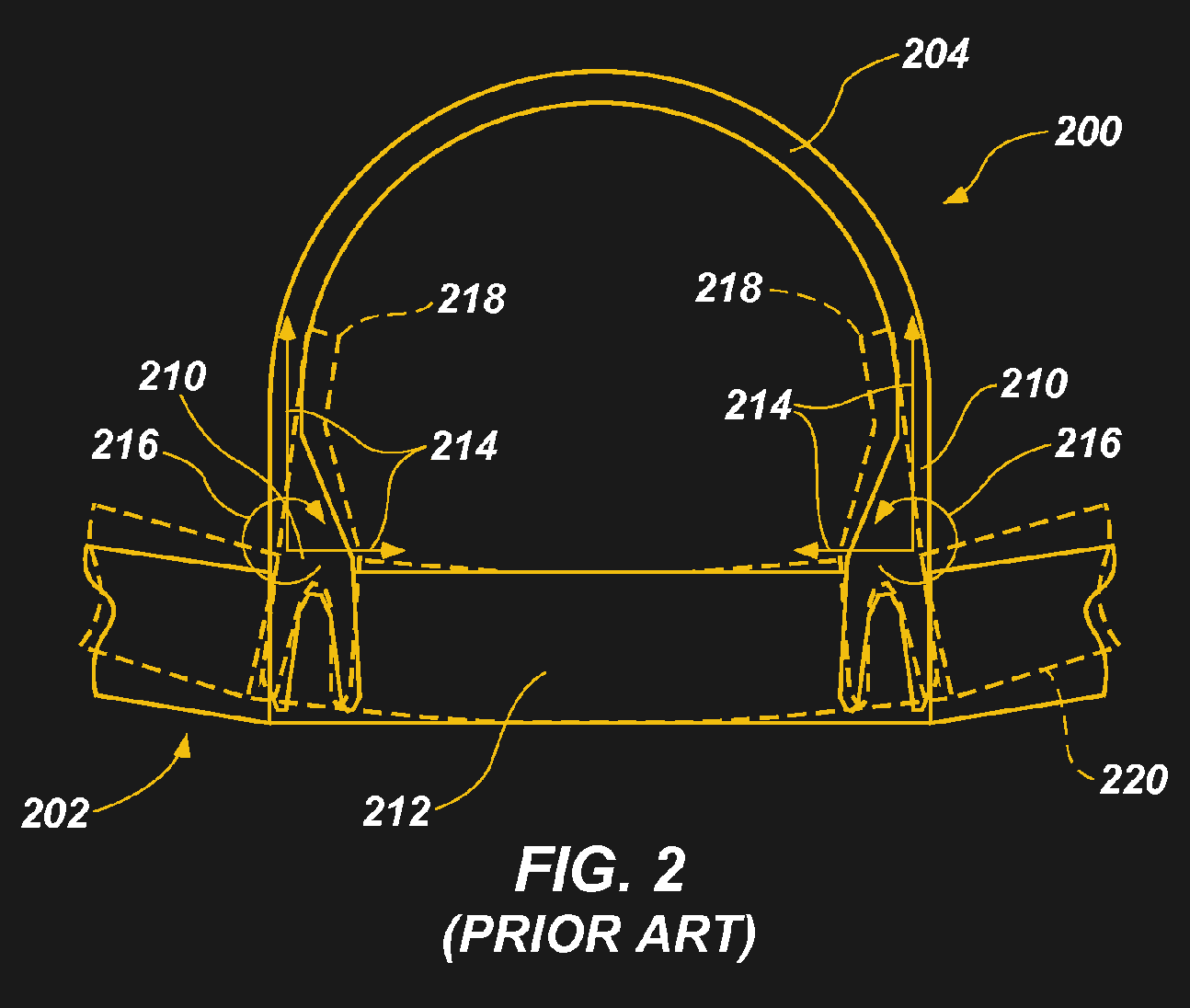
Fortunately there’s a comprehensive description of one along with a review of wing attachment technologies from Boeing themselves, and it can be found in one of their patents. US9399508B2 is concerned with an active suspension system for wing-fuselage mounts and is a fascinating read in itself, but the part we are concerned with is a description of existing wing fixtures on page 12 of the patent PDF.
A cross-section of the aircraft wing fixing, in which we’ve highlighted the role of the pickle forks. (Boeing)
The pickle fork is an assembly so named because of its resemblance to the kitchen utensil, which attaches firmly to each side of the fuselage and has two prongs that extend below it where they are attached to the wing spar.
For the curious engineer with no aviation experience the question is further answered by the patent’s figure 2, which provides a handy cross-section. The other wing attachment they discuss involves the use of pins, leading to the point of the patented invention. Conventional wing fixings transmit the forces from the wing to the fuselage as a rigid unit, requiring the fuselage to be substantial enough to handle those forces and presenting a problem for designers of larger aircraft. The active suspension system is designed to mitigate this, and we’d be fascinated to hear from any readers in the comments who might be able to tell us more.
We think it’s empowering that a science-minded general public can look more deeply at a component singled out in a news report by digging into the explanation in the Boeing patent. We don’t envy the Boeing engineers in their task as they work to produce a replacement, and we hope to hear of their solution as it appears.
Regular readers will know that we have reported extensively the sorry saga of official reactions to drone incidents, because we believe that major failings in reporting and investigation will accumulate to have an adverse effect on those many people in our community who fly multi-rotors. In today’s BBC report for example there is the assertion that 109 of the drone sightings came from “‘credible witnesses’ including a pilot and airport police” which while it sounds reassuring is we believe a dangerous route to follow because it implies that the quality of evidence is less important than its source. It is crucial to understand that multi-rotors are still a technology with which the vast majority of the population are still unfamiliar, and simply because a witness is a police officer or a pilot does not make them a drone expert whose evidence is above scrutiny.
Whichever stand you take on the drone sightings at Gatwick and in other places it is clear that Sussex Police do not emerge from this smelling of roses and that their investigation has been chaotic and inept from the start. We believe that there should be a public inquiry into the whole mess, so that those embarrassing parts of it which they and other agencies are so anxious to quietly forget can be subjected to scrutiny. We do not however expect this to happen any time soon.
Diesel is a fuel that has had a mixed history, with varying levels of take-up by consumers around the world. In the world of transport, diesel engines have offered better fuel economy and torque than comparable gasoline engines. Particularly popular in Europe, diesel established a strong consumer base in both small commuter cars as well as heavy vehicles such as trucks and buses.
Despite this, the tide is turning, and for the average motorist, diesel’s days may be numbered. Why is this the case, and what are the potential alternatives vying for diesel’s crown?
Plenty of Pros, but Plenty of Cons
Diesel remains a fuel with a varied uptake around the world. It has enjoyed great popularity in Europe in small commuter cars.
Diesel is a hydrocarbon fuel with several advantages over gasoline. Its lack of volatility makes it workable to use in a compression-ignition mode, and diesel engines can be run with lean fuel-air ratios. It also has a higher volumetric energy density than gasoline, and thanks to low volatility, diesel engines can run at significantly higher compression ratios without risking detonation. These benefits allow diesel engines to produce significantly more torque than similarly sized gasoline engines, and they can offer fuel economy gains in excess of 15%.
Unfortunately, diesel also comes with its fair share of drawbacks. Diesel engines are typically poor when it comes to power to weight ratio, as their high compression ratio and torque output demands heavier materials in their construction. The major bugbear of the diesel engine, however, is its emissions. Despite greater fuel efficiency, carbon dioxide output from a diesel engine is often far worse than that of a comparable gas motor. Additionally, their lean-burning nature leads to production of high levels of oxides of nitrogen (NOx), which have major negative environmental effects. There’s also the problem of particulate pollution, which is responsible for respiratory harm in humans. Diesel automobiles rank significantly worse than gasoline vehicles in all these areas. It’s begun to cause figurative headaches for the industry, and literal headaches for the public. Continue reading “The Future Of Diesel Is On Shaky Ground”→