That Super Mario Bros. C64 Port Was Too Good For This World

It was foolish to think that the adventure of the Mario Bros. would ever exist outside of the castle walls of the Nintendo Entertainment System. Except for that one time it did. The Hudson Soft company was a close collaborator with Nintendo, and parlayed that favor into being tasked with bringing Super Mario Bros. to platforms beyond the NES. The result of that collaboration would be 1986’s Super Mario Special, a port for the NEC PC-88 line of desktop computers. What ended up on that 5.25″ floppy sounded reminiscent of the Famicom original, but with a grand total of four colors (including black) and not a single scrolling screen in sight; Super Mario Special felt decidedly less than spectacular to play. Those eternally flickering sprites mixed with jarring blank screen transitions would never make it outside of Japan, so for a large swath of the world Mario would remain constrained to a gray plastic cartridge for years to come.

There are no shortage of ways to play Super Mario Bros. these days. Emulation in all of its various official and unofficial forms has taken care of that. Virtually everything with a processor more capable than the NES’s 6502 can play host to the Mushroom Kingdom, however, machines more contemporary with the NES still lacked access to the iconic title.

Enter the 2019 port of Super Mario Bros. for the Commodore 64 by [ZeroPaige]. A culmination of seven years work to port the game onto one of the most prolific computers of the eighties was a clear feat of brilliance and an amazing bit of programming that would have taken 1986 by storm. No pale imitation, this was Mario on the C64. Despite all of the nuance in recreating the jump-and-run model of the original paired with enveloping all eight sound channels of a dual SID chip setup, Nintendo saw fit to stifle the proliferation of this incredible 170 kB of software because they claim it infringes on their copyright.

Continue reading “That Super Mario Bros. C64 Port Was Too Good For This World”

The $50 Ham: Dummy Loads, Part 2

In the last installment of “The $50 Ham” I built a common tool used by amateur radio operators who are doing any kind of tuning or testing of transmitters: a dummy load. That build resulted in “L’il Dummy”, a small dummy load intended for testing typical VHF-UHF handy talkie (HT) transceivers, screwing directly into the antenna jack on the radio.

As mentioned in the comments by some readers, L’il Dummy has little real utility. There’s actually not much call for a dummy load that screws right into an HT, and it was pointed out that a proper dummy load is commercially available on the cheap. I think the latter observation is missing the point of homebrewing specifically and the Hackaday ethos in general, but I will concede the former point. That’s why at the same time I was building L’il Dummy, I was building the bigger, somewhat more capable version described here: Big Dummy.

Continue reading “The $50 Ham: Dummy Loads, Part 2”

Repairing A Catastrophic Failure: The Oroville Dam Update

More than two years ago, the largest dam in the United States experienced a catastrophic failure of its main spillway, the primary means by which operators of the dam prevent the lake from cresting its pen. The spillway failure caused so much erosion that the hydroelectric plant could not operate, further worsening the situation. In a few days, the dam was finally put to its design limitations, and water began flowing down an emergency spillway that had never been used, prompting the evacuation of 188,000 people living in downstream communities.

Since the time that this crisis came to a head, crews have been working around the clock to repair the main and emergency spillways in order to ensure that one of the largest pieces of infrastructure in the wealthiest country in the world does not suffer a complete failure. The dam’s spillways were reopened recently on April 2, in time for this year’s snow melting, and so far everything looks good.

The repair work was a true feat of engineering, and perhaps a logistics miracle as well. The video below goes over a lot of the raw materials inputs that were needed, but the one that stuck out the most was that a dump truck full of roller-compacted concrete was emptied every five minutes over the entire course of the repair — enough to build a sidewalk from the Oroville Dam to Texas. Part of the reason for the use of such an incredible amount of concrete was that it wasn’t just used to repair the main spillway. An enormous “splash pad” for the emergency spillway was also constructed to limit erosion in the event that it must be used again. But the full change goes beyond concrete and rebar. Join me after the break as I try to wrap my mind around the full scope of the Oroville Dam repair.

Continue reading “Repairing A Catastrophic Failure: The Oroville Dam Update”

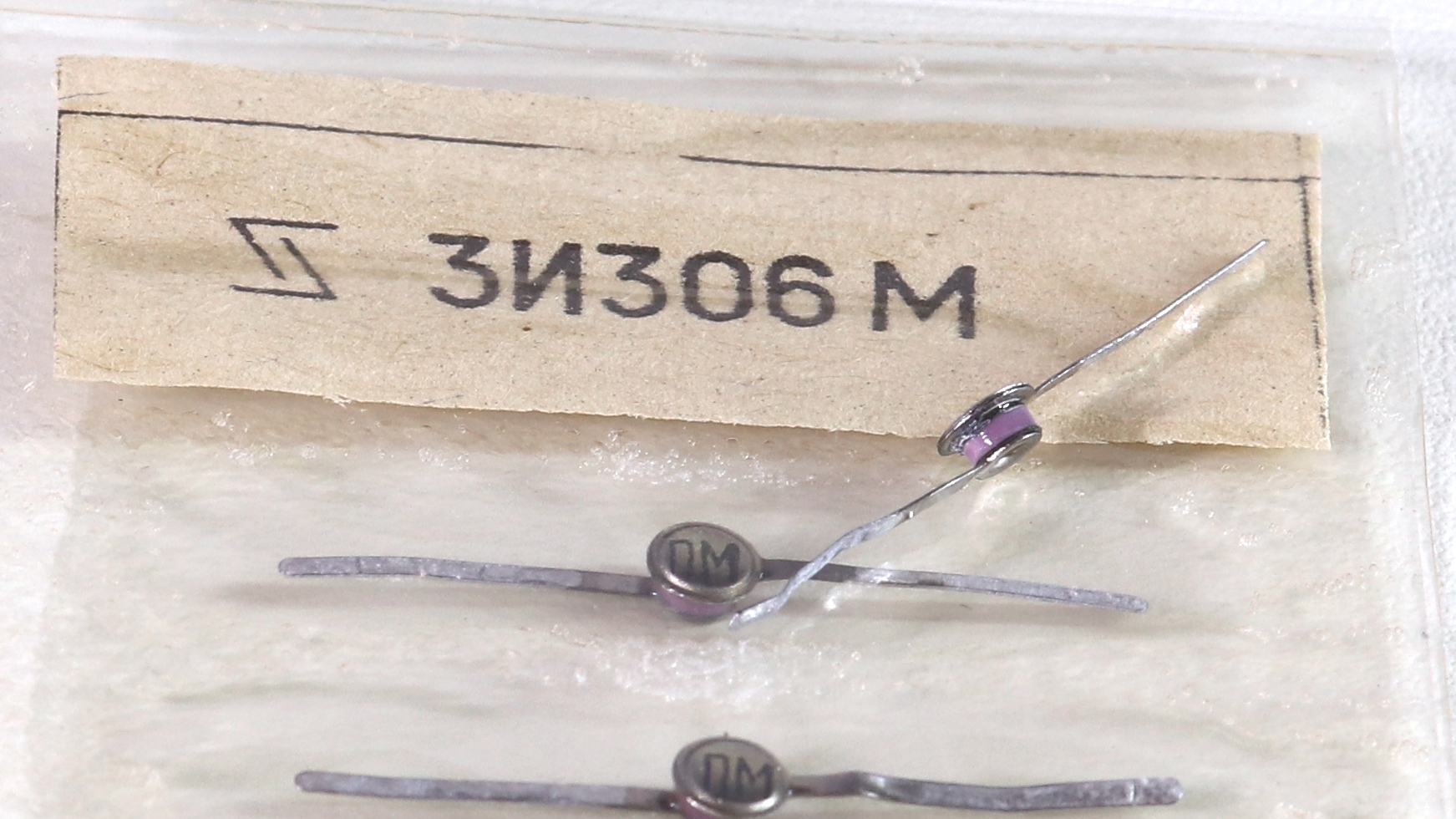
Fun With Negative Resistance II: Unobtanium Russian Tunnel Diodes

In the first part of this series, we took a look at a “toy” negative-differential-resistance circuit made from two ordinary transistors. Although this circuit allows experimentation with negative-resistance devices without the need to source rare parts, its performance is severely limited. This is not the case for actual tunnel diodes, which exploit quantum tunneling effects to create a negative differential resistance characteristic. While these two-terminal devices once ruled the fastest electronic designs, their use has fallen off dramatically with the rise of other technologies. As a result, the average electronics hacker probably has never encountered one. That ends today.

Due to the efficiencies of the modern on-line marketplace, these rare beasts of the diode world are not completely unobtainable. Although new-production diodes are difficult for individuals to get their hands on, a wide range of surplus tunnel diodes can still be found on eBay for as little as $1 each in lots of ten. While you’d be better off with any number of modern technologies for new designs, exploring the properties of these odd devices can be an interesting learning experience.

For this installment, I dug deep into my collection of semiconductor exotica for some Russian 3И306M gallium arsenide tunnel diodes that I purchased a few years ago. Let’s have a look at what you can do with just a diode — if it’s the right kind, that is.

[Note: the images are all small in the article; click them to get a full-sized version]

Continue reading “Fun With Negative Resistance II: Unobtanium Russian Tunnel Diodes”

It Is ‘Quite Possible’ This Could Be The Last Bay Area Maker Faire

The Bay Area Maker Faire is this weekend, and this might be the last one. This report comes from the San Francisco Chronicle, and covers the continuing problems of funding and organizing what has been called The Greatest Show and Tell on Earth. According to Maker Media CEO Dale Dougherty, “it is ‘quite possible’ that the event could be the Bay Area’s last Maker Faire.”

Maker Faire has been drawing artists, craftspeople, inventors, and engineers for more than a decade. In one weekend you can see risque needlepoint, art cars meant for the playa, custom racing drones, science experiments, homebrew computers, gigantic 3D printers, interactive LED art, and so much more. This is a festival built around a subculture defined by an act of creation; if you do something with your hands, if you build something, or if you make something, Maker Faire has something for you. However you define it, this is the Maker Movement and since 2006, there has been a Maker Faire, a festival to celebrate these creators.

It’s sad to learn the future of this event is in peril. Let’s take a look at how we got here and what the future might hold.

Continue reading “It Is ‘Quite Possible’ This Could Be The Last Bay Area Maker Faire”

2019 Cornell Cup Winners Include Autonomous Boat, Flapping UAV, And Leaping Rover

For college-aged engineers and designers, finding a problem they’re truly passionate about early on could very well set the trajectory for an entire career. This is precisely the goal of the Cornell Cup, a competition that tasks applicants with solving a real-world problem in a unique and interesting way. From what we saw this is definitely working, as teams showed up with ornithopter-based quadcopters, robotic dinghies, forest fire sniffers, and high-jumping rovers.

With such an open ended approach, individual entries have a tendency to vary wildly, running the gamut from autonomous vehicles to assistive technology. No team feels pressured to pursue a project they aren’t truly invested in, and everyone’s the better for it.

Given such lofty goals, Hackaday was proud to sponsor the 2019 Cornell Cup. Especially as it so closely aligns with the product design focus of this year’s Hackaday Prize. Designing something which solves a real-world problem is definitely part of the formula when the goal is to reach large scale production. And after seeing the entries first-hand during the Finals at Kennedy Space Center, we think every one of them would be a fantastic entry into the Hackaday Prize.

I don’t envy the judges who ultimately had to narrow it down to just a few teams to take home their share of the nearly $20,000 awarded. Join me after the break for a closer look at the projects that ended up coming out on top.

Continue reading “2019 Cornell Cup Winners Include Autonomous Boat, Flapping UAV, And Leaping Rover”

This Saturday: Meetup With Hackaday, Tindie, And Kickstarter

If you’re near San Francisco this weekend, this is what you should be doing. It’s The 6th Annual Hackaday x Tindie MFBA Meetup w/ Kickstarter.

Come hang out with the hardware hackers and bring along a project of your own to get the conversation going. We’re excited to move to a new, larger venue this year. All the good of the past five years will come along with us, plus many benefits of exclusively booking out an entire venue. You can catch up with people who have been on their feet all day running booths — and usually see the stuff they can’t show you at the Faire. The crew from Hackaday, Tindie, and Kickstarter will be on hand. And you’ll get a glimpse of a lot of the cool people and projects you’ve admired on the pages of Hackaday over the years. It’s fun, you should go!

First beer is on us if you RSVP using the link at the top of this article. But we’re mainly publishing this today to show off the poster art. Deposit your adoration for this exquisite illustration in the comments below.

Amazing Art by Joe Kim

We love all of the original art that Joe Kim creates for Hackaday articles. It’s impossible to look at his poster for this event and be anything but overjoyed. Here’s a link to the full size image, but be warned that the file is 14.4 MB