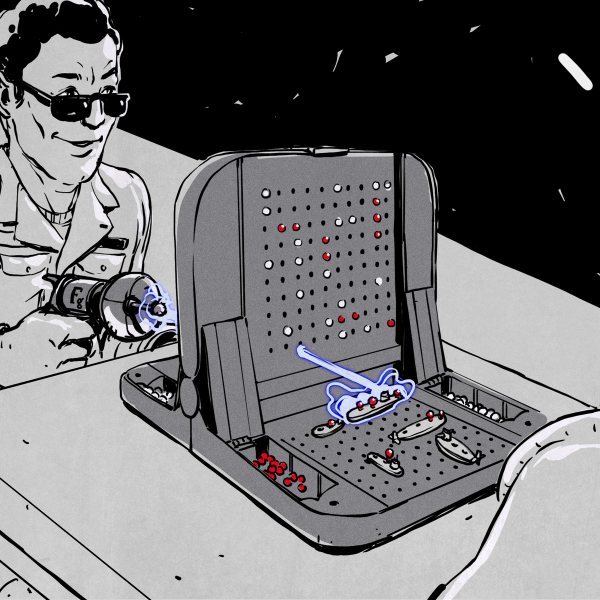
Two Bits A Gander: Of Premature Babies, Incubators, And Coney Island Sideshows

Newborn humans are both amazingly resilient and frighteningly fragile creatures. A child born with 40 full weeks of gestation has pretty good odds of surviving the neonatal period these days, and even if he or she comes along a few weeks early, things usually go smoothly. But those babies that can’t wait to get out and meet the world can run into trouble, and the earlier they’re born, the greater the intervention needed to save them.

We’ve all seen pictures of remarkably tiny babies in incubators, seemingly dwarfed by the gloved hands of an anxious parent who just wants that first magical touch of their baby’s skin. As common as such an intervention is now and as technologically advanced as neonatology is, care for premature infants as a medical discipline has a long and interesting history of technical and social hacks that’s worth looking at.

Continue reading “Two Bits A Gander: Of Premature Babies, Incubators, And Coney Island Sideshows”

Fire Hazard Testing

How do you know that new appliance you bought won’t burn your house down? Take a look at any electrical appliance, and you’ll find it marked with at least one, and most often, several safety certification marks such as UL, DIN, VDE, CSA or BSI. Practically every electrical product that plugs into utility supply needs to go through a mandatory certification process to ensure it meets these conformity test requirements. Some examples include domestic and industrial electrical appliances, tools, electrical accessories, consumer electronics and medical electronics.

When you look through a typical safety test standard, you’ll notice it breaks down the various tests in two categories. “Type” tests are conducted on prototypes and samples of the final product or its individual parts and components, and are not generally repeated unless there are changes in design or materials. “Acceptance” tests are routine verification tests conducted on 100% of the products produced. For example, a typical Type test would be used to check the fire retardant properties of the plastics used in the manufacture of the product during development, while a Routine test would be carried out to check for high voltage breakdown or leakage and touch currents on the production line.

Nowadays, a majority of countries around the world adopt standards created by international organizations such as IEC, ISO, and ITU, then fine tune them to suit local requirements. The IEC works by distributing its work across almost 170 Technical Committees and Subcommittees which are entrusted with the job of creating and maintaining standards. One of these committees is “TC89 Fire hazard testing” whose job is to provide “Guidance and test methods for assessing fire hazards of electro-technical equipment, their parts (including components) and electrical insulating materials”. These tests are why we feel safe enough to plug something in and still sleep at night.

Practically all electrical products need to confirm to this set of tests as part of their “Type” test routine. This committee produces fire hazard testing documents in the IEC 60695 series of standards. These documents range from general guidelines on several fire hazard topics to specific instructions on how to build the test equipment needed to perform the tests. It’s interesting to see how some of these tests are carried out and the equipment used. Join me after the break as we take a look at that process.

Continue reading “Fire Hazard Testing”

The Inventions Of Arthur Paul Pedrick

We hear a lot about patent portfolios when we scan our morning dose of tech news stories. Rarely a day passes without news of yet another legal clash between shady lawyers or Silicon Valley behemoths, either settling spats between multinationals or the questionable activities of patent trolls.

These huge and well-heeled organisations hold many patents, which they gather either through their staff putting in the hard work to make the inventions, or by acquisition of patents from other inventors. It is not often that a large quantity of patents are amassed by any other means, for example by an individual.

There is one prolific individual inventor and holder of many patents though. He achieved notoriety not through his inventions being successful, but through their seeming impracticability while conforming to the rules of the patent system. His name was [Arthur Paul Pedrick], and he was a retired British patent examiner who filed a vast number of eccentric patents from the early 1960s until his death in the mid 1970s, all of which stretched the boundaries of practicality.

His subject matter was varied, but included a significant number of transport inventions as well as innovations in the field of energy and nuclear physics. We wish there was room to feature them all on these pages, but sadly they are so numerous that it is difficult even to pick the selection we can show you. So sit down, and enjoy the weird and wonderful world of [Pedrick] innovations.

Continue reading “The Inventions Of Arthur Paul Pedrick”

The God Particle

The Greek philosopher Plato is well known for his allegories and metaphors. Of particular interest is his Allegory of the Cave, which appeared in The Republic, written around 380BCE. In it, Plato describes a group of prisoners which are chained to a wall within a cave, and have been all of their lives. They have no direct interaction with the world outside of the cave. They only know of the world via shadows that are cast on the wall opposite of them.  For the prisoners, the shadows are their reality.  Though you and I know the shadows are only a very low-resolution representation of that reality.

standard_01
Plato’s “Allegory of the Cave”, drawing by Markus Maurer

Theoretical physicist Steven Weinberg, a Nobel Prize winner who works out of the University of Texas at Austin, once likened himself to a prisoner in Plato’s cave. We are forever chained to this cave by the limitations in measurements we can make and experiments we can perform. All that we can know are shadows of the reality that exists in the sub-atomic world. We can see the shadowy figures lurking in our math and as wisps of misty vapor trails in our cloud chambers. We attempt to pierce the veil with the power of our imagination and draw nifty looking charts and animations depicting what our mind’s eye thinks it can see. But in the end, we are all trapped in a cave… staring at shadows. Reflections of a reality we can never truly know.

In our last Quantum Mechanics article, we introduced you to the idea of quantum electrodynamics, or to put it more simply — quantum field theory. In this article, we’re going to explore how QED lead to the prediction and eventual confirmation of something known as the Higgs Boson, also known as the God Particle. As usual, we’ll aim to keep things as simple as possible, allowing anyone with a curious mind to know what this God particle talk is all about. Like so many things in the quantum world, it all started with an unexpected outcome…

Continue reading “The God Particle”

Autonomous Delivery And The Last 100 Feet

You’ve no doubt by now seen Boston Dynamics latest “we’re living in the future” robotic creation, dubbed Handle. [Mike Szczys] recently covered the more-or-less-official company unveiling of Handle, the hybrid bipedal-wheeled robot that can handle smooth or rugged terrain and can even jump when it has to, all while remaining balanced and apparently handling up to 100 pounds of cargo with its arms. It’s absolutely sci-fi.

[Mike] closed his post with a quip about seeing “Handle wheeling down the street placing smile-adorned boxes on each stoop.” I’ve recently written about autonomous delivery, covering both autonomous freight as the ‘killer app’ for self-driving vehicles and the security issues posed by autonomous delivery. Now I want to look at where anthropoid robots might fit in the supply chain, and how likely it’ll be to see something like Handle taking over the last hundred feet from delivery truck to your door.

Continue reading “Autonomous Delivery And The Last 100 Feet”

Linux-Fu: Keeping Things Running

If you’ve used Linux from the early days (or, like me, started with Unix), you didn’t have to learn as much right away and as things have become more complex, you can kind of pick things up as you go. If you are only starting with Linux because you are using a Raspberry Pi, became unhappy with XP being orphaned, or you are running a cloud server for your latest Skynet-like IoT project, it can be daunting to pick it all up in one place.

Recently my son asked me how do you make something run on a Linux box even after you log off. I thought that was a pretty good question and not necessarily a simple answer, depending on what you want to accomplish.

There’s really four different cases I could think of:

  1. You want to launch something you know will take a long time.
  2. You run something, realize it is going to take a long time, and want to log off without stopping it.
  3. You want to write a script or other kind of program that detaches itself and keeps running (known as a daemon).
  4. You want some program to run all the time, even if you didn’t log in after a reboot.

Continue reading “Linux-Fu: Keeping Things Running”

Paramotoring For The Paranoid: Google’s AI And Relationship Mining

My son approached me the other day with his best 17-year-old sales pitch: “Dad, I need a bucket of cash!” Given that I was elbow deep in suds doing the dishes he neglected to do the night before, I mentioned that it was a singularly bad time for him to ask for anything.

Never one to be dissuaded, he plunged ahead with the reason for the funding request. He had stumbled upon a series of YouTube videos about paramotoring, and it was love at first sight for him. He waxed eloquent about how cool it would be to strap a big fan to his back and soar with the birds on a nylon parasail wing. It was actually a pretty good pitch, complete with an exposition on the father-son bonding opportunities paramotoring presented. He kind of reminded me of the twelve-year-old version of myself trying to convince my dad to spend $600 on something called a “TRS-80” that I’d surely perish if I didn’t get.

Needless to say, the $2500 he needed for the opportunity to break his neck was not forthcoming. But what happened the next day kind of blew my mind. As I was reviewing my YouTube feed, there among the [Abom79] and [AvE] videos I normally find in my “Recommended” queue was a video about – paramotoring. Now how did that get there?

Continue reading “Paramotoring For The Paranoid: Google’s AI And Relationship Mining”