PS2 Emulation On The Xbox Series S: A Story Of Walled Gardens

It’s hardly a secret any more at this point that today’s game consoles from Microsoft and Sony are essentially AMD gaming rigs packed up into a custom package and with tweaked system software. So it’s not too surprising that enterprising hackers got the Playstation 2 emulator of RetroArch running on an Xbox Series X|S game console despite Microsoft’s attempts to stop them. (Video, embedded below.)

It’s possible to sneak the RetroArch app past Microsoft’s security checkpoints by shelling out $19 for a Microsoft Developer Account, setting up Developer Mode on the XBox console, and getting the Universal Windows Platform (UWP) port of RetroArch from the official website. This has the advantage of it being a blessed-by-the-Redmond-gods approach. But one cannot play retail games in Developer Mode and large games due to a 2 GB limit.

More recently, a hacker by the name of [tunip3] found a flaw in the Xbox app distribution system which allows one to download a ‘retail’ version of RetroArch. This involves marking the RetroArch app as ‘private’, allowing it to skip a review by Microsoft. People whose email address is on a whitelist are then granted download permission for that app on their Xbox console. The advantage of this ‘retail’ approach is that it does not feature the 2 GB filesize limits. The disadvantage is that Microsoft is free to take the app down and ban [tunip3]’s developer account.

My Way Versus the Highway

A lot about this comes down to a simple question of ‘why?’. Why even jump through these hoops to set up a limited, possibly ToS-breaking emulator on what is ultimately a gaming PC running Windows 10? Why not use that Raspberry Pi 4 or NUC system that’s been giving you sad eyes for the past months from where it’s been stuffed into a dusty corner?

Continue reading “PS2 Emulation On The Xbox Series S: A Story Of Walled Gardens”

Peeking Inside A VW Gearbox Reveals Die Casting Truths

Recently, I was offered a 1997 Volkswagen Golf for the low, low price of free — assuming I could haul it away, as it suffered from a thoroughly borked automatic transmission. Being incapable of saying no to such an opportunity, I set about trailering the poor convertible home and immediately tore into the mechanicals to see what was wrong.

Alas, I have thus far failed to resurrect the beast from Wolfsburg, but while I was wrist deep in transmission fluid, I spotted something that caught my eye. Come along for a look at the nitty-gritty of transmission manufacturing!

Continue reading “Peeking Inside A VW Gearbox Reveals Die Casting Truths”

Remembering Chuck Yeager: The Supersonic Legend Whose Wings Were Clipped By A High School Diploma

In history there are people whose legacy becomes larger than life. Ask anyone who built and flew the first airplane, and you’d be hard-pressed to find someone who isn’t at least aware of the accomplishments of the Wright brothers. In a similar vein, Chuck Yeager’s pioneering trip into supersonic territory with the Bell X-1 airplane made his name essentially synonymous with the whole concept of flying faster than the speed of sound. This wasn’t the sole thing he did, of course: he also fought in WWII and Vietnam and worked as an instructor and test pilot, flying hundreds of different airplanes during his career.

Yeager’s insistence on making that first supersonic flight, despite having broken two ribs days earlier, became emblematic of the man himself: someone who never let challenges keep him from exploring the limits of the countless aircraft he flew, while inspiring others to give it their best shot. Perhaps ironically, it could be said that the only thing that ever held Yeager back was only having a high school diploma.

On December 7, 2020, Chuck Yeager died at the age of 97, leaving behind a legacy that will continue to inspire many for decades to come.

Continue reading “Remembering Chuck Yeager: The Supersonic Legend Whose Wings Were Clipped By A High School Diploma”

Hyperloop: Fast, But At What Cost?

When it comes to travelling long distances, Americans tend to rely on planes, while the Chinese and Europeans love their high speed rail. However, a new technology promises greater speed with lower fares, with fancy pods travelling in large tubes held at near-vacuum pressures. It goes by the name of Hyperloop.

Virgin Hyperloop recently ran the first-ever passenger test of a Hyperloop vehicle, reaching 100 mph on a short test track.

Spawned from an “alpha paper” put together by Elon Musk in 2013, the technology is similar to other vactrain systems proposed in the past. Claiming potential top speeds of up to 760 mph, Hyperloop has been touted as a new high-speed solution for inter city travel, beating planes and high speed rail for travel time. Various groups have sprung up around the world to propose potential routes and develop the technology. Virgin Hyperloop are one of the companies at the forefront, being the first to run a pod on their test track with live human passengers, reaching speeds of 100 mph over a short 500 meter run.

It’s an exciting technology with a futuristic bent, but to hit the big time, it needs to beat out all comers on price and practicality. Let’s take a look at how it breaks down.

Continue reading “Hyperloop: Fast, But At What Cost?”

North American Field Guide To Rail Cars

Trains are one of the oldest and most reliable ways we have of transporting things and people over long distances. But how often do you think about trains? Where I live, they can clearly be heard every hour or so. I should be used to the sound of them by now, but I like it enough to stop what I’m doing and listen to the whistles almost every time. In the early morning quiet, I can even hear the dull roar as it rumbles down the track.

I recently got a front row seat at a railroad crossing, and as the train chugged through the intersection, I found myself wondering for the hundredth time what all the cars had in them. And then, as I have for the last twenty or thirty years, I wondered why I never see a caboose anymore. I figured it was high time to answer both questions.


Image via GBX

Boxcar

Boxcars are probably the most easily identifiable after the engine and the caboose.

Boxcars carry crated and palletized freight like paper, lumber, packaged goods, and even boxes. Refrigerated box cars carry everything from produce to frozen foods.

Boxcars (and barns for that matter) are traditionally a rusty red color because there were few paint options in the late 1800s, and iron-rich dirt-based paint was dirt cheap.


Flat car with bulkheads. Image via YouTube

Flat Car

Standard, no-frills flat cars are the oldest types of rail cars. These are just big, flat platform cars that can carry anything from pipe, rail, and steel beams to tractors and military vehicles.

Flat cars come in different lengths and are also made with and without bulkheads that help keep the cargo in place. Some flat cars have a depression in the middle for really tall or heavy loads, like electrical transformers.


Image via Ship Cars Now

Auto Rack

As the name implies, auto racks carry passenger cars, trucks, and SUV from factories to distributors. They come in two- and three-level models, although there have been specialized auto racks over the years.

Perhaps the strangest auto rack of them all was the Vert-a-Pac. When Chevrolet came up with the Vega in the gas-conscious 1970s, they wanted to be able to move them as cheaply as possible, so they shipped the cars on end. If you’re wondering about all the fluids in the car when they were upended, a special baffle kept oil from leaking out, the batteries were capped, and the windshield washer fluid bottle was positioned at an angle.

Continue reading “North American Field Guide To Rail Cars”

Space Is Radioactive: Dealing With Cosmic Rays

Outer space is not exactly a friendly environment, which is why we go through great lengths before we boost people up there. Once you get a few hundred kilometers away from our beloved rocky planet things get uncomfortable due to the lack of oxygen, extreme cold, and high doses of radiation.

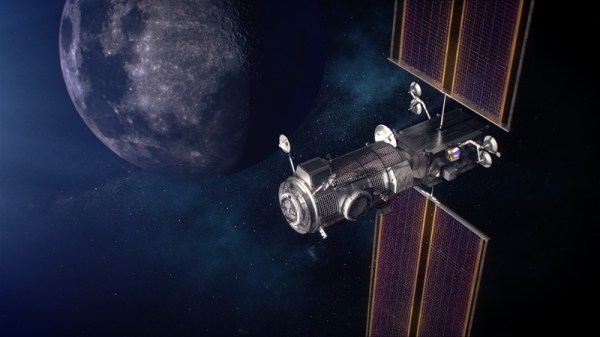
Especially the latter poses a great challenge for long-term space travel, and so people are working on various concepts to protect astronauts’ DNA from being smashed by cosmic rays. This has become ever more salient as NASA contemplates future manned missions to the Moon and Mars. So let’s learn more about the dangers posed by galactic cosmic rays and solar flares. Continue reading “Space Is Radioactive: Dealing With Cosmic Rays”

Norway Leads The Charge To Phase Out Internal Combustion; China And The UK To Follow

Climate change promises to cause untold damage across the world if greenhouse gas emissions continue at current levels for much longer. Despite the wealth of evidence indicating impending doom, governments have done what humans do best, and procrastinated on solving the issue.

However, legislatures around the world are beginning to snap into action. With transportation being a major contributor to greenhouse gas emissions — 16% of the global total in 2016 — measures are being taken to reduce this figure. With electric cars now a viable reality, many governments are planning to ban the sale of internal combustion vehicles in the coming decades.

Continue reading “Norway Leads The Charge To Phase Out Internal Combustion; China And The UK To Follow”