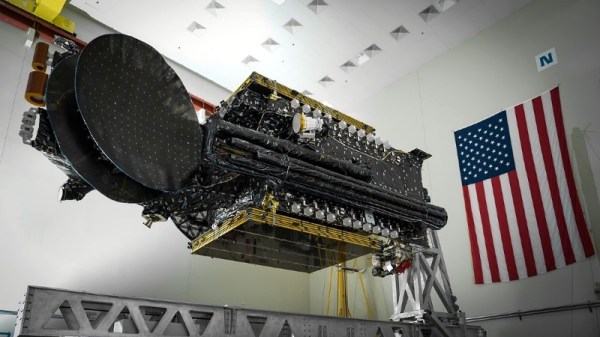
The Cost Of Moving Atoms In Space; Unpacking The Dubious Claims Of A $10 Quintillion Space Asteroid

The rest of the media were reporting on an asteroid named 16 Psyche last month worth $10 quintillion. Oddly enough they reported in July 2019 and again in February 2018 that the same asteroid was worth $700 quintillion, so it seems the space rock market is similar to cryptocurrency in its wild speculation. Those numbers are ridiculous, but it had us thinking about the economies of space transportation, and what atoms are worth based on where they are. Let’s break down how gravity wells, distance, and arbitrage work to figure out how much of this $10-$700 quintillion we can leverage for ourselves.

The value assigned to everything has to do with where a thing is, AND how much someone needs that thing to be somewhere else. If they need it in a different place, someone must pay for the transportation of it.

In international (and interplanetary) trade, this is where Incoterms come in. These are the terms used to describe who pays for and has responsibility for the goods between where they are and where they need to be. In this case, all those materials are sitting on an asteroid, and someone has to pay for all the transport and insurance and duties. Note that on the asteroid these materials need to be mined and refined as well; they’re not just sitting in a box on some space dock. On the other end of the spectrum, order something from Amazon and it’s Amazon that takes care of everything until it’s dropped on your doorstep. The buyer is paying for shipping either way; it’s just a matter of whether that cost is built into the price or handled separately. Another important term is arbitrage, which is the practice of taking a thing from one market and selling it in a different market at a higher price. In this case the two markets are Earth and space.

Continue reading “The Cost Of Moving Atoms In Space; Unpacking The Dubious Claims Of A $10 Quintillion Space Asteroid”

The Shipping Industry’s Transition To Atomic Power And Faster Deliveries

The transport of goods with cargo ships and especially container ships is the backbone of today’s economies, with about 90% of non-bulk cargo transported with them. This is in addition to the large number of oil tankers and LNG carriers. Unfortunately, due to their use of diesel engines they are also responsible for about 3.5% of the world’s CO2 emissions, in addition to 18 – 30% of nitrogen oxide and 9% of sulfur oxides.

Although the switch to low-sulfur diesel (ULSD) and the use of speed limits has reduced some of these pollutants, the shipping industry sees itself faced with the necessity to decarbonize in order to meet the obligations of the Paris Agreement. This essentially means finding a way to switch from diesel engines to an alternative which has comparable or better fuel costs, produces no or almost no pollutants and will not negatively affect logistics.

As a highly competitive, cut-throat industry, this does seem to leave shipping companies backed up againstĀ  a wall. Yet an existing, proven technology just so happens to exist already which can be retrofitted into existing cargo ships. Continue reading “The Shipping Industry’s Transition To Atomic Power And Faster Deliveries”

Larry Berg And The Purple Open Passion Project

It all started with an 88-ton Arburg RP300 injection molding machine in the basement, and a bit of inattention. Larry Berg wanted a couple custom plastic plugs for his Garmin GPS, so he milled out a mold and ran a few. But he got distracted, and came back an hour later to find that his machine had made 400. Instead of throwing them away, he mailed them away for free, but then he found that people started throwing money at him to make more. People all over the world.

This is how the Purple Open Project turned into an global network of GPS geeks, selling molded alternatives to the oddball Garmin plugs for pledges to pay an unspecified amount, and ended up producing over 350,000 plugs over 16 years before he passed away in 2012. This is the story of a hacker’s hacker, who wanted to be able to connect his GPS to his computer and use it the way he wanted, and accidentally created an international business.

Continue reading “Larry Berg And The Purple Open Passion Project”

The Special Fridges Behind The COVID-19 Vaccine, Why It’s Surprisingly Difficult To Be That Cool

One of the big stories last week was the announcement of results from clinical trials that suggest a new COVID-19 vaccine developed through the joint effort of the American and German companies Pfizer and BioNTech is strongly effective in providing immunity from the virus. In the midst of what is for many countries the second spike of the global pandemic this news has been received with elation as well as becoming the subject of much political manoeuvring.

While we currently have two vaccine candidates with very positive testing results, one of the most interesting things for us is the need to keep doses of the Pfizer/BioNTech vaccine extremely cold until they are administered. Let’s dig into details of the refrigeration problem at hand.

Continue reading “The Special Fridges Behind The COVID-19 Vaccine, Why It’s Surprisingly Difficult To Be That Cool”

Teardown: Recon Sentinel

It might be hard to imagine now, but there was a time when the average home had only a single Internet connected device in it. This beige box, known as a “desktop computer” in those olden days, was a hub of information and productivity for the whole family. There was a good chance you might even need to wait for your turn to use it, since it’s not like you had a personal device in your pocket that let you log on from the bathroom whatever room you might be in at the time. Which is just as well, since even if you had broadband back then, you certainly weren’t shooting it around the house with the Magic Internet Beams that we take for granted now.

Things are a lot more complicated today. Your computer(s) are only part of the equation. Now there’s mobile phones and tablets sharing your Internet connection, in addition to whatever smart gadgets you’ve brought into the mix. When your doorbell and half the light bulbs in the house have their own IP address, it takes more than a fresh copy of Norton AntiVirus to keep everything secure.

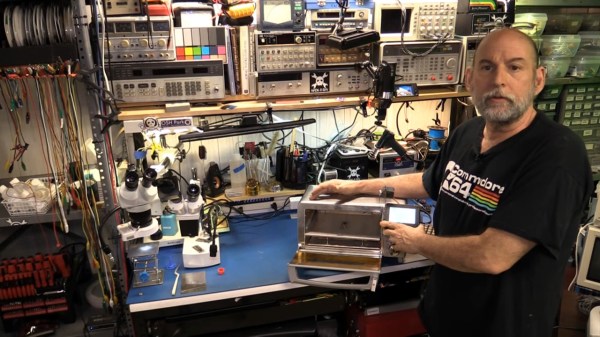
Which is precisely what Cigent Technology says the Recon Sentinel was designed for. Rather than protecting a single computer or device, this little gadget is advertised as being able to secure your entire network by sniffing out suspicious activity and providing instant notifications when new hardware is connected. According to the official whitepaper, it also runs a honeypot service Cigent calls a “cyber deception engine” and is capable of deploying “Active Defense Countermeasures” to confuse malicious devices that attempt to attack it.

It certainly sounds impressive. But for $149.99 plus an annual subscription fee, it better. If you’re hoping this teardown will tell you if it’s worth springing for the $899.99 Lifetime Subscription package, don’t get too excited. This isn’t a review, we’re only interested in cracking this thing open and seeing what makes it tick.

Continue reading “Teardown: Recon Sentinel”

After Eight-Month Break, Deep Space Network Reconnects With Voyager 2

When the news broke recently that communications had finally been re-established with Voyager 2, I felt a momentary surge of panic. I’ve literally been following the Voyager missions since the twin space probes launched back in 1977, and I’ve been dreading the inevitable day when the last little bit of plutonium in their radioisotope thermal generators decays to the point that they’re no longer able to talk to us, and they go silent in the abyss of interstellar space. According to these headlines, Voyager 2 had stopped communicating for eight months — could this be a quick nap before the final sleep?

Thankfully, no. It turns out that the recent blackout to our most distant outpost of human engineering was completely expected, and completely Earth-side. Upgrades and maintenance were performed on the Deep Space Network antennas that are needed to talk to Voyager. But that left me with a question: What about the rest of the DSN? Could they have not picked up the slack and kept us in touch with Voyager as it sails through interstellar space? The answer to that is an interesting combination of RF engineering and orbital dynamics.

Continue reading “After Eight-Month Break, Deep Space Network Reconnects With Voyager 2”

Adventures In Overclocking: Which Raspberry Pi 4 Flavor Is Fastest?

There are three different versions of the Raspberry Pi 4 out on the market right now: the “normal” Pi 4 Model B, the Compute Module 4, and the just-released Raspberry Pi 400 computer-in-a-keyboard. They’re all riffing on the same tune, but there are enough differences among them that you might be richer for the choice.

The Pi 4B is easiest to integrate into projects, the CM4 is easiest to break out all the system’s features if you’re designing your own PCB, and the Pi 400 is seemingly aimed at the consumer market, but it has a dark secret: it’s an overclocking monster capable of running full-out at 2.15 GHz indefinitely in its stock configuration.

In retrospect, there were hints dropped everywhere. The system-on-a-chip that runs the show on the Model B is a Broadcom 2711ZPKFSB06B0T, while the SOC on the CM4 and Pi 400 is a 2711ZPKFSB06C0T. If you squint just right, you can make out the revision change from “B” to “C”. And in the CM4 datasheet, there’s a throwaway sentence about it running more efficiently than the Model B. And when I looked inside the Pi 400, there was this giant aluminum heat spreader attached to the SOC, presumably to keep it from overheating within the tight keyboard case. But there was one more clue: the Pi 400 comes clocked by default at 1.8 GHz, instead of 1.5 GHz for the other two, which are sold without a heat-sink.

Can the CM4 keep up with the Pi 400 with a little added aluminum? Will the newer siblings leave the Pi 4 Model B in the dust? Time to play a little overclocking!

Continue reading “Adventures In Overclocking: Which Raspberry Pi 4 Flavor Is Fastest?”