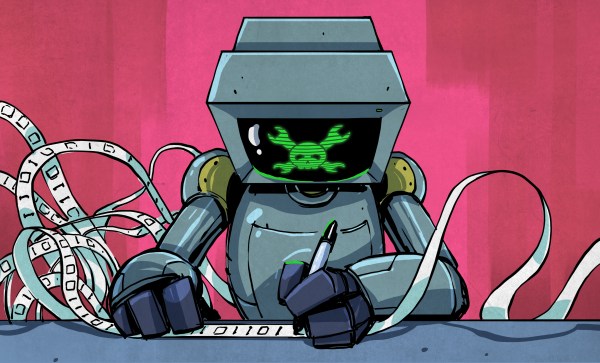
Will 2020 (Finally) Be The Year Of Electronic Paper?

These days paper is being phased out whenever possible, and while we’re still far from being a completely digital society, the last decade or two has seen a huge reduction in the amount of paper the average person deals with on a daily basis. At the very least, we seem a lot closer to a future without the printed page than we are flying cars or any of the other concepts we generally associate with the far-flung future.

That said, there’s still something undeniably appealing about reading on paper. The idea of squirting ink on a piece of thin wood might seem increasingly archaic to us, but it sure does look nice when you hold it in your hand. Which is exactly why so much effort has been put into recreating the look of printed paper in electronic form; we all love the experience of paper, but the traditional execution doesn’t align itself particularly well with modern sensibilities.

Of course electronic “eReaders”, most notably the Kindle line from Amazon, have gone a long way towards making this a reality. At least for reading books, anyway. But what about magazines, newspapers, or even the lowly notebook we keep by the bench to jot down measurements or ideas? A PDF datasheet, with graphics where the grey tones matter? Being able to carry a whole bookshelf worth of novels in your bag is incredible, but despite what science fiction has promised us since 2001: A Space Odyssey, we’re still consuming plenty of media off of dead trees.

But that might be changing soon. This year will see the release of two tablets that promise to deliver an experience much closer to reading and writing on traditional paper than anything we’ve seen previously. They certainly aren’t cheap, and it’s too early to tell how much is just hype, but these devices could end up being an important step towards the paperless future we’ve been dreaming of.

Continue reading “Will 2020 (Finally) Be The Year Of Electronic Paper?”

COVID-19 And The State Of The Climate

The novel coronavirus sweeping the globe has led governments to institute widespread quarantines to stem the spread. Many industries have slowed production or shutdown entirely, and economic activity has slowed to a crawl. This has naturally led to a sudden reduction in greenhouse gas emissions. But how great will the effect be, and will it buy us any real time?

On The Ground

Nitrogen dioxide levels in China have dropped sharply with the reduction in industrial activity due to COVID-19. Image source: NASA

In the wake of COVID-19, good news stories have sprung up as people look for a silver lining. Unfortunately, these stories aren’t always true. There aren’t dolphins in the waters of Venice, though the water has cleared due to reduced boat activity. And drunken elephants did not begin roaming the mountains of China.

Despite this, there have been notable reductions in emissions in several areas due to government-mandated lockdowns. Northern Italy is seeing a much lower concentration of nitrogen dioxide, likely due to reduced industrial and vehicular activity. Carbon monoxide levels have similarly dropped in New York, while China has seen its carbon emissions temporarily drop by a full 25%.

On the surface of it, these are all promising numbers. Many are cautiously optimistic that this could be a major development to help stave off the worst of climate change for a little longer. Nonetheless, it’s early days yet, and what happens after the crisis passes is just as important as what’s happening now.

Continue reading “COVID-19 And The State Of The Climate”

On 5G And The Fear Of Radiation

The world around us is a scary place, with a lot of visible and invisible dangers. Some of those invisible dangers are pretty obvious, such as that of an electrical shock from exposed wiring. Some are less obvious, for example the dangers of UV radiation to one’s skin and eyes commonly known, but also heavily underestimated by many until it’s too late. In the US alone, skin cancer ends up affecting about one in every five people.

Perhaps ironically, while the danger from something like UV radiation is often underestimated, other types of electromagnetic radiation are heavily overestimated. All too often, the distinction between what is and isn’t considered to be harmful appears to be made purely on basis of whether it is ‘natural’ radiation or not. The Sun is ‘natural’, ergo UV radiation cannot be harmful, but the EM radiation from a microwave or 5G wireless transceiver is human-made, and therefore harmful. This is, of course, backwards.

Rather than dismissing such irrational fears of radiation, let’s have a look at both the science behind radiation and the way humans classify ‘danger’, such as in the case of 5G cell towers. Continue reading “On 5G And The Fear Of Radiation”

Getting To Space Is Even Harder During A Pandemic

At this point, most of us are painfully aware of the restrictions that COVID-19 social distancing protocols have put on our daily lives. Anyone who can is working from home, major events are canceled, non-essential businesses are closed, and travel is either strongly discouraged or prohibited outright. In particularly hard hit areas, life and commerce has nearly ground to a halt with no clear end date in sight.

Naturally, there are far reaching consequences for this shutdown beyond what’s happening on the individual level. Large scale projects are also being slowed or halted entirely, as there’s only so much you can do remotely. That’s especially true when the assembly of hardware is concerned, which has put some industries in a particularly tight spot. One sector that’s really feeling the strain is aerospace. Around the world, space agencies are finding that their best laid plans are suddenly falling apart in the face of COVID-19.

In some cases it’s a minor annoyance, requiring nothing more than some tweaks to procedures. But when the movements of the planets are concerned, a delay of weeks or months changes everything. While things are still changing too rapidly to make an exhaustive list, we already know of a few missions that are being impacted in these uncertain times.

Continue reading “Getting To Space Is Even Harder During A Pandemic”

Cellular Tracking Used During COVID-19 Pandemic

As most in the technology community know, nation states have a suite of powerful tools that can be used to trace and monitor mobile phones. By and large, this comes up in discussions of privacy and legislation now and then, before fading out of the public eye once more. In the face of a global pandemic, however, governments are now using these tools in the way many have long feared – for social control. Here’s what’s happening on the ground.

The Current Situation

With COVID-19 sweeping the globe, its high level of contagiousness and rate of hospitalizations has left authorities scrambling to contain the spread. Unprecedented lockdowns have been put in place in an attempt to flatten the curve of new cases to give medical systems the capacity to respond. A key part of this effort is making sure that confirmed cases respect quarantine rules, and isolate themselves to avoid spreading the disease. Rules have also been put in place in several countries where all overseas arrivals must quarantine, regardless of symptoms or status. Continue reading “Cellular Tracking Used During COVID-19 Pandemic”

FDA Says PPE Can Be Reused After Trip Through Shipping Container Decontamination System

We are hearing so much in the news about shortages of personal protective equipment, or PPE, for healthcare workers. Factories are being asked to perform the impossible when it comes to production be the need is so real, so immediate, and so widespread.

The problem with rapid consumption of PPE is that once it has been exposed to infection, it’s contaminated and can’t be used again. Physically it may be fine, but it retains the capability to infect other people. If there were some way it could be effectively cleaned and decontaminated for re-use, it would reduce the strain on the supply chain and result in a greater availability of PPE for all those who require it.

This is the promise of Battelle’s Critical Care Decontamination System, a shipping-container-sized unit which has received approval from the FDA at break-neck speed.

Continue reading “FDA Says PPE Can Be Reused After Trip Through Shipping Container Decontamination System”

Star Trackers: Telling Up From Down In Any Space

Keeping track of position is crucial in a lot of situations. On Earth, it’s usually relatively straight-forward, with systems having been developed over the centuries that would allow one to get at least a rough fix on one’s position on this planet. But for a satellite out in space, however, it’s harder. How do they keep their communications dishes pointed towards Earth?

The stars are an obvious orientation point. The Attitude and Articulation Control Subsystem (AACS) on the Voyager 1 and 2 space probes has the non-enviable task of keeping the spacecraft’s communication dish aligned precisely with a communications dish back on Earth, which from deep space is an incomprehensibly tiny target.

Back on Earth, the star tracker concept has become quite popular among photographers who try to image the night skies. Even in your living room,  VR systems also rely on knowing the position of the user’s body and any peripherals in space. In this article we’ll take a look at the history and current applications of this type of position tracking. Continue reading “Star Trackers: Telling Up From Down In Any Space”