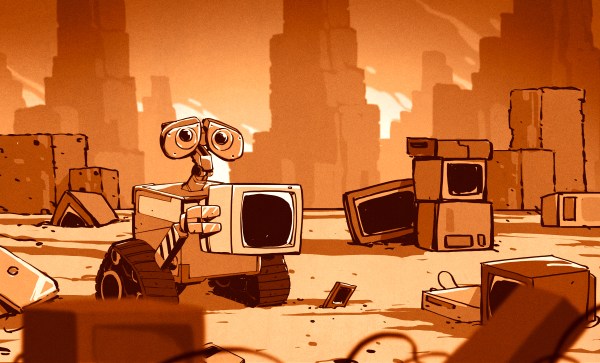
The Woeful World Of Worldwide E-Waste

How large is the cache of discarded electronics in your home? They were once expensive and cherished items, but now they’re a question-mark for responsible disposal. I’m going to dig into this problem — which goes far beyond your collection of dead smartphones — as well as the issues of where this stuff ends up versus where it should end up. I’m even going to demystify the WEEE mark (that crossed out trashcan icon you’ve been noticing on your gadgets), talk about how much jumbo jets weigh, and touch on circular economies, in the pursuit of better understanding of the waste streams modern gadgets generate.

Our lives are encountering an increasing number of “how do I dispose of this [X]” moments, where X is piles of old batteries, LCDs, desktop towers, etc. This leads to relationship-testing piles of garbage potential in a garage or the bottom of a closet. Sometimes that old gear gets sold or donated. Sometimes there’s a handy e-waste campaign that swings through the neighborhood to scoop that pile up, and sometimes it eventually ends up in the trash wrapped in that dirty feeling that we did something wrong. We’ve all been there; it’s easy to discover that responsible disposal of our old electronics can be hard.

Fun fact: the average person who lives in the US generates 20 kg of e-waste annually (or about 44 freedom pounds). That’s not unique, in the UK it’s about 23 kg (that’s 23 in common kilograms), 24 kg for Denmark, and on and on. That’s quite a lot for an individual human, right? What makes up that much waste for one person? For that matter, what sorts of waste is tracked in the bogus sounding e-waste statistics you see bleated out in pleading Facebook posts? Unsurprisingly there are some common definitions. And the Very Serious People people at the World Economic Forum who bring you the definitions have some solutions to consider too.

We spend a lot of time figuring out how to build this stuff. Are we spending enough time planning for what to do with the gear once it falls out of favor? Let’s get to the bottom of this rubbish.
Continue reading “The Woeful World Of Worldwide E-Waste”
Bell Labs, Skunk Works, And The Crowd Sourcing Of Innovation

I’ve noticed that we hear a lot less from corporate research labs than we used to. They still exist, though. Sure, Bell Labs is owned by Nokia and there is still some hot research at IBM even though they quit publication of the fabled IBM Technical Disclosure Bulletin in 1998. But today innovation is more likely to come from a small company attracting venture capital than from an established company investing in research. Why is that? And should it be that way?

The Way We Were

There was a time when every big company had a significant research and development arm. Perhaps the most famous of these was Bell Labs. Although some inventions are inevitably disputed, Bell Labs can claim radio astronomy, the transistor, the laser, Unix, C, and C++ among other innovations. They also scored a total of nine Nobel prizes.

Bell Labs had one big advantage: for many years it was part of a highly profitable monopoly, so perhaps the drive to make money right away was less than at other labs. Also, I think, times were different and businesses often had the ability to look past the next quarter.

Continue reading “Bell Labs, Skunk Works, And The Crowd Sourcing Of Innovation”

Predicting Weather With The Internet Of Cars

Follow this train of thought: cars have sensors, cars are in frequent use over large areas, cars are the ultimate distributed sensor network for weather conditions.

Many years ago, as I wasted yet another chunk of my life sitting in the linear parking lot that was my morning commute, I mused that there had to be a way to prevent this madness. I thought: What if there was a way for the cars to tell each other where slowdowns are? This was long before smartphones, so it would have to be done the hard way. I imagined that each vehicle could have a small GPS receiver and a wireless transceiver of some sort, to send the vehicle’s current position to a central server, which would then send the aggregate speed data for each road back to the subscriber’s car. A small display would show you the hotspots and allow you to choose an alternate route. Genius! I had finally found my billion dollar idea.

Sadly, it was not to be. Seemingly days later, everyone on the planet had a GPS-equipped smartphone in his or her pocket, and the complex system I imagined was now easily implemented as software. Comically, one of the reasons I chose not to pursue my idea is that I didn’t think anyone would willingly let a company have access to their location information. Little did I know.

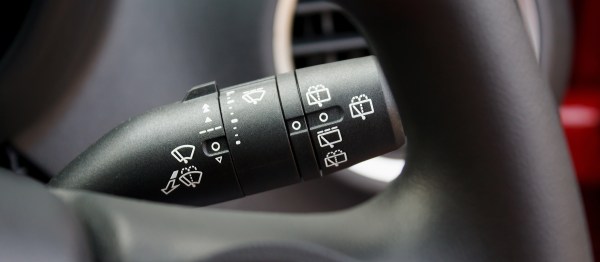
So it was with great interest that I read an article claiming that windshield wiper data from connected cars can be used to prevent floods. I honestly thought it was a joke at first, like something from a Monty Python sketch. But as I read through the article, I thought about that long-ago idea I had had, which amounted to a distributed sensor platform, might actually be useful for more than just detecting traffic jams.

Continue reading “Predicting Weather With The Internet Of Cars”

In Space, No One Can Hear You Explode: The Byford Dolphin Incident

“It wouldn’t happen that way in real life.” One of the most annoying habits of people really into the “sci” of sci-fi is nitpicking scientific inaccuracies in movies. The truth is, some things just make movies better, even if they are wrong.

What would Star Wars be without the sounds of an epic battle in space where there should be no sound? But there are plenty of other examples where things are wrong and it would have been just as easy to get them right — the direction of space debris in the movie Gravity, for example. But what about the age-old trope of explosive decompression? Some movies show gross body parts flying everywhere. Others show distressed space travelers surviving in space for at least brief periods.
It turns out, dropping pressure from one atmosphere to near zero is not really good for you as you might expect. But it isn’t enough to just make you pop like some meat balloon. You are much more likely to die from a pulmonary embolism or simple suffocation. But you are a meat balloon if you experience a much greater change in pressure. How do we know? It isn’t theoretical. These things have happened in real life.

Continue reading “In Space, No One Can Hear You Explode: The Byford Dolphin Incident”

The Problem With Self-Driving Cars: The Name

In 1899, you might have been forgiven for thinking the automobile was only a rich-man’s toy. A horseless carriage was for flat garden pathways. The auto was far less reliable than a horse. This was new technology, and rich people are always into their gadgets, but the automobile is a technology that isn’t going to go anywhere. The roads are too terrible, they don’t have the range of a horse, and the world just isn’t set up for mechanized machines rolling everywhere.

This changed. It changed very quickly. By 1920, cars had taken over. Industrialized cities were no longer in the shadow of a mountain of horse manure. A highway, built specifically for automobiles, stretched from New York City to San Francisco. The age of the automobile had come.

And here we are today, in the same situation, with a technology as revolutionary as the automobile. People say self-driving cars are toys for rich people. Teslas on the road aren’t for the common man because the economy model costs fifty thousand dollars. They only work on highways anyway. The reliability just isn’t there for level-5 automation. You’ll never have a self-driving car that can drive over mountain roads in the snow, or navigate a ball bouncing into the street of a residential neighborhood chased by a child. But history proves time and time again that people are wrong. Self-driving cars are the future, and the world will be unrecognizable in thirty years. There’s only one problem: we’re not calling them the right thing. Self-driving cars should be called ‘cryptocybers’.

Continue reading “The Problem With Self-Driving Cars: The Name”

The “Impossible” Tech Behind SpaceX’s New Engine

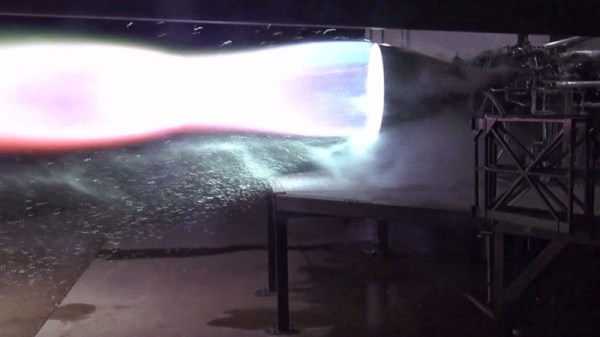
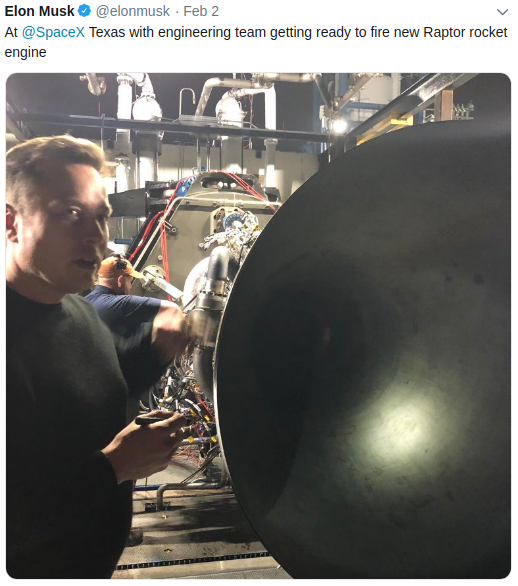
Followers of the Church of Elon will no doubt already be aware of SpaceX’s latest technical triumph: the test firing of the first full-scale Raptor engine. Of course, it was hardly a secret. As he often does, Elon has been “leaking” behind the scenes information, pictures, and even video of the event on his Twitter account. Combined with the relative transparency of SpaceX to begin with, this gives us an exceptionally clear look at how literal rocket science is performed at the Hawthorne, California based company.

This openness has been a key part of SpaceX’s popularity on the Internet (that, and the big rockets), but its been especially illuminating in regards to the Raptor. The technology behind this next generation engine, known as “full-flow staged combustion” has for decades been considered all but impossible by the traditional aerospace players. Despite extensive research into the technology by the Soviet Union and the United States, no engine utilizing this complex combustion system has even been flown. Yet, just six years after Elon announced SpaceX was designing the Raptor, they’ve completed their first flight-ready engine.

The full-flow staged combustion engine is often considered the “Holy Grail” of rocketry, as it promises to extract the most possible energy from its liquid propellants. In a field where every ounce is important, being able to squeeze even a few percent more thrust out of the vehicle is worth fighting for. Especially if, like SpaceX, you’re planning on putting these new full-flow engines into the world’s largest operational booster rocket and spacecraft.

But what makes full-flow staged combustion more efficient, and why has it been so difficult to build an engine that utilizes it? To understand that, we’ll need to first take a closer look at more traditional rocket engines, and the design paradigms which have defined them since the very beginning.

Continue reading “The “Impossible” Tech Behind SpaceX’s New Engine”

Security Engineering: Inside The Scooter Startups

A year ago, ridesharing scooter startups were gearing up for launch. Workers at Bird, Lime, Skip, and Spin were busy improving their app, retrofitting scooters, and most importantly, figuring out the logistics of distributing thousands of electronic scooters along the sidewalks of the Bay Area. These companies were gearing up for a launch in early summer, but one company — nobody can remember exactly who — decided to launch early. First mover advantage, and all. Overnight, these scooter companies burst into overdrive, chucking scooters out of panel vans onto the sidewalk simply to keep up with the competition.

The thing about San Francisco, and California in general, is that it’s a very direct democracy masquerading as a representative government. Yes, there are city council members and a state legislature, but the will of the people will rule. No one liked tripping over the scooters littering the sidewalks, so the scooters ended up at the bottom of a lake. Or in trees. Or in the trash. In time, city permits were issued, just like a hot dog cart or any other business operating on a public sidewalk, and the piles of electric scooters disappeared. Not before hundreds of scooters were vandalized, that is.

It’s still early in the electric scooter rental startup space, but if there’s one company leading the pack, It’s Bird. they’re getting the most press, the CEO was formerly at Lyft and Uber (which explains the press), and they’ve raised nearly a half Billion dollars in funding (which explains the press). Bird is valued at two Billion dollars, and it’s one of four major ridesharing scooter startups. Pets.com had nothing on this.

Despite how overvalued you think a scooter startup might be, they’re still a business, and they’re ruled by the bottom line. Bird has grown a lot in the past year, and with that comes engineering challenges. The Bird scooters must be more resistant to vandalism. The Bird scooters must be harder to steal. Above all else, they must remain in service longer. This is the teardown of how Bird managed to improve their bottom line and engineer a better scooter.

Continue reading “Security Engineering: Inside The Scooter Startups”