Practical Public Key Cryptography

Encryption is one of the pillars of modern-day communications. You have devices that use encryption all the time, even if you are not aware of it. There are so many applications and systems using it that it’s hard to begin enumerating them. Ranging from satellite television to your mobile phone, from smart power meters to your car keys, from your wireless router to your browser, and from your Visa to your Bitcoins — the list is endless.

One of the great breakthroughs in the history of encryption was the invention of public key cryptography or asymmetrical cryptography in the 70’s. For centuries traditional cryptography methods were used, where some secret key or scheme had to be agreed and shared between the sender and the receiver of an encrypted message.

Asymmetric cryptography changed that. Today you can send an encrypted message to anyone. This is accomplished by the use of a pair of keys: one public key and one private key. The key properties are such that when something is encrypted with the public key, only the private key can decrypt it and vice-versa. In practice, this is usually implemented based on mathematical problems that admit no efficient solution like certain integer factorization, discrete logarithm and elliptic curve relationships.

But the game changer is that the public key doesn’t have to be kept secret. This allows cryptography to be used for authentication — proving who someone is — as well as for encryption, without requiring you to have previously exchanged secrets. In this article, I’ll get into the details of how to set yourself up so that anyone in the world is able to send you an e-mail that only you can read.
Continue reading “Practical Public Key Cryptography”

3D Prints And Food

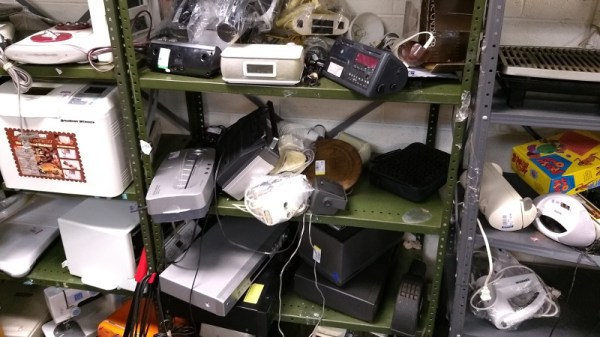
We recently ran a post about a cute little 3D printed elephant that could dispense booze. The design didn’t actually have the plastic touching the liquid — there was a silicone tube carrying the shots. However, it did spark a conversation at the secret Hackaday bunker about how safe it is to use 3D printed objects for food. In particular, when I say 3D printing, I’m talking fused deposition modeling. Yes, there are other technologies, but most of us are printing using filament laid out in layers with a hot nozzle.

There’s a common idea that ABS is bad in general, but that PET and PLA are no problem because there are food-safe versions of those plastics available. However, the plastic is only a small part of the total food safety picture. Let me be clear: I am not a medical professional and although my computers have run a few plastics plants in years past, I am not really an expert on polymer chemistry, either. However, I don’t use 3D printed materials to hold or handle food and while you might not drop dead if you do, you might want to reconsider.

Continue reading “3D Prints And Food”

Inside Two-Factor Authentication Apps

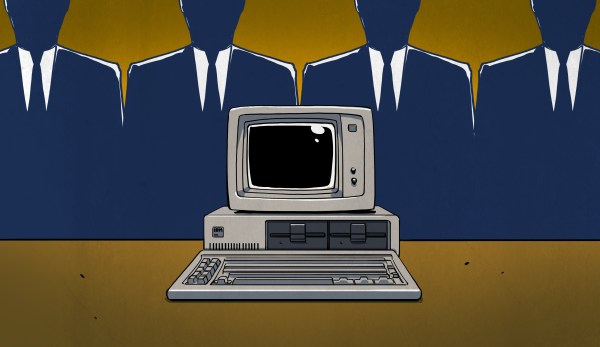
Passwords are in a pretty broken state of implementation for authentication. People pick horrible passwords and use the same password all over the place, firms fail to store them correctly and then their databases get leaked, and if anyone’s looking over your shoulder as you type it in (literally or metaphorically), you’re hosed. We’re told that two-factor authentication (2FA) is here to the rescue.

Well maybe. 2FA that actually implements a second factor is fantastic, but Google Authenticator, Facebook Code Generator, and any of the other app-based “second factors” are really just a second password. And worse, that second password cannot be stored hashed in the server’s database, which means that when the database is eventually compromised, your “second factor” blows away with the breeze.

Second factor apps can improve your overall security if you’re already following good password practices. We’ll demonstrate why and how below, but the punchline is that the most popular 2FA app implementations protect you against eavesdropping by creating a different, unpredictable, but verifiable, password every 30 seconds. This means that if someone overhears your login right now, they wouldn’t be able to use the same login info later on. What 2FA apps don’t protect you against, however, are database leaks.

Continue reading “Inside Two-Factor Authentication Apps”

Computers That Never Were

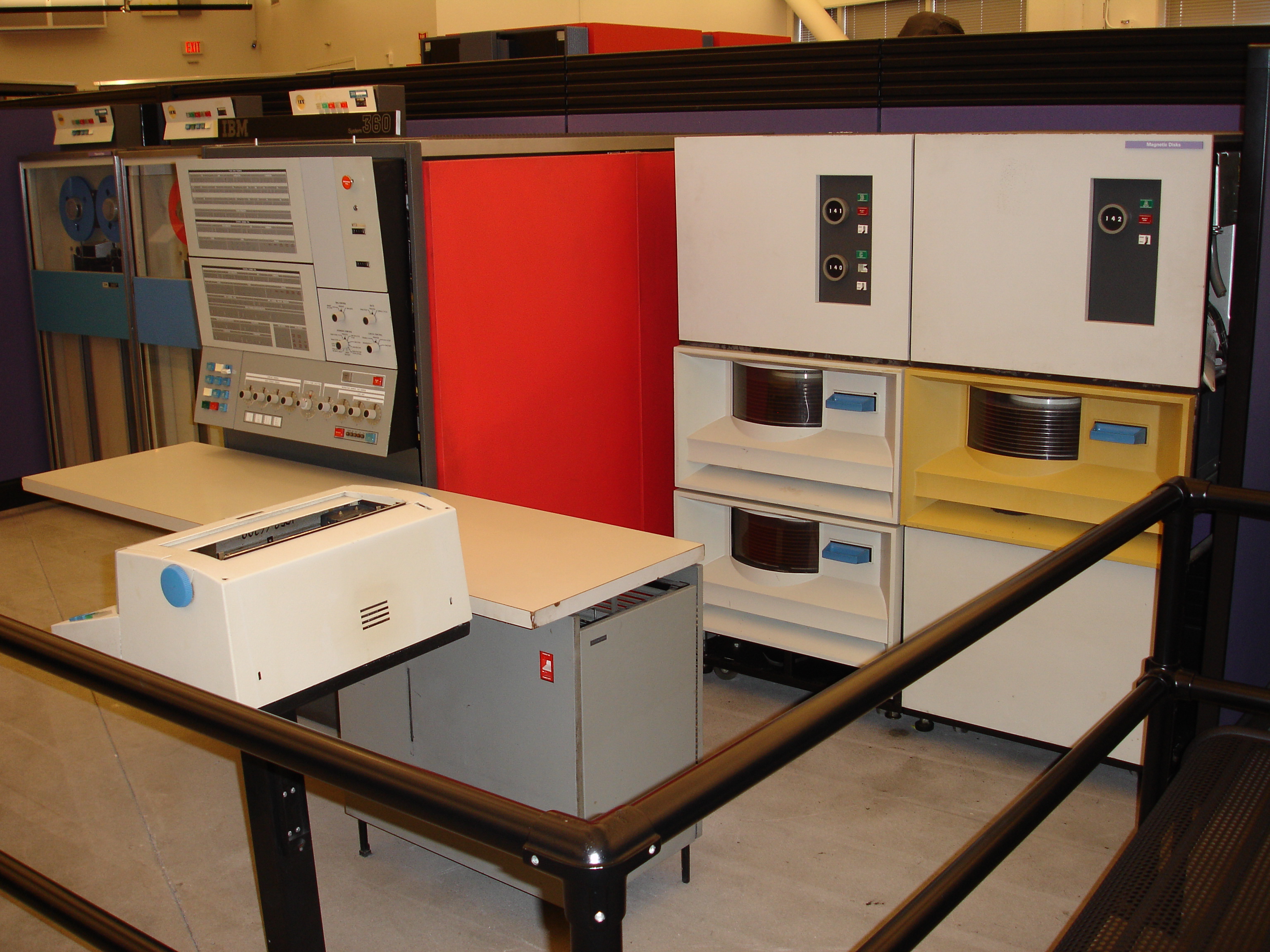
Today it is easier than ever to learn how to program a computer. Everyone has one (and probably has several) and there are tons of resources available. You can even program entirely in your web browser and avoid having to install programming languages and other arcane software. But it wasn’t always like this. In the sixties and seventies, you usually learned to program on computers that didn’t exist. I was recently musing about those computers that were never real and wondering if we are better off now with a computer at every neophyte’s fingertips or if somehow these fictional computing devices were useful in the education process.

Back in the day, almost no one had a computer. Even if you were in the computer business, the chances that you had a computer that was all yours was almost unheard of. In the old days, computers cost money — a lot of money. They required special power and cooling. They needed a platoon of people to operate them. They took up a lot of space. The idea of letting students just run programs to learn was ludicrous.

Continue reading “Computers That Never Were”

LEGO-compatible Electronics Kits Everywhere!

Within the last few years, a lot of companies have started with the aim to disrupt the educational electronics industry using their LEGO-compatible sets. Now they’re ubiquitous, and fighting each other for their slice of space in your child’s box of bricks. What’s going on here?

Raison D’Être

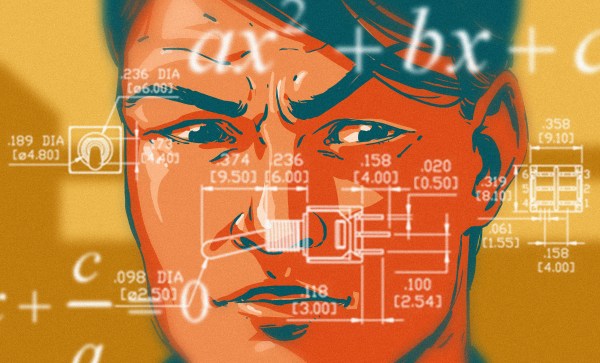
The main reason for LEGO-compatibility is familiarity. Parents and children get LEGO. They have used it. They already have a bunch. When it comes to leveling up and learning about electronics, it makes sense to do that by adding on to a thing they already know and understand, and it means they can continue to play with and get more use from their existing sets. The parent choosing between something that’s LEGO-compatible and a completely separate ecosystem like littleBits (or Capsela) sees having to set aside all the LEGO and buy all new plastic parts and learn the new ecosystem, which is a significant re-investment. littleBits eventually caught on and started offering adapter plates, and that fact demonstrates how much demand there is to stick with the studs.

Continue reading “LEGO-compatible Electronics Kits Everywhere!”

Building The Hackaday Superconference Badge

The best hardware conference is just a few weeks away. This is the Hackaday Superconference, and it’s two days of talks, an extra day of festivities, soldering irons, and an epic hardware badge. We’ve been working on this badge for a while now, and it’s finally time to share some early details. This is an awesome badge and a great example of how to manufacture electronics on an extremely compressed timetable. This is badgelife, the hardware demoscene of electronic conference badges.

So, what does this badge do? It’s a camera. It has games, and it’s designed by [Mike Harrison] of Mike’s Electric Stuff. He designed and prototyped this badge in a single weekend. On board is a PIC32 microcontroller, an OV9650 camera module, and a bright, crisp 128×128 resolution color OLED display. Tie everything together with a few buttons, and you have a badge that’s really incredible.

So, how do you get one? You’ve got to come to the Hackaday Superconference. This year we’re doing things a bit differently and opening the doors a day early to get the hacker village started with badge hacking topped off by a party that evening and everyone coming to Supercon is invited! This is a badge full of games, puzzles, and video capture and isn’t something to miss. We have less than 30 tickets left so grab your ticket now and read on.

Continue reading “Building The Hackaday Superconference Badge”

Happy Ada Lovelace Day!

Today is Ada Lovelace Day, a day to celebrate and encourage women in the fields of science and technology. The day is named after Augusta Ada King-Noel, Countess of Lovelace, born Byron. (You can see why we just call her Ada Lovelace.) She was a brilliant mathematician, and the writer of what’s probably the first real computer program — it computed the Bernoulli series. At least according Charles Babbage, in correspondence to Michael Faraday, she was an “enchanted math fairy”. Not only a proto-coder, she wrote almost all of the existing documentation about Babbage’s computation engine. She’s a stellar example of a brilliant and unique individual. If you were looking for a superhero to represent women in science and tech, Ada’s a good pick.

In our minds, she gets stiff competition from Marie Curie. Curie did fundamental research on radioactivity, is one of two people with Nobel Prizes in two different sciences, and got to name the two elements that she discovered. 2011 was the Year of Marie Curie in France and Poland. She has her own year in addition to her own unit. Even Spiderman doesn’t have those radioactive super powers!

Don’t Need Another Hero?

But on a day dedicated to getting more women into the technical arts, it’s also a little bit daunting to pick Lovelace or Curie as a symbol. Are you ever going to have something that equals “first computer program” or “two Nobel Prizes” on your résumé? We aren’t. It’s great to have heroes, but maybe we need more than just heroes — we also need mentors.

Continue reading “Happy Ada Lovelace Day!”