Extra-Large Denial Of Service Attack Uses DVRs, Webcams

Brace yourselves. The rest of the media is going to be calling this an “IoT DDOS” and the hype will spin out of control. Hype aside, the facts on the ground make it look like an extremely large distributed denial-of-service attack (DDOS) was just carried out using mostly household appliances (145,607 of them!) rather than grandma’s old Win XP system running on Pentiums.
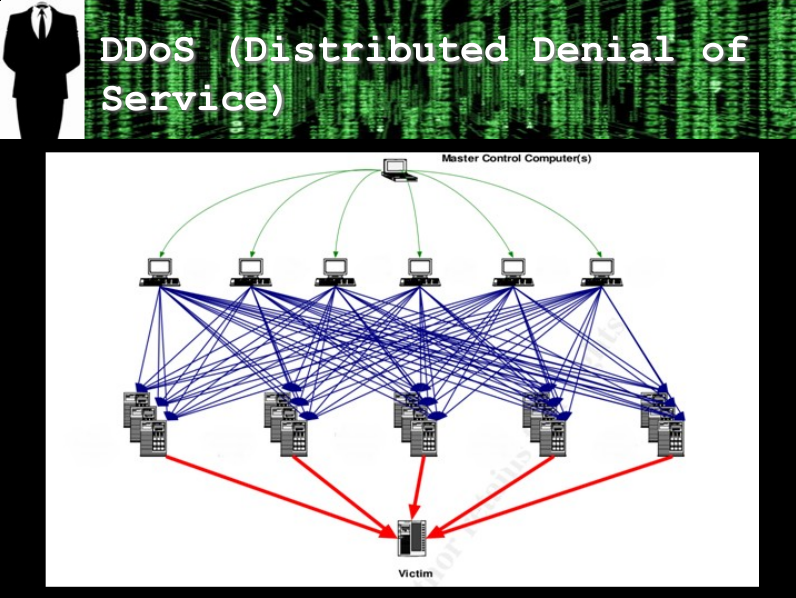
Slide from <a href="http://slideplayer.org/slide/906693/">this talk</a> by Lisa Plesiutschnig
Replace computers with DVRs. Slide from this talk by Lisa Plesiutschnig

We can argue all day about whether a digital video recorder (DVR) or an IP webcam is an “IoT” device and whether this DDOS attack is the biggest to date or merely among them, but the class of devices exploited certainly are not traditional computers, and this is a big hit. Most of these devices run firmware out of flash, and it’s up to the end user (who is not a sysadmin) to keep it up to date or face the wrath of hackers. And it’s certainly the case that as more Internet-facing devices get deployed, the hacker’s attack surface will grow.

Why did the DDOS network use these particular devices? We’re speculating, but we’d guess it’s a combination of difficult-to-update firmware and user “convenience” features like uPnP. To quote the FBI “The UPnP describes the process when a device remotely connects and communicates on a network automatically without authentication.” You can see how this would be good for both the non-tech-savvy and hostile attackers, right? (Turn off UPnP on your router now.)

We alternate between Jekyll and Hyde on the IoT. On one hand, we love having everything in our own home hooked up to our local WiFi network and running on Python scripts. On the other hand, connecting each and every device up to the broader Internet and keeping it secure would be a system administration headache. Average users want the convenience of the latter without having to pay the setup and know-how costs of the former. Right now, they’re left out in the cold. And their toasters are taking down ISPs.
Artificial Skylight Brings Sunlight To Any Room

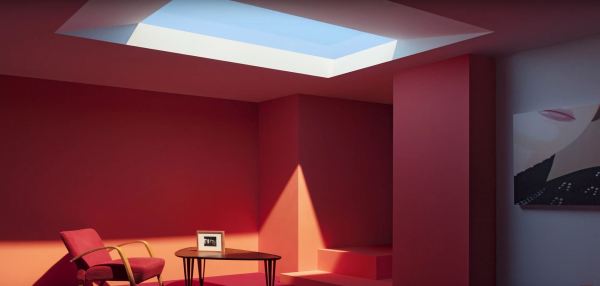
Humans aren’t supposed to be cooped up indoors all day, but who wants to be bothered by UV rays, insects, allergens, traffic, physical activity, and other people? On the other hand, a gloomy living space generally inhibits productivity — if not making it difficult to find what you’re looking for. So, if you’re looking to illuminate any room in your place, and you have the cash and the patience to wait for its widespread release, CoeLux is a skylight that needs no sky or sun — not that you’ll be able to tell the difference.

The Italian developers [CoeLux Srl] are perhaps wisely remaining tight-lipped on how the effect is achieved, but confirm that nanoparticles in the skylight mimic the effect of atmospheric fluctuations, compressing that vast deep blue into a few milimetres while maintaining the perception of infinite depth.

Continue reading “Artificial Skylight Brings Sunlight To Any Room”

Now Is The Golden Age Of Artisanal, Non-Traditional Tube Amps

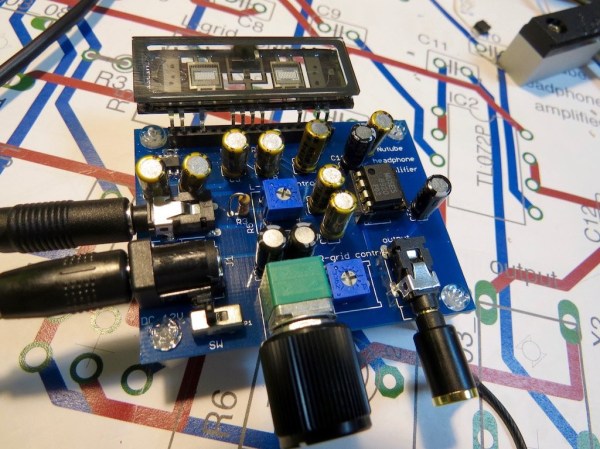
Earlier in the month, [Elliot Williams] quipped that it had been far too long since we saw a VFD-based amplifier build. Well, that dry spell is over. This week, [kodera2t] started showing off his design for a VFD headphone amp.

Here’s the thing, this isn’t using old surplus vacuum fluorescent displays. This is actually a new part. We first covered it about 18 months ago when Korg and Noritake announced the NuTube. It’s the VFD form factor you would find in old stereo and lab equipment, but housed in the familiar glass case is a triode specifically designed for that purpose.

Check out [kodera2t’s] video below where he walks through the schematic for his amplifier. Since making that video he has populated the boards and taken it for a spin — no video of that yet but we’re going to keep a watchful eye for a follow-up. Since these parts can be reliably sourced he’s even planning to sell it in his Tindie store. If you want to play around with this new tube that’s a pretty easy way to get the tube and support hardware all in one shot. This is not a hack, it’s being used for exactly what Korg and Noritake designed it to do, but we hope to see a few of these kits hacked for specific tastes in amp design. If you do that (or any other VFD hacking) we want to hear about it!

And now for the litany of non-traditional VFD amps we’ve grown to love. There is the Nixie amp where [Elliot] made the quip I mentioned above, here’s an old radio VFD amp project, in this one a VCR was the donor, and this from wayback that gives a great background on how this all works.

Continue reading “Now Is The Golden Age Of Artisanal, Non-Traditional Tube Amps”

How To Drill A Curved Hole

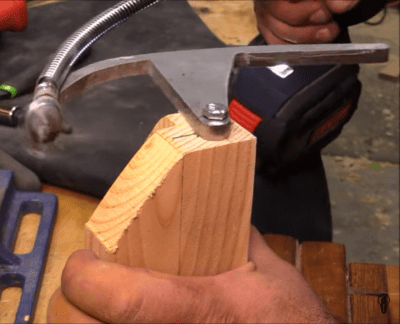
Next time you’re renovating and need to run some cables around corners in you walls, save yourself some frustration by building [izzy swan]’s corner drilling rig. It’s something akin to a custom tunnel boring machine but on a small scale.

drill-a-curved-holeStarting with a piece of steel, [izzy] traced and cut out a 90 degree curve with an attached arm that will allow it to rotate from a central block. He then grabs a random drill bit and attaches it to a flex shaft which is secured to the leading point of the steel curve. To complete the handy setup the entire rig is bolted to a block that will clamp over the corner stock.
As it stands, it takes some elbow grease to get the drill through, but it’s not a purpose built setup. On a second demonstration, the flex shaft breaks, but the idea is there. Now, [izzy] advises that this is most easily accomplished when re-framing walls with no drywall obstructing your drill, but the concept for this rig could nonetheless prove handy for welding, grinding, and so forth along any angled curve.

If instead you want to push your carpentry skills to their limits, build a wooden Vespa.

Continue reading “How To Drill A Curved Hole”

Arduino Sketch: The Next Generation

What was your first Arduino program? Probably an LED blinker — that seems to be the “hello world” of microcontrolllers. You probably moved on to things a little more complicated pretty quickly. At some point, things get harder because the Arduino lacks an operating system.

There are operating systems that will run on the Arduino. They aren’t full-featured like Windows or Linux, but they allow you to run multiple tasks that are both isolated from each other (to some degree) and have a way to cooperate (that is, synchronize, share data and resources, and so on). One such operating system is ChibiOS. It will run on AVR- and ARM-based devices. You can find documentation about the entire project on the home page along with other ports.

The problem with adopting a new operating system is always getting started. [ItKindaWorks] has started a video series on using ChibiOS and has posted three installments so far (see below; one is about getting started, the other two cover messaging, mutexes, and priorities).

Continue reading “Arduino Sketch: The Next Generation”

How To Run A Pagekite Server To Expose Your Raspberry Pi

Last time I showed you how to expose a web service on a Raspberry Pi (or, actually, any kind of device) by using a reverse proxy from Pagekite. On your Pi, you just need a simple Python script. However, it also depends on the Pagekite server, which isn’t always convenient. There are limits to the free service, and you don’t control the entire thing. The good news is twofold: the same Python script you use to set up the client-side can also set up a server. The other good news is the entire thing is open source.

In practical terms, then, if you have a computer that is always on and has an IP address that can be found on the public internet, you can run your own Pagekite server (they call it a front end) and service your own backends.

Continue reading “How To Run A Pagekite Server To Expose Your Raspberry Pi”

5 More SuperCon Speakers You Don’t Want To Miss

This morning it is my pleasure to announce five more confirmed speakers for the Hackaday SuperConference. The ultimate hardware conference takes place in just a few weeks: November 5th and 6th in Pasadena, California.

Get your tickets now!

Continue reading “5 More SuperCon Speakers You Don’t Want To Miss”