This excellent content from the Hackaday writing crew highlights recurring topics and popular series like Linux-Fu, 3D-Printering, Hackaday Links, This Week in Security, Inputs of Interest, Profiles in Science, Retrotechtacular, Ask Hackaday, Teardowns, Reviews, and many more.
This Friday at 5pm PST, [Sprite_tm] will be leading a Hack Chat talking about the ESP32.
[Sprite_tm] should require no introduction, but we’re going to do it anyway. He’s can install Linux on a hard drive. He can play video games on his keyboard. He built the world’s tiniest Game Boy, and gave the greatest talk I’ve ever seen. Right now, [Sprite] is in China working on the guts of the ESP32, the next great WiFi and Bluetooth uberchip.
[Sprite] recently packed his bags and headed over to Espressif, creators of the ESP32. He’s one of the main devs over there, and he’s up to his neck in the varied and weird peripherals contained in this chip. His job includes porting NES emulators to a WiFi-enabled microcontroller. If you want to learn about the latest and greatest microcontroller, this is the guy you want to talk to, and he’s taking all questions.
Note that we usually do these things earlier in the day but this week we start rolling at 5 PM Pacific Friday to help match up with [Sprite’s] timezone. You can figure out when this event will happen with this handy time and date converter.
Here’s How To Take Part:
Buttons to join the project and enter the Hack Chat
Our Hack Chats are live community events on the Hackaday.io Hack Chat group messaging. Log into hackaday.io, visit that page, and look for the ‘Join this Project’ Button. Once you’re part of the project, the button will change to ‘Team Messaging’, which takes you directly to the Hack Chat.
You don’t have to wait until Friday; join whenever you want and you can see what the community is talking about.
And Tindie Too
In addition to [Sprite]’s Hack Chat on Friday, we’re going to have a Tindie Chat in the Tindie Dog Park on Friday at noon, Pacific time. You can figure out when that’ll be in your local time by following this link.
In the Tindie Chat, we’re going to be talking about all the aspects of selling hardware on Tindie. This is a phenomenal community that keeps on growing, and right now there’s some really, really cool hardware being offered up from makers and creators around the world.
Upcoming Hack Chats
We have a few more Hack Chats on the books. On February 10th, we’ll be talking RF with [Jenny List]. Sparkfun will be around for a Hack Chat on February 17th. If stats are your thing, we’ll have a chat on the ins and outs of R in a few weeks.
When I first got interested in computers, it was all but impossible for an individual to own a computer outright. Even a “small” machine cost a fortune not to mention requiring specialized power, cooling, and maintenance. Then there started to be some rumblings of home computers (like the Mark 8 we recently saw a replica of) and the Altair 8800 burst on the scene. By today’s standards, these are hardly computers. Even an 8-bit Arduino can outperform these old machines.
As much disparity as there is between an Altair 8800 and a modern personal computer, looking even further back is fascinating. The differences between the original computers from the 1940s and anything even remotely “modern” like an Altair or a PC are astounding. If you are interested in that kind of history, you should read a paper entitled “Electronic Computing Circuits of the ENIAC” by [Arthur W. Burks].
These mid-century designers used tubes and were blazing new ground. Part of what makes the ENIAC so different is that it had a different design principle than a modern computer. It was less a general purpose stored-program computer and more of a collection of logic circuits that could be configured to solve problems — sort of a giant vacuum tube FPGA, if you will. It used some internal representations that proved to be suboptimal which also makes it seem strange. The EDSAC — a later device — was closer to what we think of as a computer. Yet the ENIAC was a major step in the direction of a practical digital computer.
Cost and Size
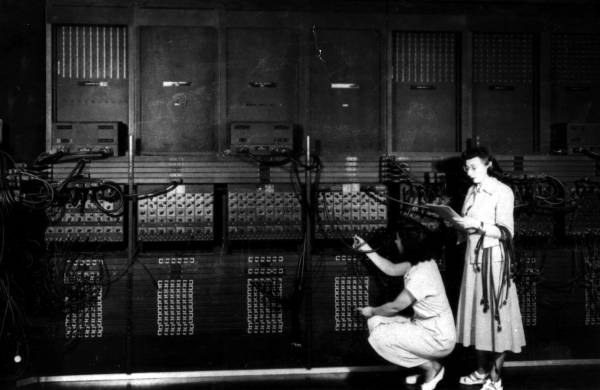
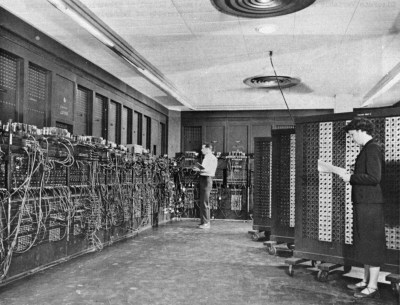
Programming the ENIAC in 1951 (±4 years) [Image Source: Public Domain]The size of ENIAC is hard to imagine. The device had about 18,000 tubes, 7,000 diodes, 70,000 resistors, 10,000 capacitors, and 6,000 switches. There were 5 million hand-soldered joints! ([Thomas Haigh] tells us that while this is widely reported, the real number was about 500,000.) Physically, it stood 10 feet tall, 3 feet deep, and 100 feet long. The tube filaments alone required 80 kW of power. Even the cooling system consumed 20 kW. In total, it took 150 kW to run the beast.
The cost of the machine was about $487,000. Almost a half-million dollars in 1946 is plenty. But that’s nearly seven million dollars in today’s money. What was worth that kind of expenditure? The military built firing tables for shell trajectories. From the [Burks] paper:
“A skilled computer with a desk machine can compute a 60-second trajectory in about twenty hours…”
Keep in mind that in 1946, a computer was a person. [Burks] goes on to say that a differential analyzer can do the same job in 15 minutes. ENIAC, on the other hand, could do it in 30 seconds and with a greater precision than the differential analyzer.
If you know me at all, you know I’m a car guy. I’m pretty green as far as hardcore wrenching skills go, but I like to tackle problems with my vehicles myself – I like to learn by doing. What follows is the story of how I learned a few hard lessons when my faithful ride died slowly and painfully in my arms over the final months of 2016.
For context, my beast of a machine was a 1992 Daihatsu Feroza. It’s a 4WD with a 1.6 litre fuel injected four-cylinder engine. It had served me faithfully for over a year and was reading around 295,000 kilometers on the odometer. But I was moving house and needed to pull a trailer with all my possessions on an 800 km journey. I didn’t want to put the stress on the car but I didn’t have a whole lot of choice if I wanted to keep my bed and my prized Ricoh photocopier. I did my best to prepare the car, topping up the oil which had gotten perilously low and fitting new tyres. I’d had a hell of a time over the winter aquaplaning all over the place and wasn’t in the mood for a big ugly crash on the highway. Continue reading “Fixing My 4×4: The Battle Of The Bent Valves”→
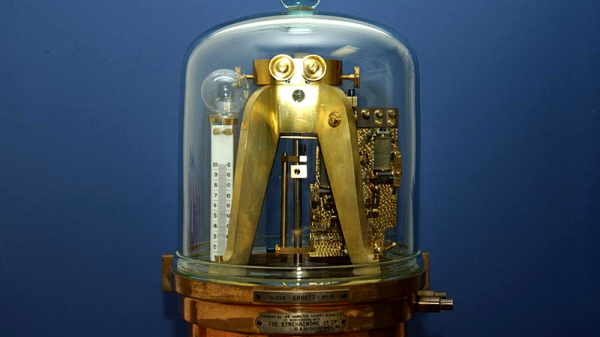
Would you believe a pendulum clock that can keep time accurately to within one second per year? If you answered “yes”, you’ve either never tried to regulate a pendulum clock yourself, or you already know about the Shortt Clock. Getting an electromechanical device to behave so well, ticking accurately to within 0.03 parts per million, is no mean feat, and the Shortt clock was the first timekeeping device that actually behaves more regularly than the Earth itself. Continue reading “Retrotechtacular: The Best Pendulum Clock”→
A 3D printer and laser cutter were cited as cause in two deaths. A couple (and two cats) were found dead in their apartment this week. The cause of death was carbon monoxide poisoning. Police and the gas company investigated the residence and found no other source of carbon monoxide besides a 3D printer and a laser cutter. Be sure to check out the people who know more about these deaths than the people who actually investigated these deaths in the comments below. In the mean time, get a CO detector. It’s nasty stuff.
At CES last this month, Lulzbot unleashed the MOARstruder. It’s an extruder with a massive, massive, 1.2mm nozzle. [James] from xrobots dot co dot uk just got his hands on the MOARstruder and the initial results are pretty cool. With a 1.2mm nozzle, you can print big parts fast (helpful for [James]’ massive builds), and the parts are stronger. Check out the video for a great hammer vs. printed part test.
We knew this would happen eventually. Pi Blades. Element14 is now offering ‘breakout boards but not quite’ for the full-size Raspberry Pis and Pi HATs. The idea of this product is to package clusters of Pis into an easy-to-use form factor. The Bitscope Blade Quattro, for example, provides power to four Pis. In other news, I own 20% of the world’s supply of vertical SODIMM sockets.
Arbitrary Code Execution On The Nintendo 64. A bit of background is required before going into this. Pokemon Stadium is a game for the N64. It used a Transfer Pak to read the save game data on Pokemon Game Boy cartridges to battle, trade, and organize Pokemon. Additionally, the Pokemon Tower in Pokemon Stadium allows players to play first-gen Game Boy Pokemon games from within an N64 – sort of like the SNES Super Game Boy. By using two Game Boy Pokemon games and two Transfer Paks, arbitrary code can be executed on the N64. Video demo right here. This is really cool, and the next obvious step is a ‘bootloader’ of sorts to allow arbitrary code downloading from controller button presses.
The Travelling Hacker Box is on the move! The original plan for the Travelling Hacker Box was to visit home base for the 2016 Hackaday SuperConference, then depart to foreign lands beginning with Canada, Greenland, Europe, Africa, Asia, Oceana, and the other America. After the SuperCon, the box was shipped out to its first recipient in Canada. The box came back. Something with customs. Now, the Travelling Hacker Box is on the move again. The plan is still the same, it’s just delayed a month or two. If you want to check out the future travels of the Travelling Hacker Box, here you go.
What the heck is CircuitPython? Get that question answered along with many more during this Friday’s Hack Chat. Three engineers from Adafruit join us as [Ladyada], [Tony DiCola], and [Scott Shawcoft] lead a CircuitPython discussion at Noon PST on 1/27/17.
CircuitPython is Adafruit’s new extension on the MicroPython codebase. It adds support for SAMD21 processors in MicroPython and reworks the API for better support across platforms and better documentation. Does this still sound like jibberish? The Python programming language has been extended to microcontrollers. CircuitPython is furthering that work and this Hack Chat is the perfect opportunity to talk with the people who are doing that work. They will also be doing a giveaway of five CircuitPlayground m0 Express boards (brand new, not yet released hardware).
Hack Chats are live community events that take place in the Hackaday.io Hack Chat group messaging. Visit that page (make sure you are logged in) and look for the “Join this Project Button” in the upper right. Once you are part of the project, that button will change to “Team Messaging” which takes you to the Hack Chat.
You don’t have to wait for Friday, join Hack Chat whenever you like and see what the community is currently talking about.
One of the most famous lectures in the history of technology was delivered by [Douglas Engelbart] in December 1968, at a San Francisco conference. In it he described for the first time most of what we take for granted in our desktop computers and networking today, several years before even the first microprocessor made it to market. It is revered not only because it was the first airing of these ideas, but because it was the event that inspired and influenced many of those who developed them and brought them to market. You may have heard of it by its poplar name: the Mother of All Demos.
This was an exciting time to be a technologist, as it must have been obvious that we lay on the brink of an age of ubiquitous computing. [Engelbart] was by no means alone in looking to the future and trying to imagine the impact that the new developments would have in the decades to come. On the other side of the Atlantic, at the British Post Office Telephone research centre at Dollis Hill, London, his British counterparts were no less active with their crystal ball gazing. In 1969 they produced our film for today, entitled complete with misplaced apostrophe “Telecommunications Services For The 1990’s” , and for our 2017 viewpoint it provides a quaint but fascinating glimpse of what almost might have been.
You can have any phone you want, as long as it’s state-owned! A GPO 746 telephone from the early 1970s.
Until the 1980s, the vast majority of British telephone services were a tightly regulated state monopoly run as part of the Post Office. There were only a few models of telephone available in the GPO catalogue, all of which were fixed installations with none of the phone sockets we take for granted today. Accessories such as autodiallers or answering machines were eye-wateringly expensive luxuries you’d only have found in offices, and since the fax machine was unheard of the height of data transfer technology was the telex. Thus in what later generations would call consumer information technology there really was only one player, so when they made pronouncements on the future they were a good indication of what you were likely to see in your home.
The film starts with a couple having a conversation, she in her bedroom and he in a phone box. Forgotten little touches such as a queue for a phone box or the then-cutting-edge-design Trimphone she’s using evoke the era, and the conversation leaves us hanging with the promise that their conversation would be better with video. After the intro sequence we dive straight into how the GPO thought their future network would look, a co-axial backbone with local circuits as a ring.
The real future-gazing starts with an office phone call to an Australian, at which we’re introduced to their concept of video calling with a colour CRT in a plastic unit that could almost be lifted from the set of The Jetsons. The presenter then goes on to describe a mass information service which we might recognise as something like our WWW, before showing us the terminal in more detail. Alongside the screen is a mock-up of a desktop console with keypad, cassette-based answerphone recorder, and a subscriber identity card slot for billing purposes. Period touches are a brief burst of the old harsh dial tone of a Strowger exchange, and mention of a New Penny, the newly-Decimalised currency. We’re then shown the system transmitting a fax image, of which a hard copy is taken by exposing a photographic plate to the screen.
Perhaps the most interesting sequence shows their idea of how an online information system would look. Bank statements and mortgage information are retrieved, though all with the use of a numeric keypad rather than [Englebart]’s mouse. Finally we see the system being used in a home office, a situation shown as farcical because the worker is continually harassed by his children.
Scorecard
This was the cutting edge in 1980, at least for people who hadn’t seen France’s Minitel. Fair use, via Wikimedia Commons.
So nearly five decades later, what did they get right and how much did they miss? The area you might expect them to be most accurate is oddly the one in which they failed most. The BT telecommunications backbone is now fibre-optic, and for the vast majority of us the last mile or two is still the copper pair it would have been a hundred years ago. In terms of the services though we have all of the ones they show us even if not in the form they envisaged. Fax and answering machines were everyday items by the 1980s, and though it didn’t gain much traction at the time we had video calling as a feature of most offices by the 1990s. We might however have expected them to anticipate a fax machine with a printer, after all it was hardly new technology. Meanwhile the online service they show us is visibly an ancestor of Prestel, which they launched for the late 1970s and which failed to gain significant traction due to its expense.
Another area they miss is wireless. We briefly see a pager, but even though they had a VHF radio telephone service and the ancestors of our modern cellular services were on the drawing board on the other side of the Atlantic at the time, they completely miss a future involving mobile phones.
The full film is below the break. It’s a charming period production, and the wooden quality of the action shows us that while the GPO engineers might have been telephone experts, they certainly weren’t actors.