This excellent content from the Hackaday writing crew highlights recurring topics and popular series like Linux-Fu, 3D-Printering, Hackaday Links, This Week in Security, Inputs of Interest, Profiles in Science, Retrotechtacular, Ask Hackaday, Teardowns, Reviews, and many more.
Did you know Hackaday is hosting a fantastic contest to build hardware and software? It’s true! The Hackaday Prize will award hundreds of thousands of dollars to Hackaday community members for building the coolest hardware designed to make a difference in the world.
The Hackaday Prize has many ways to enter, focusing on several themes throughout this year. We’ll be discussing that and opening the floor to questions. Tomorrow, Friday, April 28, at noon, Pacific time, we’re hosting a Hack Chat for the Hackaday Prize over on Hackaday.io.
Our guest host for this chat is [Alberto], creator of the project that won last year’s Hackaday Prize. He’ll be in the Hack Chat telling everyone what he learned from last year’s Hackaday Prize. If we’re lucky, he might even tell us something about what building his project out in the Supply Frame Design Lab is like. It’s all very cool, and it’s going down tomorrow at noon, PDT.
Here’s How To Take Part:
Our Hack Chats are live community events on the Hackaday.io Hack Chat group messaging.
Log into Hackaday.io, visit that page, and look for the ‘Join this Project’ Button. Once you’re part of the project, the button will change to ‘Team Messaging’, which takes you directly to the Hack Chat.
You don’t have to wait until tomorrow; join whenever you want and you can see what the community is talking about.
And Tindie, Too!
Next Tuesday, we’re going to have another chat geared toward sellers on Tindie, the online marketplace where anyone can buy or sell DIY hardware.
This time around, we’re talking about Kickstarter. We roped [Zach Dunham] into this one. He’s the Design & Technology Outreach Lead at Kickstarter, and by every measure a really cool guy.
[Zach] will discuss the ins and outs of turning a hardware project into a Kickstarter campaign. Surprisingly, there’s a significant overlap between Tindie sellers and Kickstarter — some sellers test their ideas on Tindie and build up to doing a crowd funding campaign. Others complete a campaign and then come over to Tindie to sell excess inventory or second runs. Either way, there’s a great opportunity for market verification or simply getting your gear into the hands of those who want to use it.
If you want to get in on the Kickstarter chat action, head on over to the Tindie Dog Park. Request to join the project and show up in the chat sometime before 1pm Pacific on Tuesday, May 2.
Blinky LED projects: we just can’t get enough of them. But anyone who’s stared a WS2812 straight in the face knows that the secret sauce that takes a good LED project and makes it great is the diffuser. Without a diffuser, colors don’t blend and LEDs are just tiny, blinding points of light. The ideal diffuser scrambles the photons around and spreads them out between LED and your eye, so that you can’t tell exactly where they originated.
We’re going to try to pay the diffuser its due, and hopefully you’ll get some inspiration for your next project from scrolling through what we found. But this is an “Ask Hacakday”, so here’s the question up front: what awesome LED diffusion tricks are we missing, what’s your favorite, and why?
You’re a contractor and people are paying you to work in your pajamas. It’s a life of luxury, but when tax time comes, you are in a world of hurt and you wonder why you even do it. Taxes are tricky, but there are some tools you can use to make it less painful on your pocketbook. With planning and diligence, you can significantly increase the amount of money that stays in your bank account. Continue reading “Life On Contract: Hacking Your Taxes”→
‘Member StarCraft? Ooooh, I ‘member StarCraft. The original game and the Brood War expansion are now free. A new patch fixes most of the problems of getting a 20-year-old game working and vastly improves playing over LAN (‘member when you could play video games over a LAN?) And you thought you were going to have free time this week.
About a year ago, [Mark Chepurny] built a dust boot for his Shapeoko CNC router. The SuckIt (not the best possible name, by the way) is an easy, simple way to add dust collection to an X-Carve or Shapeoko 2. The folks at Inventables reached out to [Mark] and made a few improvements. Now, the renamed X-Carve Dust Control System. It’s a proper vacuum attachment for the X-Carve with grounding and a neat brush shoe.
I don’t know if this is a joke or not. It’s certainly possible, but I seriously doubt anyone would have the patience to turn PowerPoint into a Turing Machine. That’s what [Tom Wildenhain] did for a lightning talk at SIGBOVIK 2017 at CMU. There’s a paper (PDF), and the actual PowerPoint / Turing Machine file is available.
System76 builds computers. Their focus is on computers that run Linux well, and they’ve garnered a following in the Open Source world. System76 is moving manufacturing in-house. Previously, they’ve outsourced their design and hardware work to outside companies. They’re going to work on desktops first (laptops are much harder and will come later), but with any luck, we’ll see a good, serviceable, Open laptop in a few year’s time.
Remember all the talk about modular smart phones? They sounded amazing! instead of upgrading your phone you would just upgrade the parts a bit like a computer but more simplistic. Well it seems modular phones are dead (video, embedded below) even after a lot of major phone manufacturers were jumping on the bandwagon. Even Google got on-board with Google Ara which was subsequently cancelled. LG released the G5 but it didn’t fare too well. The Moto Z from Motorola seemed to suffer from the same lack of interest. The buzz was there when the concept of these modular phones was announced, and people were genuinely exited about the possibilities. What went wrong?
For a start people expect their phones to have everything on board already, whether it be cameras, GPS, WiFi, high-capacity batteries or high-resolution screens. Consumers expect these things to come as standard. Why would they go out and buy a module when other phones on the market already have these things?
Sure you could get some weird and wonderful modules like extra loud speakers or perhaps a projector, but the demand for these items was small. And because these extras are already available as separate accessories not locked down to one device, it was a non starter from the beginning.
When we did our user studies. What we found is that most users don’t care about modularizing the core functions. They expect them all to be there, to always work and to be consistent. — Lead engineer Project Ara
The hackability of these phones would have been interesting to say the least, had they come to the mainstream. It just seems the public want thin sleek aluminum phones that they treat more as a status symbol than anything else. Modular phones have to be more bulky to accommodate the power/data rails and magnets for the modules, so they’ll lose out in pocketability. Still, we hope the idea is revisited in the future and not left on the scrap-heap of obsolescence.
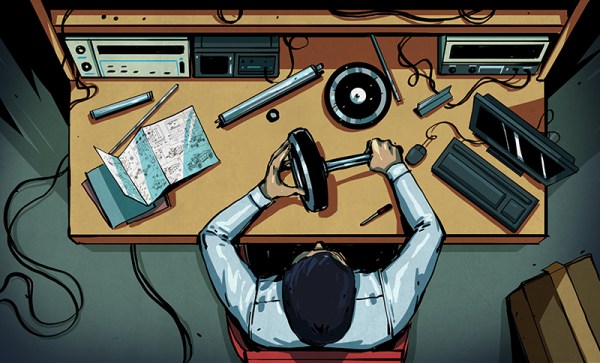
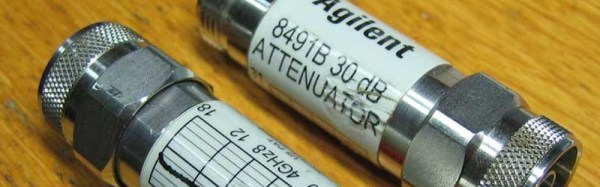
If you catch a grizzled old radio amateur propping up the bar in the small hours, you will probably receive the gravelly-voiced Wisdom of the Ancients on impedance matching, antenna tuners, and LC networks. Impedance at RF, you will learn, is a Dark Art, for which you need a lifetime of experience to master. And presumably a taste for bourbon and branch water, to preserve the noir aesthetic.
It’s not strictly true, of course, but it is the case that impedance matching at RF with an LC network can be something of a pain. You will calculate and simulate, but you will always find a host of other environmental factors getting in the way when it comes down to achieving a match. Much tweaking of values ensues, and probably a bit of estimating just how bad a particular voltage standing wave ratio (VSWR) can be for your circuit.
Oh, for cryin’ out loud. That’s the last straw. We’ve seen one dangerous YouTube video too many. Are we honestly cursed with a false feedback system that unequitably rewards dangerous behavior in online videos? Obviously the answer is ‘yes’. Now the real question becomes, can we do anything about it?
Professional Driver on a Closed Course
Marketing is all about putting something in front of a consumer and getting their brain to go “awesome!”. The fast, loud, shiny, burny, and sharp things are all on the table for that task. It’s the primal part of your brain that gives you jolt, as if your amygdala forgot how to run from sabertooths (saberteeth?) and learned how to like and subscribe.
Back in the day, people were hurt and even killed when replicating stunts they saw done on television. To protect from litigation, companies started adding disclaimers — Don’t Try this at Home or my favorite: Professional Driver on a Closed Course.
But the thing is, commercials are big business. If someone gets hurt, there’s money to be had by assigning blame in a court of law. When the ability to produce and distribute video content was democratized by the coming of the Internet we lost those warnings and the common sense that went with them.
Going way back to this remote-control-a-real-car hack in 2009 I haven’t been able to shake the lack of consideration for danger in a project like this. I included it in the title, which ends with “(dangerously)”. While I wasn’t taken to task in the comments for that title, I have been chided for advocating for things as controversial as helmets when strapping your body to a moving object. Do a Ctrl-F on “helmet” in this article to see what I mean.
The people pulling off these hacks were doing it because it felt awesome and they wanted to document how that felt. They weren’t stars, they were hackers and the world mostly ignored them except in places like Hackaday. We might debate the lack of safety measures but most assumed anyone with skills to do this would take a beat to consider the risks. This was probably a false assumption.
It’s All About the Subs
Things have gotten worse since then. I can’t blame all of this on YouTube, but I’m going to try. One day, YouTube changed everything. They put together a perfect mix of easy uploading, great discoverability, and (most importantly) advertising revenue sharing. For some people, this became a business and not just a way to connect with the rest of the hacker community.
This is the rise of the subscriber base. It’s a vicious cycle — you need more people to like and subscribe so that their influence will push your channel to more people to like and subscribe. The problem is, the fastest way to this is that tricky amygdala again. For some, this is being funny, but for others this is speed, fireballs, and loud bangs, with no regard for life, limb, or eyeball.
We’re Far From Blameless
I like fireballs and fast cars as much as the next person. And we’ve certainly run a lot of articles on the escalatingly dangerous hacks out there for all to see. For instance, we’ve covered several hacks from [kreosan], like microwaving things outside of a microwave and then building a microwave gun.
But even the more mainstream content appears to be getting more and more dangerous. Our beloved [Colin Furze] is guilty of dangerous behavior. Not only did he burn himself testing a jet engine out without any safety gear, but turned the aftermath into another ad-supported video.
Which brings me to the straw that broke the camel’s back. Here’s a hack that’s based on the idea of hurting people. It’s what is (luckily) a crappy robot designed to recognize faces and shine lasers into any eyes it detects. Literally it’s conceived to shoot your eyes out. It’s using a red laser that likely won’t cause eye damage unless you intentionally stare into it without blinking, but that’s not discussed in the video, and someone who doesn’t know better replicating this with a different laser could easily cause irreparable damage to their sight.
Rocket Scientists Use Common Sense and So Should You
I was going to use the heading “This Isn’t Rocket Science”, but you don’t see rocket scientists testing new engine designs by lighting a fuse as they run away giggling in short sleeves and flip-flops. Those brilliantly intelligent people are tucked safely in a bunker at a safe distance with their hands hovering over the emergency kill switch as fire fighting equipment hangs out at arms reach. Rocket scientists know a lot about safety and so should you.
This is simple. We don’t have to invent anything to add safety to our hacks. Use common sense. Dress appropriately for your demo — as the situation dictates use reasonable fire-resistant clothing, helmet, etc. Wear protective glasses, laser spec’d goggles, and ear plugs; each whenever called for. Take fumes and particulates seriously and wear respiratory gear. Keep a fire extinguisher around. And if you’re making a video or posting images about it — which you should definitely do — snap a picture or give us a quick video cut to the safety precautions you’ve chosen.
I still want to see awesome projects on YouTube. But I also want to see the trend towards danger for clicks stopped. Let’s do dangerous stuff safely. And let’s be conspicuous about those safety measures. That combination is truly awesome.
Now get off my lawn, and wear your seat belt while doing so.


 Our Hack Chats are live community events on the Hackaday.io Hack Chat group messaging.
 Next Tuesday, we’re going to have another chat geared toward sellers on Tindie, the online marketplace where anyone can buy or sell DIY hardware.







 Back in the day, people were hurt and even killed when replicating stunts they saw done on television. To protect from litigation, companies started adding disclaimers — Don’t Try this at Home or my favorite: Professional Driver on a Closed Course.