Get Your Kicks With This New PIC Development Board

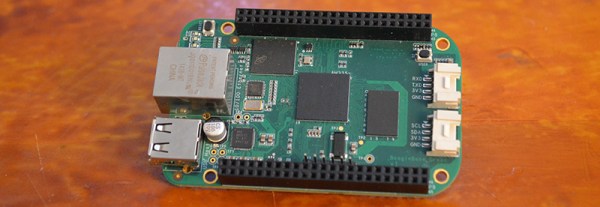
While development boards for micro controllers are nothing ground breaking, they can be expensive, and often times overkill for what you’re doing when they try to put everything you might use … including the kitchen sink. when [Brian] noticed his projects were starting to use Microchip PIC24 more and more, the time came to have a dev board on hand. 

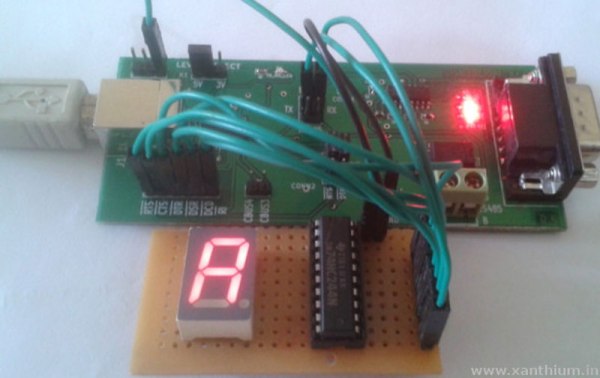
top-viewThe result is a small board with breakouts for USB, UART (via FTDI), of course tons of GPIO pins, and a socket which mates with a daughter board to swap out either a PIC24FJ128GC006, or a DSPIC33EP256MU806, with the potential for more. Also packed on the board is a power regulator system and dual crystals allowing full speed operation or power sipping modes.

Schematics and PCB layout are available (in Diptrace format) along with a board template file to use with MPLAB on github.com. Once you have everything together you will need a PIC programmer, [Brian] is using a trusty Microchip MPLAB ICD 3 programmer, but naturally, others are available.

Microchip recently announced a new development board of their own for the PIC16F series. The Curiosity board has built-in support for programming and debugging (no chipKIT needed). The engineer who designed that board, [John Mouton] is going to join us on July 30th for a live chat about the design process. We’re also going to be giving away some of the first boards to come off the production line… more about that this coming week.

Android-based Reflow Brings Solder Profiles To Your Lab

[Andy Brown] is a prolific hacker and ends up building a lot of hardware. About a year back, he built a reflow oven controller. The board he designed used a large number of surface mount parts. This made it seem like a chicken or egg first problem. So he designed a new, easy to build, Android based reflow controller. The new version uses just one, easy to solder surface mount part. By putting in a cheap bluetooth module on the controller, he was able to write an app which could control the oven using any bluetooth enabled Android phone or tablet.

The single PCB is divided into the high voltage, mains powered section separated from the low power control electronics with cutout slots to take care of creepage issues. A BTA312-600B triac is used to switch the oven (load) on and off. The triac is controlled by a MOC3020M optically isolated triac driver, which in turn is driven by a micro controller via a transistor. The beefy 12Amp T0220 package triac is expected to get hot when switching the 1300W load, and [Andy] works through the math to show how he arrived at the heat sink selection. To ensure safety, he uses an isolated, fully encased step down transformer to provide power to the low voltage, control section. One of his requirements was to detect the zero cross over of the mains waveform. Using this signal allows him to turn on the triac for specific angle which can be varied by the micro controller depending on how much current the load requires. The rectified, but unfiltered ac signal is fed to the base of a transistor, which switches every time its base-emitter voltage threshold is reached.

For temperature measurement, [Andy] was using a type-k thermocouple and a Maxim MAX31855 thermocouple to digital converter. This part caused him quite some grief due to a bad production batch, and he found that out via the eevblog forum – eventually sorted out by ordering a replacement. Bluetooth functions are handled by the popular, and cheap, HC-06 module, which allows easy, automatic pairing. He prototyped the code on an ATmega328P, and then transferred it to an ATmega8 after optimising and whittling it down to under 7.5kb using the gcc optimiser. In order to make the board stand-alone, he also added a header for a cheap, Nokia 5110 display and a rotary encoder selector with switch. This allows local control without requiring an Android device.

Gerbers (zip file) for the board are available from his blog, and the ATmega code and Android app from his Github repo. The BoM list on his blog makes it easy to order out all the parts. In the hour long video after the break, [Andy] walks you through solder tip selection, tips for soldering SMD parts, the whole assembly process for the board and a demo. He then wraps it up by connecting the board to his oven, and showing it in action. He still needs to polish his PID tuning and algorithm, so add in your tips in the comments below.

Continue reading “Android-based Reflow Brings Solder Profiles To Your Lab”

New Part Day: The ESP8266 Killer

Around this time last year we first heard of the ESP8266 WiFi module. It’s still a great little module, providing WiFi connectivity for all those Internet of Things things at a price point of just $5. It’s an attractive price for a great module with a huge community pumping out a lot of projects for the platform.

Now there’s a new kid on the block. It’s called the EMW3165, and like the ESP it provides WiFi connectivity for a bunch of wireless projects. It’s much, much more capable with an STM32F4 ARM Coretex M4 microcontroller, a ‘self hosted’ networking library, more RAM, more Flash, and more GPIOs. How much, you’re probably asking yourself. It’s a dollar more than the ESP8266.

The datasheet for the module goes over all the gritty details. While this chip has 3.6V I/Os, there are some 5V tolerant pins – a boon for the Arduino crowd. It’s also surprisingly low power for something that connects to an 802.11n network. The real bonus here is the STM32F4 core – that’s a very, very powerful microcontroller, and if you want a 2-component WiFi webcam build, this is the part you should use. There will be a lot of interesting builds using this part. It’s also passed FCC certification. Very cool.

Insane 33 Port USB Charger

Like it or not, Hackers gonna hack. And when your hackerspace has someone who looks like Doc Brown from Back to the Future, the builds can get a bit weird, like this Hack42 FestivalCharger.

The Hack42 hackerspace in Arnhem, The Netherlands had collected a large number of TP-Link 5V USB chargers – but all of them had the North American NEMA plug (flat, 2 pin) which wouldn’t fit the Schuko sockets prevalent in The Netherlands. [Simon “MacSimski” Claessen] decided to whip out his giant soldering iron and use it to solder two long pieces of welding filler metal rods to 33 of the chargers, effectively wiring them up in parallel. He did apply his obvious skill and experience to good use. For one, the diameter of the filler metal rods he used were just about the right size to fit in the Shucko Schuko socket. And the gap between the two turned out to be the right distance too, thus creating a sort of Schucko Schuko plug. All that was needed to power up all the chargers was to connect a socket extension to the FestivalCharger. The unit was built to allow crowds of festival-goers to charge their phones and battery-powered gadgets simultaneously. To make sure the visitors didn’t get electrocuted, he used a piece of PVC pipe to cover up the exposed pins and keep it all safe.

Thanks to Hack42 member [Dennis van Zuijlekom] for sending in this tip.

State-Aware Foldable Electronics Enters The Third Dimension

Still working with PCBs in 2D? Not [Yoav]. With some clever twists on the way we fab PCBs, he’s managed to create a state-aware foldable circuit board that responds to different configurations.

From his paper [PDF warning], [Yoav] discusses two techniques for developing foldable circuits that may be used repeatedly. The first method involves printing the circuit onto a flexible circuit board material and then bound front-and-back between two sheets of acrylic. Valid folded edges are distinguished by the edges of individual acrylic pieces. The second method involves laying out circuits manually via conductive copper tape and then exposing pads to determine an open or closed state.

Reconfigurable foldable objects may open the door for many creative avenues; in the video (after the break), [Yoav] demonstrates the project’s state-awareness with a simple onscreen rendering that echoes its physical counterpart.

While these circuits are fabbed from a custom solution, not FR1 or FR4, don’t let that note hold your imagination back. In fact, If you’re interested with using PCB FR4 as a structural element, check out [Voja’s] comprehensive guide on the subject.

Continue reading “State-Aware Foldable Electronics Enters The Third Dimension”

Tiny X86 Systems With Graphics Cards

The Intel Edison is out, and that means there’s someone out there trying to get a postage-stamp sized x86 machine running all those classic mid-90s games that just won’t work with modern hardware. The Edison isn’t the only tiny single board computer with an x86 processor out there; the legends told of another, and you can connect a graphics card to this one.

This build uses the 86Duino Zero, a single board computer stuffed into an Arduino form factor with a CPU that’s just about as capable as a Pentium II or III, loaded up with 128 MB of RAM, a PCI-e bus, and USB. It’s been a while since we’ve seen the 86Duino. We first saw it way back at the beginning of 2013, and since then, barring this build, nothing else has come up.

The 86Duino Zero only has a PCI-e x1 connector, but with an x16 adapter, this tiny board can drive an old nVidia GT230. A patch to the Coreboot image and a resistor for the Reset signal to the VGA was required, but other than that, it’s not terribly difficult to run old games on something the size of an Arduino and a significantly larger graphics card.

Thanks [Rasz] for sending this one in.

Continue reading “Tiny X86 Systems With Graphics Cards”

Logic Noise: Ping-pong Stereo, Mixers, And More

So far on Logic Noise, we’ve built up a bunch of sound-making voices and played around with sequencing them. The few times that we’ve combined voices together, we’ve done so using the simplest possible passive mixer — a bunch of resistors. And while that can work, we’ve mostly just gotten lucky. In this session, we’ll take our system’s output a little bit more seriously and build up an active mixer and simple stereo headphone driver circuit.

For this, we’ll need some kind of amplification, and our old friend, the 4069UB, will be doing all of the heavy lifting. Honestly, this week’s circuitry is just an elaboration of the buffer amplifiers and variable overdrive circuits we looked at before. To keep things interesting we’ll explore ping-pong stereo effects, and eventually (of course) put the panning under logic-level control, which is ridiculous and mostly a pretext to introduce another useful switch IC, the 4066 quad switch.

At the very end of the article is a parts list for essentially everything we’ve done so far. If you’ve been following along and just want to make a one-time order from an electronics supply house, check it out.

klangoriumIf you’re wondering why the delay in putting out this issue of Logic Noise, it’s partly because I’ve built up a PCB that incorporates essentially everything we’ve done so far into a powerhouse of a quasi-modular Logic Noise demo — The Klangorium. The idea was to take the material from each Logic Noise column so far and build out the board that makes experimenting with each one easy.

Everything’s open and documented, and it’s essentially modular so you can feel free to take as much or as little out of the project as you’d like. Maybe you’d like to hard-wire the cymbal circuit, or maybe you’d like to swap some of the parts around. Copy ours or build your own. If you do, let us know!

OK, enough intro babble, let’s dig in.

Continue reading “Logic Noise: Ping-pong Stereo, Mixers, And More”