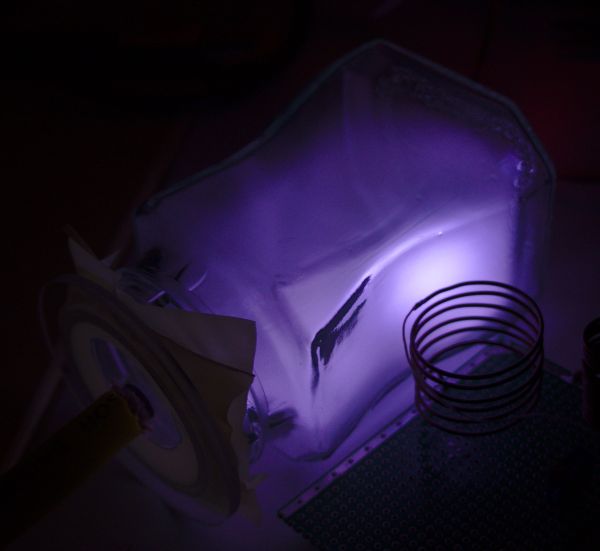
Experimentation with the unusual nature of things in the world is awesome… especially when the result is smokey glowing plasma. For this relatively simple project, [Peter Zotov] uses the purchase of his new vacuum pump as an excuse to build a mini vacuum chamber and demonstrate the effect his mosfet-based Gouriet-Clapp capacitive three-point oscillator has on it.
In this case, the illumination is caused due to the high-frequency electromagnetic field produced by the Gouriet-Clapp oscillator. [Peter] outlines a build for one of these, consisting of two different wound coils made from coated wire, some capacitors, a mosfet, potentiometer, and heat sink. When the oscillator is placed next to a gas discharge tube, it causes the space to emit light proportionate to the pressure conditions inside.
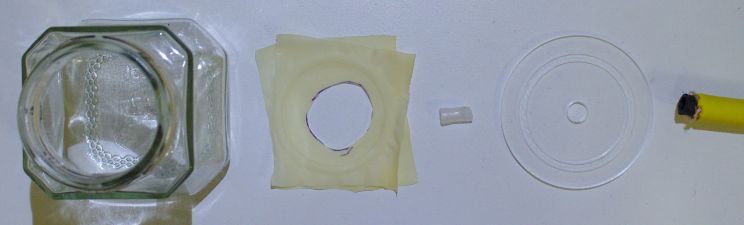
For his air tight and nearly air free enclosure, [Peter] uses a small glass jar with a latex glove as the fitting between it and a custom cut acrylic flange. With everything sandwiched snugly together, the vacuum hose inserted through the center of the flange should do its job in removing the air to less than 100 Pa. At this point, when the jar is placed next to the oscillator, it will work its physical magic…
[Peter] has his list of materials and schematics used for this project on his blog if you’re interested in taking a look at them yourself. Admittedly, it’d be helpful to hear a physicist chime in to explain with a bit more clarity how this trick is taking place and whether or not there are any risks involved. In any case, it’s quite the interesting experiment.