Underwater Datacenter Proves To Be A Success

Back in 2018, Microsoft began Project Natick, deploying a custom-designed data center to the sea floor off the coast of Scotland. Aiming to determine whether the underwater environment would bring benefits to energy efficiency, reliability, and performance, the project was spawned during ThinkWeek in 2014, an event designed to share and explore unconventional ideas.

This week, Microsoft reported that the project had been a success. The Northern Isles data center was recently lifted from the ocean floor in a day-long operation, and teams swooped in to analyse the hardware, and the results coming out of the project are surprisingly impressive.

Continue reading “Underwater Datacenter Proves To Be A Success”

Autodesk Announces Major Changes To Fusion 360 Personal Use License Terms

Change is inevitable, and a part of life. But we’re told that nobody likes change. So logically, it seems we’ve proved nobody likes life. QED.

That may be a reach, but judging by the reaction of the Fusion 360 community to the announced changes to the personal use license, they’re pretty much hating life right now. The clear message from Autodesk is that Fusion 360 — the widely used suite of CAD and CAM software — will still offer a free-to-use non-commercial license for design and manufacturing work, with the inclusion of a few very big “buts” that may be deal-breakers for some people. The changes include:

  • Project storage is limited to 10 active and editable documents
  • Exports are now limited to a small number of file types. Thankfully this still includes STL files but alas, DXF, DWG, PDF exports are all gone
  • Perhaps most importantly to the makerverse, STEP, SAT, and IGES file types can no longer be exported, the most common files for those who want to edit a design using different software.
  • 2D drawings can now only be single sheet, and can only be printed or plotted
  • Rendering can now only be done locally, so leveraging cloud-based rendering is no longer possible
  • CAM support has been drastically cut back: no more multi-axis milling, probing, automatic tool changes, or rapid feeds, but support for 2, 2.5, and 3 axis remains
  • All support for simulation, generative design, and custom extensions has been removed

Most of these changes go into effect October 1, with the exception of the limit on active project files which goes into effect in January of 2021. We’d say that users of Fusion 360’s free personal use license would best be advised to export everything they might ever think they need design files for immediately — if you discover you need to export them in the future, you’ll need one of the other licenses to do so.

To be fair, it was pretty clear that changes to the personal use license were coming a while ago with the consolidation of paid-tier licenses almost a year ago, and the cloud-credit system that monetized rendering/simulation/generative design services happening on the Autodesk servers. Features removed from the free license in this week’s announcement remain in place for paid subscriptions as well as the educational and start-up license options.

The problem with these personal use licenses is that it’s easy to get used to them and think of them as de facto open-source licenses; changing the terms then ends up leaving a bad taste in everyone’s mouth. To their credit, Autodesk is offering a steep discount on the commercial license right now, which might take some of the sting out of the changes.

Update 09-25-2020: Autodesk has announced that STEP file export will remain in the free version of Fusion 360

Improving More Leaf Design Flaws

[Daniel] was recently featured here for his work in improving the default charging mode for the Nissan Leaf electric vehicle when using the emergency/trickle charger included with the car. His work made it possible to reduce the amount of incoming power from the car, if the charging plug looked like it might not be able to handle the full 1.2 kW -3 kW that these cars draw when charging. Thanks to that work, he was able to create another upgrade for these entry-level EVs, this time addressing a major Leaf design flaw that is known as Rapidgate.

The problem that these cars have is that they still have passive thermal management for their batteries, unlike most of their competitors now. This was fine in the early ’10s when this car was one of the first all-electric cars to market, but now its design age is catching up with it. On long trips at highway speed with many rapid charges in a row the batteries can overheat easily. When this happens, the car’s charging controller will not allow the car to rapid charge any more and severely limits the charge rate even at the rapid charging stations. [Daniel] was able to tweak the charging software in order to limit the rapid charging by default, reducing it from 45 kW to 35 kW and saving a significant amount of heat during charging than is otherwise possible.

While we’d like to see Nissan actually address the design issues with their car designs while making these straighforward software changes (or at least giving Leaf owners the options that improve charging experiences) we are at least happy that there are now other electric vehicles in the market that have at least addressed the battery thermal management issues that are common with all EVs. If you do own a Leaf though, be sure to check out [Daniel]’s original project related to charging these cars.

Continue reading “Improving More Leaf Design Flaws”

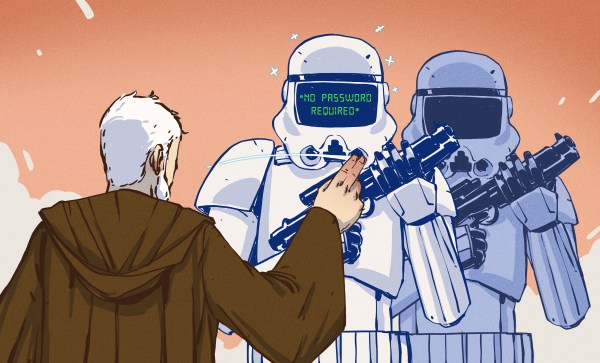
GitHub’s Move Away From Passwords: A Sign Of Things To Come?

Later this month, people who use GitHub may find themselves suddenly getting an error message while trying to authenticate against the GitHub API or perform actions on a GitHub repository with a username and password. The reason for this is the removal of this authentication option by GitHub, with a few ‘brown-out’ periods involving the rejection of passwords to give people warning of this fact.

This change was originally announced by GitHub in November of 2019, had a deprecation timeline assigned in February of 2020 and another blog update in July repeating the information. As noted there, only GitHub Enterprise Server remains unaffected for now. For everyone else, as of November 13th, 2020, in order to use GitHub services, the use of an OAuth token, personal token or SSH key is required.

While this is likely to affect a fair number of people who are using GitHub’s REST API and repositories, perhaps the more interesting question here is whether this is merely the beginning of a larger transformation away from username and password logins in services.

Continue reading “GitHub’s Move Away From Passwords: A Sign Of Things To Come?”

A Graphene Mouth Screen

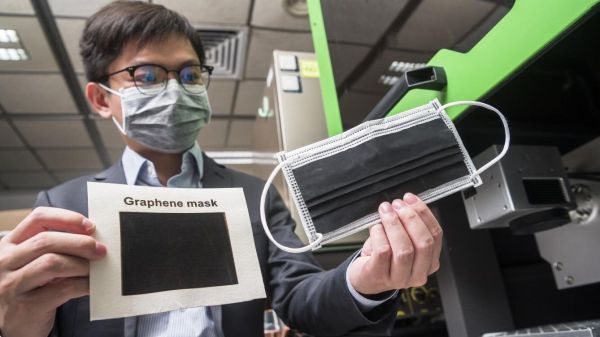
We are all intimate with face coverings to slow the spread of the coronavirus. Some are reusable, and some become waste after one use. [Dr. Ye Ruquan] and a research team from City University of Hong Kong, CityU, are developing an inexpensive reusable mask with outstanding antibacterial properties, and, get this, the graphene it contains will generate a tiny current when moistened by human breath. There isn’t enough power to charge your phone or anything, but that voltage drops as the masks get dirty, so it can help determine when it needs cleaning. The video after the break shows the voltage test, and it reminds us of those batteries.

All the remarkable qualities of this mask come from laser-induced graphene. The lab is producing LIG by lasering polyimide film with a commercial CO2 infrared model. In a speed test, the process can convert 100cm² in ninety seconds, so the masks can be made more cheaply than an N95 version with that melt-blown layer that is none too good for the earth. Testing the antibacterial properties against activated carbon fiber and blown masks showed approximately 80% of the bacteria is inert after 8 hours compared to the others in the single digits. If you put them in the sun for 10 minutes, blown fabric goes to over 85%, but the graphene is 99.998%, which means that one bacteria in 50K survives. The exact mechanism isn’t known, but [Dr. Ye] thinks it may have something to do with graphene’s sharp edges and hydrophobic quality. A couple of coronavirus species were also affected, and the species that causes COVID-19 will be tested this year.

An overly damp mask is nothing to sneeze at, so keep yourself in check and keep yourself fabulous.

Continue reading “A Graphene Mouth Screen”

Nvidia Acquires ARM For $40 Billion

Nvidia announced on Sunday evening that it has reached an agreement to acquire Arm Limited from SoftBank for a cool $40 billion.

In this age of headlines that use the b-word in place of nine zeros it’s easy to lose track, so you may be wondering, didn’t SoftBank just buy Arm? That was all the way back in July of 2016 to the tune of $32 billion. SoftBank is a holding company, so that deal didn’t ruffle any feathers, but this week’s move by Nvidia might.

Arm Limited is the company behind the ARM architecture, but they don’t actually produce the chips themselves, instead licensing them to other companies who pay a fee to use the core design and build their own chip around it. Nvidia licenses the ARM core for some of their chips, and with this deal they will be in a position to set terms for how their competitors may license the ARM core. The deal still needs regulatory approval so time will tell if this becomes a kink in the acquisition plan.

There’s a good chance that you’re reading this article on a device that contains an ARM processor because of its dominance in the smartphone and tablet market. Although less common in the laptop market, and nearly unheard of in the desktop market, the tide may be changing as Apple announced early in the summer that their Mac line will be moving to ARM.

Chances are you know the Nvidia name for their role as purveyors of fine graphics cards. They got a major boost as the world ramped up Bitcoin and other cryptocurrency mining hardware which early on was mainly based on the heavy lifting of graphics processors. But the company also has their eye on the ongoing wave of hardware targeting AI applications like computer vision. Nvidia’s line of Jetson boards, marketed for “next-generation autonomous machines”, all feature ARM cores.

Assuming the deal goes through without a hitch, what will be the fallout? Your guess is as good ours. There is certainly a conflict of interest in a company who competes in the ARM market owning the Arm. But it’s impossible to say what efforts they will make to firewall those parts of the business. Some might predict a mass exodus from the ARM ecosystem in favor of an open standard like RISC-V, but that is unlikely in the near-term. Momentum is difficult to overcome — look at how long it took ARM to climb that mountain and it was primarily the advent of a new mobile ecosystem lacking an established dominant player that let ARM thrive.

Security This Week: Racoons In My TLS, Bypassing Frontends, And Obscurity

Raccoon is the next flashy security flaw with a name, cute logo, and a website (and a PDF). Raccoon is a flaw in TLS version prior to 1.3, and seems to be a clever bit of work, albeit one with limited real-world application. The central problem is that these older versions of TLS, when using Diffie Hellman (DH), drop leading all-zero bytes in the resulting pre-master key. As that key is part of the input for calculating the master session key, a shortened pre-master key results in a slightly faster calculation of the master key. If an attacker can make fine-grained timing measurements, he can determine when the pre-master key is trimmed.

Let’s review Diffie Hellman, briefly. The client and server agree on two numeric values, a base g and modulus p, and each party generates a secret key, a and b. Each party calculates a public key by raising the shared base to their own private key, mod the shared modulus: A = g^a mod p. These public keys are exchanged, and each party raises the received key to their own secret key: A^b. Exponents have a non-obvious quirk, the power rule. A value raised to a power raised to a power is the same as the value raised to the power of the exponents multiplied together. g^a^b is equal to g^(a*b). By going through this mathematical dance, the server and client have arrived at a shared value that only they know, while preserving the secrecy of their private keys. Continue reading “Security This Week: Racoons In My TLS, Bypassing Frontends, And Obscurity”