Weekly Roundup 2/11/12


In case you have been on vacation, here is the best that we have had on our blog in the past week:

In first place is a post about [the University of Pennsylvania’s] quadcopter team. This time they have a group of twenty quadcopters flying in formation.

In second place is a post about a nice project by [Joel] where he converted an overhead projector into a TV projector by projecting through a LCD TV. He went all-out on this one by using a CNC machine to cut out a special holder for the LCD and the fans necessary to cool it.

Next up we have a post about a project where a 55 gallon plastic barrel is turned into a wind turbine. We’re not sure about how much power this would produce but it would probably be fun to play around with.

Following that is a follow up post about Printrbot, an inexpensive 3D printer which we previously posted about. It was a successful Kickstarter project a couple of months ago and now the design files have been released into the wild. Check it out!

Finally we finish off with a post about how to build a solid-state Tesla coil. It’s presented in an Instructable with 12 easy steps so that you too can feed your high-voltage addiction.
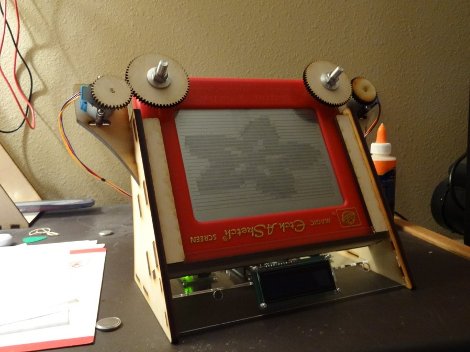
Robotic Etch-a-Sketch Draws Grayscale Images

[Patrick] decided to make a computer controlled etch-a-sketch. While the idea is not that new, there is always a different way to accomplish a goal. An Arduino is used to control a pair of stepper motors which were sourced for pretty cheap, and even came with their own driver. Next a stand was mocked up using foam board, which helps determine where all the parts should live.

Next was a way to attach the steppers to the knobs, gears would be used and a collet meant for model airplanes was sourced to make the mechanical connection between gear and shaft. With everything set in place via foam board and paper printouts, it is off to get some thin plywood. The plywood is sent though a laser cutter creating most of the stand and gears. Now its all software, a program was whipped up for OSX which converts low res pictures into squiggly lines perfect for the etch-a-sketch to draw on its screen.

The results are quite impressive, join us after the break for a quick video.

Continue reading “Robotic Etch-a-Sketch Draws Grayscale Images”

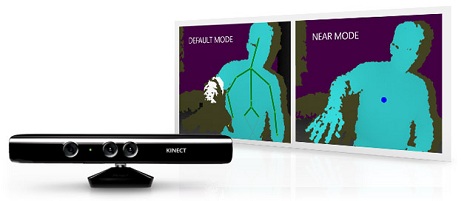
Kinect For Windows Released

Even though we’ve seen dozens of Kinect hacks over the years, there are a few problems with the Kinect hardware itself. The range of the Kinect sensor starts at three feet, a fact not conducive to 3D scanner builds. Also, it’s not possible to connect more than one Kinect to a single computer – something that would lead to builds we can barely imagine right now.

Fear not, because Microsoft just released the Kinect for Windows. Basically, it’s designed expressly for hacking. The Kinect for Windows can reliably ‘see’ objects 40 cm (16 in) away, and supports up to four Kinects connected to the same computer.

Microsoft set the price of Kinect for Windows at $250. This is a deal breaker for us – a new Kinect for XBox sells for around half that. If you’re able to convince Microsoft you’re a student, the price of the Kinect for Windows comes down to $150. That’s not too shabby if you compare the price to that of a new XBox Kinect.

We expect most of the builders out there have already picked up a Kinect or two from their local Craigslist or Gamestop. If you haven’t (and have the all-important educational discount), this might be the one to buy.

Analog Joypad For Your Retro PC

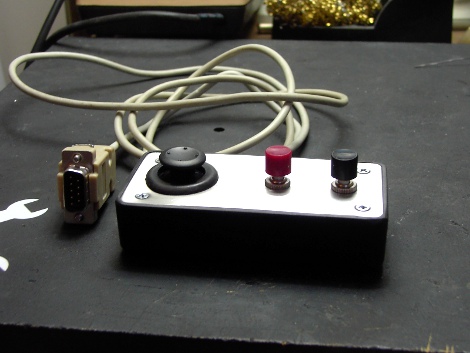
Part of the fun with old computers is playing some old school games, and while you could play them with a keyboard it is much more fun with a joystick. You can get old joysticks all day long on auction sites, but you have to watch out. Some are digital, which wont work for many games on many systems. Some were cheap to begin with and probably worn out, and many are flight sticks … ever play pac-man with a giant flight stick?

What I really wanted was a game pad like device for my 1986 Apple //c , using one of the modern thumbstick analog controllers. Using a thumbstick out of an old XBOX(1) controller, some generic parts from Radio Shack, and a little bit of effort , I ended up with exactly what I wanted.

Join us after the break and I will show you how to get there!

Continue reading “Analog Joypad For Your Retro PC”

The Phone Box

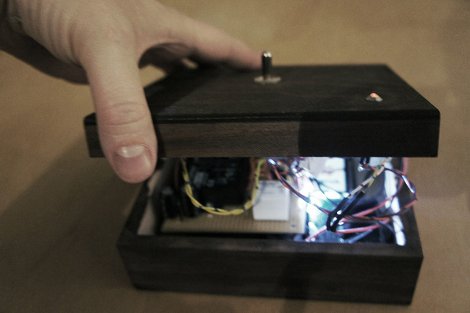
[Nerdindustries] had a interesting idea; “what if you could just flip a switch and call someone?”. This happens a lot, especially in companies where your trying to catch a certain someone who is always swamped in phone calls. The Phone Box is a basic Nokia cellphone that has a number stored into its speed dial. To help aid in communication the phones output is directed to a three and a half watt amplifier module ensuring that your going to hear it.

A delay circuit was made out of a basic RC network, so when you hit the switch the phone has a chance to power up and fully boot. Once the delay triggers it presses the speed dial button and off you go. Now someone has already asked “Why don‘t you just call them?”, and we got a kick out of the first answer “calling someone is NOT nerdy.”

Join us after the break for a quick video.

Continue reading “The Phone Box”

Weekly Roundup 1/21/12


In case you were asleep at the wheel, here are our top stories of the week.

Our most popular post was one that shows you how to make your own ‘personal assistant’ using Wolfram Alpha, text to speech software, and the phone network. It still won’t get your coffee though. You’ll just have to do that yourself.

Coming in at second place was a post about how to use your Android camera phone as a Geiger counter. Of course, this hack will work with any device that uses a CMOS sensor to do its imaging but they have gone and wrapped it up into a nice app.

Do you have access to a laser cutter and a burning desire (pun intended) to make gears? In this post Alex makes some acrylic gears using an Epilog laser cutter.

When is our government going to get it through their heads that we don’t want the internet to be controlled by a small group of corporations? Probably when the lobbyists stop giving them money by the boat load to do just that… It seems like several times a year a bill comes through that would severely restrict the internet or would at least allow someone to shut down a website without any sort of due process. Luckily, groups like the EFF are paying attention and are well organized for getting the word out there. This post was our stand against the current bills that threaten our internet freedom.

Finally, on a lighter note, we have a post about how to do ultrasonic welding on the cheap using a ‘heat staker’ and a small drill press.

FLORA: A Better Arduino LilyPad

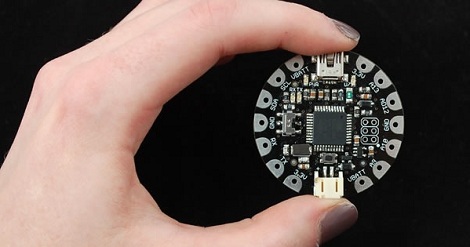
[Ladyada] has been working on FLORA, her wearable electronics platform, for a few months now. Even though it has just been announced the specs look much better than the previous queen of the hill, the Arduino LilyPad.

Going down the spec sheet for both the FLORA and the LilyPad, we see that FLORA has twice as much flash and SRAM as the LilyPad. The LilyPad has more options for I/O, but [Ladyada]’s FLORA has the benefit of not using an ISP header for programming; FLORA is completely USB-compatable. FLORA is also about a quarter-inch in diameter smaller than the LilyPad, something to take into account when you’re going for a wearable project.

On top of Bluetooth, GPS, accelerometer, compass and other modules planned for FLORA ( it doesn’t look like they’re available yet, though), FLORA has USB HID support so it can operate as a USB keyboard, mouse, MIDI device, or connect to a cell phone. If you’ve ever wanted a keytar cardigan, this is the board for you.

Check out [Ladyada]’s video demo of a LED-equipped fabric after the break.

Continue reading “FLORA: A Better Arduino LilyPad”