Tapping Tree Power

[bugloaf] tipped us off about this flower power hack. University of Washington researchers, [Babak], [Brian], and [Carlton] have developed very low power circuits to run directly off of trees. This builds upon the work of MIT researchers and Voltree Power. A voltage of up to around 200mV is generated between an electrode in a tree and an electrode in the ground. Identical metals can be used as electrodes as the process is not like that of a lemon or potato battery. The significant development here is the use of a boost converter and exceptionally low power circuits. What kind of applications can you come up with for this source of power? Maybe you could try to combine this power with the power from donuts and hair.

40 Years Of NERF

nerf3 (Custom)

In 1968 a guy by the name of [Rey Guyer] came up with an idea for a game. It involved foam balls as game pieces. After failing to sell the game to Milton Bradley, he approached Parker Brothers. They bought his idea but ended up tossing the game itself and just marketing the foam ball. Named after the padding used on rollbars in offroad vehicles, Nerf balls were an instant success, 40 years ago, in 1969. Many of us have fond memories of Nerf, even before everything they produced was a weapon. That’s not to say we don’t appreciate the Nerf weapons. We certainly have seen some hackers do some fun stuff with them.

[via neatorama]

How To Download Books From Google

If you want books, but don’t want to pay for them, there is a better way than walking into your local book store and pocketing them. Try grabbing them online, from Google!

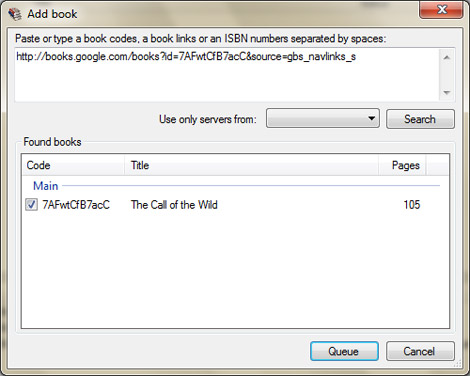
Everyone must be aware of the Google Books Library project by now. If you’re not, it’s basically a way for Google to ensure all of the world’s book content is accessible and searchable. Through the Book Project, Google works with libraries to scan and archive their older and out of print materials. Up until recently, viewers of books in the Google Library Project web space were limited to viewing books within the browser. Not any more. Google Book Downloader is a utility that rips books from Google and saves them as PDFs so you can view them with any device or desktop that can view this file format. Using Microsoft’s .NET framework, the Google Book Downloader application allows users to enter a book’s ISBN number or Google link to pull up the desired book and begin a download, fishing off with exporting the file to a PDF. Full setup instructions and download are available on Codeplex.

Windows 7 And Vista Crash Via SMB Exploit

vista_dx10_bsod

[Laurent Gaffié] has discovered an exploit that affects Windows Vista, Windows 7, and possibly Windows Server 2008 (unconfirmed). This method attacks via the NEGOTIATE PROTOCOL REQUEST which is the first SMB query sent. The vulnerability is present only on Windows versions that include Server Message Block 2.0 and have the protocol enabled. A successful attack requires no local access to the machine and results in a Blue Screen of Death.

[Laurent] has a proof of concept available with his writeup in the form of a python script (please, white hat use only). There is no patch for this vulnerability but disabling the SMB protocol will protect your system until one is available.

Update: According to the Microsoft advisory this vulnerability could lead to code execution, making it a bit worse than we thought. On the bright side, they claim that the final version of Windows 7 is not open to this attack, only Windows Vista and Windows Server 2008.

[via Full Disclosure]

[picture: Inquirer]

Snega2usb Update: Usb Snes And Sega Cartridge Reader

[youtube=http://www.youtube.com/watch?v=QNBg_jWjBmI]

When we first posted [Matthias_H]’s USB reader for SNES game carts, it was met with enthusiasm. The snega2usb allows you to play SNES and Sega games on your pc right off the cartridge. The latest revision is even more amazing than the first.  [Matthias] has added the ability to read Sega Genesis/Mega Drive cartridges as well as the ability to save games directly to the cartridge. The board has also been updated from the rats nest it used to be to a smart looking dual sided PCB. So far [Matthias] hasn’t had any trouble reading cartridges, even ones with the SuperFX chips. [Matthias] also launched a site for the project where the lastest information on its development can be found.  [Matthias] is getting close to a production version which will feature better firmware, console quality connectors and a shiny case.

Hack A Day Turns 5

hackaday_turns_five

September 5th marks the fifth anniversary of Hack a Day. We hope you’ve had as much fun hacking, reading, and sending us stories as we’ve had sharing them with everyone.

Whether you destroyed your hard drives or built your own web server we tried to keep things interesting over the past year. It was easy at times because of cool parking meter hacks, great advances in the world of hackintosh, and steam powered pleasure devices. But we couldn’t have done any of it without you. So keep reading, don’t forget to send us your hacks, and we’ll serve up the latest and juciest as we find it. We thought about putting up a list of the best hacks we’ve covered over the last five years. We’d rather hear what you think, so please leave a comment to let us know what your favorites have been.

Mozilla Fennec Alpha 3 For Windows Mobile Released

fennec

Mozilla released the latest alpha version of their new mobile browser Fennec for Windows Mobile. It brings many new features and fixes, such as improved startup time and a caching system to help scrolling on a page. They have also added support for a wider range of screen resolutions, and for those of us running an HTC Touch Pro support for zoom via the directional pad has been included in this release. Being an alpha release, it’s still a bit on the buggy side, but is very a promising browser for mobile phones. The final release should give other browsers a run for their money.