The 2022 Hackaday Supercon Is On! And The Call For Proposals Is Open

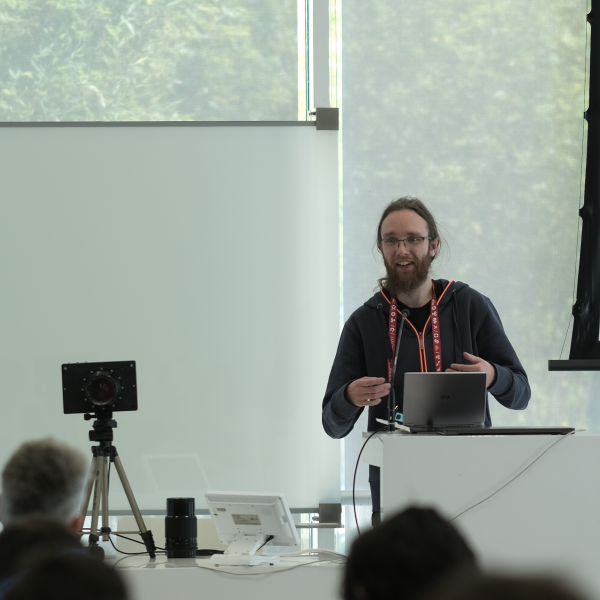
After two years in remote mode, we’re very excited to announce that this year’s Hackaday Supercon will be coming back, live! Join us Nov. 4th, 5th, and 6th in sunny Pasadena, CA for three days of hacks, talks, and socializing with the Hackaday community. And we’d love to see and hear in person what you’ve been up to for the last two years – so start brainstorming what you’re going to talk about now and fill out the call for proposals.

Supercon is On!

We’ll be starting off on Friday Nov. 4th with early-bird registration, a mellow afternoon of badge-hacking and workshops, and a party to kick off the con. Saturday and Sunday will be the full enchilada: two tracks of talks, hacking stations and food set up in the alley, and workshops aplenty. (Just thinking about hacking in the alley and sharing tacos afterward again brings a tear of joy to my eye.) We’ll close up Sunday night with the 2022 Hackaday Prize Awards and a chance to demo the weekend’s badge hacking on stage.

If you haven’t ever been to a Supercon before, it’s Hackaday in real life. People bring hacks to show and share, projects to work on, and their ideas that are too big to fit in the overhead compartment anyway. The crowd is awesome. There are seasoned pros, famous YouTubers, and brand-new hackers to boot. But yet it’s not overwhelming – Supercon is too big to fit in your living room, but it’s nonetheless cozy. The folks in attendance are all fantastic and you’ll stumble into the most awesome conversations.

It’s a weekend you don’t want to miss, so start figuring out how you’re going to get to Pasadena now.

We’ll be putting tickets on sale soon, and while we can’t see into the future, they have sold out every year, so keep your eyes on Hackaday to get yours. And of course, speakers don’t need no stinking tickets. Continue reading “The 2022 Hackaday Supercon Is On! And The Call For Proposals Is Open”

Hackaday Links Column Banner

Hackaday Links: July 17, 2022

Webb’s first deep-field image. Source: NASA

The folks at NASA are taking a well-deserved victory lap this week after the splashy reveal of the first scientific images from the James Webb Space Telescope. As we expected, the first public release included a lot of comparisons to images obtained from Hubble, as the general public understandably sees Webb as the successor to the venerable space telescope, now in its third decade of service. So for a “let’s see what this baby can do” image, they turned Webb loose on a tiny patch of sky in the southern hemisphere containing galactic cluster SMACS 0723, and sent back images and spectroscopic data from galaxies up to 13 billion light years away. There are plenty of analyses of Webb’s deep field and the other images in the first release, but we particularly liked the takes by both Anton Petrov and Dr. Becky. They both talk about the cooler scientific aspects of these images, and how Webb is much more than just a $10 billion desktop image generator.

Continue reading “Hackaday Links: July 17, 2022”

Fighting The Good Fight

We here at Hackaday are super-duper proponents of open source. Software, hardware, or firmware, we like to be able to see it, learn from it, modify it, and make it ourselves. Some of this is self-serving because when we can’t see how it was done, we can’t show you how it’s done. But it’s also from a deeper place than that: the belief that the world is made better by sharing and open access.

One of the pieces of open-source firmware that I have running on no fewer than three devices in my house right now is grbl – it’s a super-simple, super-reliable G-code interpreter and stepper motor controller that has stood the test of time. It’s also GPL3 licensed, which means that if you want to use the code in your project, and you modify it to match your particular machine, you have to make the modified version available for those who bought the machine to modify themselves.

So when Norbert Heinz noticed that the Ortur laser engravers were running grbl without making the code available, he wrote them a letter. They responded with “business secrets”, he informed them again of their responsibility, and they still didn’t comply. So he made a video explaining the situation.

Good news incoming! Norbert wrote in the comments that since the post hit Hackaday, they’ve taken notice over at Ortur and have gotten back in touch with him. Assuming that they’re on their way to doing the right thing, this could be a nice win for grbl and for Ortur users alike.

Inside the free software world, we all know that “free” has many meanings, but I’d bet that you don’t have to go far outside our community to find people who don’t know that “free” software can have tight usage restrictions on it. (Or maybe not – it all depends on the license that the software’s author chose.) Reading software licenses is lousy work better left for lawyers than hackers anyway, and I can no longer count how many times I’ve clicked on a EULA without combing through it.

So what Norbert did was a good deed – educating a company that used GPL software of their obligations. My gut says that Ortur had no idea what they needed to do to comply with the license, and Norbert told them, even if it required some public arm-twisting. But now, Ortur has the opportunity to make good, and hackers everywhere can customize the firmware that drives their laser engravers. Woot!

It’s probably too early to declare victory here, but consider following Norbert’s example yourself. While you can’t bring a lawsuit if you’re not the copyright owner, you can still defend your right to free software simply by explaining it politely to companies that might not know that they’re breaking the law. And when they come around, make sure you welcome them into the global open-source hive mind, because we all win. One of us!

Chinese Anti-Porn Helmet Raises Eyebrows, Questions

Did you know that pornography is completely illegal in China? Probably not surprising news, though, right? The country has already put measures in place to scour the Internet in search of explicit content, mostly using AI. But the government also employs human porn appraisers, called jian huang shi, whose job it is to judge images and videos to decide whether they contain explicit content. Also probably not surprising is that humans are better than AI at knowing porn when they see it — or at least, they are faster at identifying it. Weirdness and morality and everything else aside, these jian huang shi are regular people, and frankly, they get exhausted looking at this stuff all day.

So what is the answer to burnout in this particular field? Researchers at Beijing Jiaotong University have come up with a way to bring the technological and human aspects of their existing efforts together. They’ve created a helmet that can detect particular spikes in brainwaves that occur from exposure to explicit imagery. Basically, it flashes a combination of naughty and ho-hum images in rapid succession until a spike is detected, then it flags the offending image.

Continue reading “Chinese Anti-Porn Helmet Raises Eyebrows, Questions”

Overwhelmed By Odd Inputs: The Contest Winners And More

The Odd Inputs and Peculiar Peripherals Contest wrapped up last week, and our judges have been hard at work sifting through their favorite projects. And this was no easy task – we had 75 entries and so many of them were cool in their own right that all we can say is go check them all out. Really.

But we had to pick winners, not the least because Digi-Key put up three $150 gift certificates. So without further ado, here are the top three projects and as many honorable mentions as you have fingers and toes – if you don’t count your thumbs.

The Prize Winners

Keybon should be a mainstream commercial product. It’s a macro keypad with an OLED screen per key. It talks to an application on your desktop that detects the program that you currently have focused, and adapts the keypress action and the OLED labels to match. It’s a super-slick 3D-printed design to boot. It’s the dream of the Optimus Maximus, but made both DIY and significantly more reasonable as a macro pad. It’s the coolest thing to have on your desk, and it’s a big winner!

On the ridiculous side of keyboards, meet the Cree-board. [Matt] says he got the idea of using beefy COB LEDs as keycaps from the bad pun in the name, but we love the effect when you press down on the otherwise blinding light – they’re so bright that they use your entire meaty finger as a diffuser. Plus, it really does look like a keypad of sunny-side up eggs. It’s wacky, unique, and what’s not to love about that in a macropad?

Finally, [Josh EJ] turned an exercise bike into a wireless gamepad, obliterating the choice between getting fit and getting high scores by enabling both at the same time. An ESP32-turned-Bluetooth-gamepad is the brains, and he documents in detail how he hooked up a homebrew cadence sensor, used the heart-rate pads as buttons, and even added some extra controls on top. Watching clips of him pedaling his heart out in order to push the virtual pedal to the metal in GRID Autosport, we only wish he were screaming “vroooom”. Continue reading “Overwhelmed By Odd Inputs: The Contest Winners And More”

You Wouldn’t 3D Print A House, Would You?

Most houses built in the US today are platform construction: skinny two-by-fours are stacked and layered to create walls with studs. Each floor is framed on top of the other. It is fast, relatively cheap, and easy to learn how to do. However, it is not without drawbacks. Some estimates put the amount of waste generated per square foot (0.09 m2) at around 3.9 lbs (1.8 kg).

Timber framing is an older style where giant beams are used to create the structure of the house. Each timber is hand-carved and shaped, requiring skill and precision. Some cabins are still built this way because it is easy to source the timber locally and cutting into big logs is less work than cutting into lots of small logs. It’s relatively ecologically friendly, but slow and skilled-labor intensive.

We live in a world where there is a vast need for cheaper, faster, more eco-friendly housing, but finding a solution that can tick all the boxes is fiendishly difficult. Can 3D-printed housing accomplish all three of those goals? We’re not there yet, but we’re working on it.

Continue reading “You Wouldn’t 3D Print A House, Would You?”

Airbus A380 Completes Flight Powered By Cooking Oil

Fossil fuels are making news for all the wrong reasons of late. Whether it’s their contribution to global climate change or the fact that the price and supply hinges on violent geopolitics, there are more reasons than ever to shift to cleaner energy sources.

In the world of aviation, that means finding a cleaner source of fuel. A test earlier this year took place in pursuit of that very goal, where an Airbus A380 airliner was flown solely on fuel derived from cooking oil.

Continue reading “Airbus A380 Completes Flight Powered By Cooking Oil”