This Week In Security: Printing Shellz, Ms-officecmd, And AI Security

Researchers at f-secure have developed an impressive new attack, leveraging HP printers as an unexpected attack surface. Printing Shellz (PDF) is a one-click attack, where simply visiting a malicious webpage is enough to get a shell and reverse proxy installed to a printer on the same network. The demo below uses a cross-site printing (XSP) attack to send the malicious print job to the printer without any further interactions.
Continue reading “This Week In Security: Printing Shellz, Ms-officecmd, And AI Security”

Keynote Video: Dr. Keith Thorne Explains The Extreme Engineering Of The LIGO Hardware

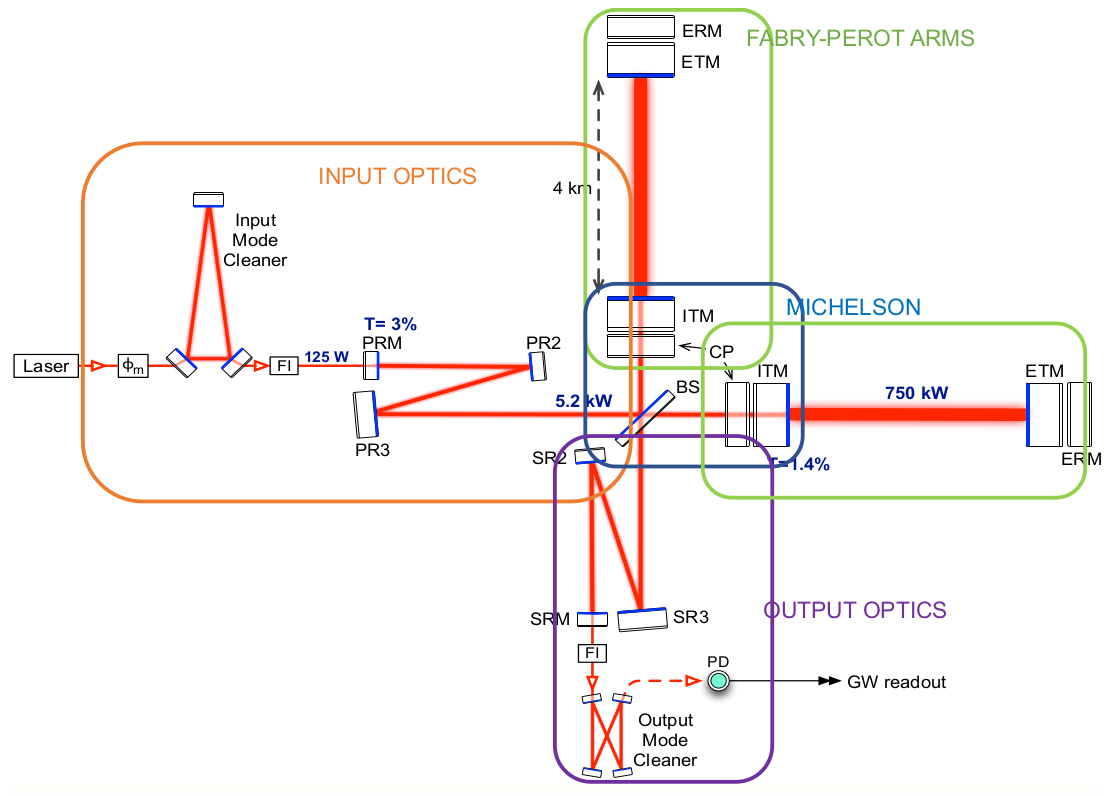
The Laser Interferometer Gravitational-Wave Observatory (LIGO) is a huge installation measured in kilometers that is listening for wrinkles in space-time. Pulling this off is a true story of hardware and software hacking, and we were lucky to have Dr. Keith Thorne dive into those details with his newly published “Extreme Instruments for Extreme Astrophysics” keynote from the 2021 Hackaday Remoticon.

Gravity causes space-time to stretch — think back to the diagrams you’ve seen of a massive orb (a star or planet) sitting on a plane with grid lines drawn on it, the fabric of that plane being stretch downward from the mass of the orb. If you have two massive entities like black holes orbiting each other, they give off gravitational waves. When they collide and merge, they create a brief but very strong train of waves. Evidence of these events are what LIGO is looking for.

Laser Interferometer diagramRai Weiss had the idea to look for gravitational waves using laser interferometers in about 1967, but the available laser technology was too new to accomplish the feat. In an interferometer, a laser is shot through a beam splitter and one beam reflects out and back over a distance, and is then recombined with the other half using a photodetector to measure the intensity of light. As the distance in the long leg changes, the relative phase of the lasers shift, and the power detected will vary.

LIGO is not your desktop interferometer. It uses a 5 kW laser input. The 4 km legs of the interferometer bounce the light back and forth 1,000 times for an effective 4,000 km travel distance. These legs are kept under extreme vacuum and the mirrors are held exceptionally still. It’s worth it; the instrument can measure at a precision of 1/10,000 the diameter of a proton!

Continue reading “Keynote Video: Dr. Keith Thorne Explains The Extreme Engineering Of The LIGO Hardware”

Mixing synthetic blood

The Challenges Of Finding A Substitute For Human Blood

Throughout history, the human body has been the subject of endless scrutiny and wonder. Many puzzled over the function of all these organs and fluids found inside. This included the purpose of blood, which saw itself alternately disregarded as being merely for ‘cooling the body’, to being responsible for regulating the body’s humors, leading to the practice of bloodletting and other questionable remedies. As medical science progressed, however, we came to quite a different perspective.

Simply put, our circulatory system and the blood inside it, is what allows us large, multi-celled organisms to exist. It carries oxygen and nutrients to cells, while enabling the removal of waste products as well as an easy path for the cells that make up our immune system. Our blood and the tissues involved with it are crucial to a healthy existence. This is something which becomes painfully clear when we talk about injuries and surgeries that involve severe blood loss.

While the practice of blood transfusions from donated blood has made a tremendous difference here, it’s not always easy to keep every single type of blood stocked, especially not in remote hospitals, in an ambulance, or in the midst of a war zone. Here the use of artificial blood — free from complicated storage requirements and the need to balance blood types — could be revolutionary and save countless lives, including those whose religion forbids the transfusion of human blood.

Although a lot of progress has been made in this field, with a limited number of practical products, it’s nevertheless proving to be a challenge to hit upon a replacement that ticks all of the boxes needed to make it generic and safe.

Continue reading “The Challenges Of Finding A Substitute For Human Blood”

Fail Of The Week: Hackaday Writer Attempts XBox Repair

Like a lot of Hackaday readers, I pride myself on being “the fix-it guy” in my family. When something breaks, I get excited, because it’s a chance to show off my skills. It’s especially fun when something major breaks, like the fridge or the washing machine — repairs like that are a race against time, since I’ve got to get it fixed faster than it would take to hire someone to do it. I usually win the race; I can’t remember the last time I paid someone to work on something. Like I said, it’s a point of pride.

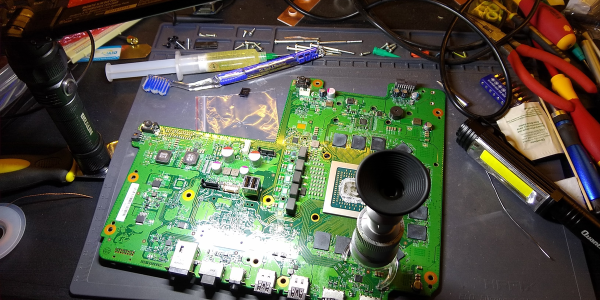
And so when my son came home on Thanksgiving break from his first semester away at college, eager to fire up his Xbox for some mindless relaxation from his biochemistry studies, only to be greeted with a black screen and no boot-up, it was go-time for me. I was confident that I’d be able to revive the dead box in time for him to have some fun. The fact that he’s back at school and the machine is still torn apart on my bench testifies to my hubris, but to be fair, I did get close to a fix, and may still yet get it done. But either way, the lessons I’ve learned along the way have been really valuable and worth sharing.

Continue reading “Fail Of The Week: Hackaday Writer Attempts XBox Repair”

Ordering prototypes like they were fast food

Made To Spec: The Coming Age Of Prototyping As A Service

In the last decade, the price for making a single PCB plummeted. And we’ve featured tons of hacks with boards hailing from places like OSH Park or Seeed Studio. But this phenomenon isn’t isolated, and all sorts of one-off prototyping services are becoming cheaper and looking to satiate both hobbyist and engineer alike.

Today, I want to blow the lid off a few places offering one-off mechanical prototyping services. I’ll take us through some history of how we got here, introduce a few new players, and finally highlight some important tradeoffs before you start ordering bespoke aluminum parts straight to your doorstep.

Now go get your ANSI Z87+ safety glasses, and let’s get started.

Continue reading “Made To Spec: The Coming Age Of Prototyping As A Service”

Spacing Out: Telescopes, Politics, And Spacecraft Design

Let’s launch into a round-up of stories that are out of this world, as we take a look at what’s happening in the realm of space exploration.

Ten Billion Dollars For A Telescope? Don’t Drop It!

Perhaps the most highly anticipated space mission of the moment is the James Webb Space Telescope, an infra-red telescope that will be placed in an orbit around the Earth-Sun L2 Lagrange point from which it will serve as the successor to the now long-in-the-tooth Hubble telescope. After many years of development the craft has been assembled and shipped to French Guiana for a scheduled Ariane 5 launch on the 22nd of December. We can only imagine what must have gone through the minds of the engineers and technicians working on the telescope when an unplanned release of a clamp band securing it to the launch vehicle adapter sent a vibration throughout the craft. Given the fragility of some of its components this could have jeopardised the mission, however after inspection it was found that no damage had occurred and that space-watchers and astronomers alike can breathe easy.

Continue reading “Spacing Out: Telescopes, Politics, And Spacecraft Design”

Microsoft’s Minimal Mouse May Maximize Masochism

So it seems that Microsoft has a patent in process for a folding mouse.  It looks a whole lot like their Arc mouse, which is quite thin and already goes from curved to flat. But that’s apparently not good enough for Microsoft, who says mice in general are bulky and cumbersome to travel with. On the bright side, they do acknowledge the total lack of ergonomics in those tiny travel mice.

Microsoft filed this patent in March of 2021 and it was published in early November. The patent describes the use of an expandable shell on the top with these kerf cuts in the long sides like those used to bend wood — this is where the flexibility comes in. The patent also mentions a motion tracker, haptic feedback, and a wireless charging coil. Now remember, there’s no guarantee of this ever actually happening, and there was no comment from Microsoft about whether it will become a real rodent someday.

And now, the rant. Microsoft considers this mouse, which again is essentially an updated Arc that folds in half, to be ergonomic. Full disclosure: I’ve never used an Arc mouse. But I respectfully disagree with this assessment and believe that people should not prioritize portability when it comes to peripherals, especially those that are so small to begin with. Like, what’s the use? And by the way, isn’t anyone this concerned with portability just using the touch pad or steering stick on their laptop anyway?

Continue reading “Microsoft’s Minimal Mouse May Maximize Masochism”