Illustrated Kristina with an IBM Model M keyboard floating between her hands.

Keebin’ With Kristina: The One Where Shift Happens

It’s been an exciting few weeks for me personally on the clacking front. I got a couple of new-to-me keyboards including my first one with ALPS switches, an old TI/99A keyboard with Futaba MD switches, and a couple of what are supposed to be the original Cherry switches (oh man they clack so nicely!) But enough about my keyboard-related fortuitousness, and on to the hacks and clacks!

Putting My Pedals to the Metal

Kinesis Savant Elite triple foot pedal. It's a keyboard for your feet!I picked up this Kinesis Savant Elite triple foot pedal from Goodwill. It works fine, but I don’t like the way it’s programmed — left arrow, right arrow, and right mouse click. I found the manual and the driver on the Kinesis website easily enough, but I soon learned that you need a 32-bit computer to program it. Period. See, Kinesis never wrote an updated driver for the original Savant Elite pedal, they just came out with a new one and people had to fork over another $200 or figure something else out.

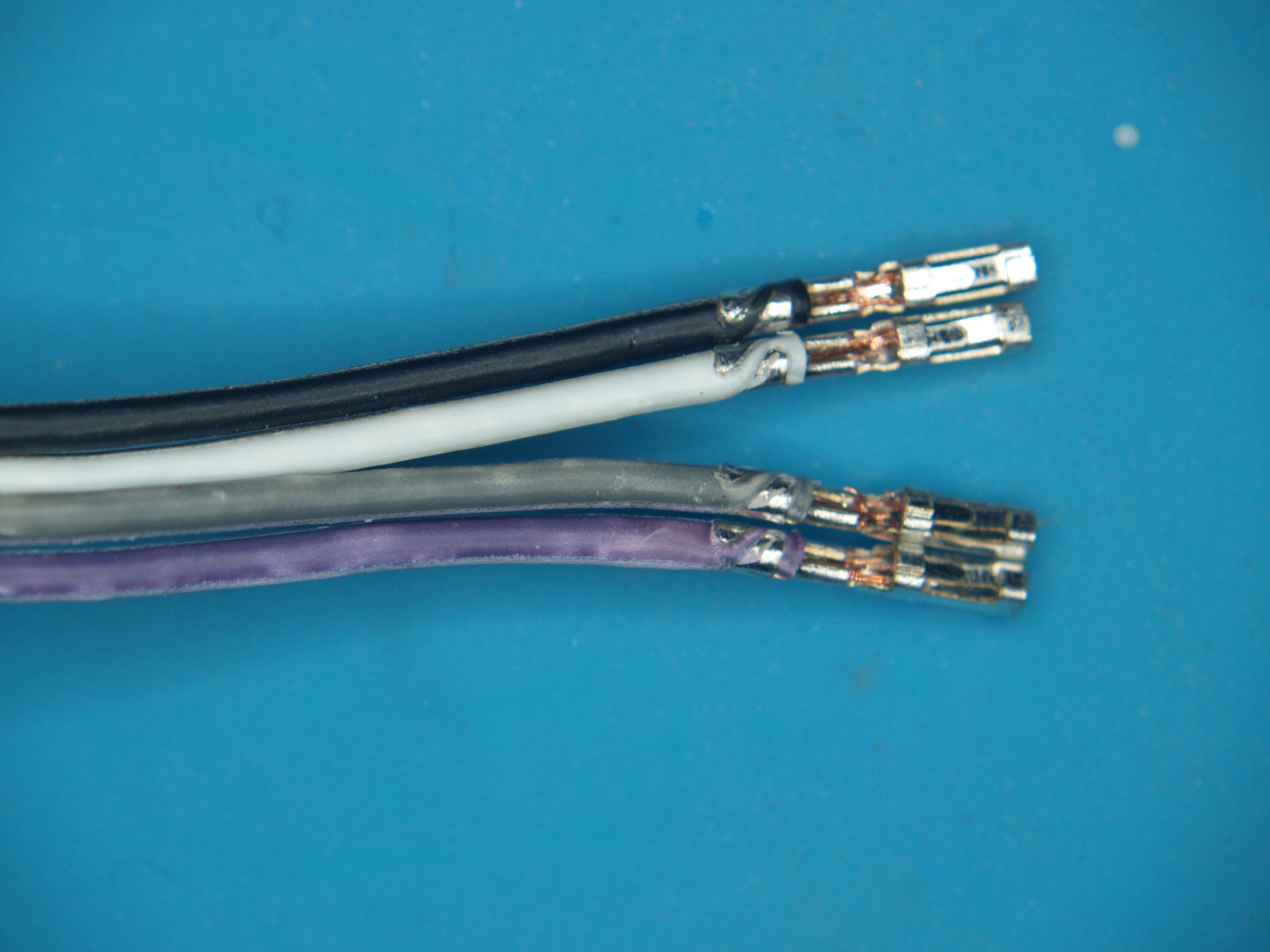
I’m fresh out of 32-bit computers, so I tried running the program in XP-compatibility mode like the manual says, but it just doesn’t work. Oh, and the manual says you can brick it if you don’t do things correctly, so that’s pretty weird and scary. It was about this time that I started to realize how easy it would be to open it up and just replace the controller with something much more modern. Once I got inside, I saw that all three switches use JST plugs and right angle header. Then I though hey, why not just re-use this set-up? I might have to make a new board, but it how awesome would it be to plug these pedals’ JSTs into my own board?

Continue reading “Keebin’ With Kristina: The One Where Shift Happens”

Image of CFS's SPARC reactor

Commonwealth Fusion’s 20 Tesla Magnet: A Bright SPARC Towards Fusion’s Future

After decades of nuclear fusion power being always ten years away, suddenly we are looking at a handful of endeavours striving to be the first to Q > 1, the moment when a nuclear fusion reactor will produce more power than is required to drive the fusion process in the first place. At this point the Joint European Torus (JET) reactor holds the world record with a Q of 0.67.

At the same time, a large international group is busily constructing the massive ITER tokamak test reactor in France, although it won’t begin fusion experiments until the mid-2030s. The idea is that ITER will provide the data required to construct the first DEMO reactors that might see viable commercial fusion as early as the 2040s, optimistically.

And then there’s Commonwealth Fusion Systems (CFS), a fusion energy startup.  Where CFS differs is that they don’t seek to go big, but instead try to make a tokamak system that’s affordable, compact and robust. With their recent demonstration of a 20 Tesla (T) high-temperature superconducting (HTS) rare-earth barium copper oxide (ReBCO) magnet field coil, they made a big leap towards their demonstration reactor: SPARC.

A Story of Tokamaks

CFS didn’t appear out of nowhere. Their roots lie in the nuclear fusion research performed since the 1960s at MIT, when a scientist called Bruno Coppi was working on the Alcator A (Alto Campo Toro being Italian for High Field Torus) tokamak, which saw first plasma in 1972. After a brief period with a B-revision of Alcator, the Alcator C was constructed with a big power supply upgrade. Continue reading “Commonwealth Fusion’s 20 Tesla Magnet: A Bright SPARC Towards Fusion’s Future”

NYT Crossword Decision Puzzles Many

Over at the New York Times (NYT) crossword puzzle desk, newly-appointed Games Editorial Director Everdeen Mason has caused a bit of a ruckus and hubbub (both six letter words with U as the 2nd and 5th letter) among digital puzzle solvers. In a short article published in early August, Ms. Mason announced the end of support for the crossword-solving program Across Lite, abruptly terminating a relationship between the two organizations spanning 25 years. But the ramifications extend much deeper than just one application.

The NYT first published its now-famous crossword puzzle back in 1942, appearing every Sunday, and in 1950 it became a daily feature. In 1993, Will Shortz was chosen as the fourth Crossword Puzzle Editor, a position he still holds today. The NYT online crossword puzzles first appeared in 1996 — puzzle files could be downloaded by modem and solved offline using the program Across Lite.

Modems aside, this basic method has continued until now, and a variety of programs and apps have sprung up over the years that allow not only offline play, but with tailored feature sets, such as support for the visually impaired, puzzle fanatics, puzzle creators, team playing, etc. Naturally the NYT joined the party as well, offering the crossword puzzles online and via smart phone apps.

Continue reading “NYT Crossword Decision Puzzles Many”

This Week In Security: Somebody’s Watching, Microsoft + Linux, DDoS

In case you needed yet another example of why your IoT devices shouldn’t be exposed to the internet, a large swath of Hikvision IP Cameras have a serious RCE vulnerability. CVE-2021-36260 was discovered by the firm Watchful_IP in the UK. In Hikvision’s disclosure, they refer to the problem as a command injection vulnerability in the device’s web interface. The vuln is pre-authentication, and requires no user interaction. This could be something as simple as a language chooser not sanitizing the inputs on the back-end, and being able to use backticks or a semicolon to trigger an arbitrary command.

Now you’re probably thinking, “I don’t use Hikvision cameras.” The sneaky truth is that a bunch of cameras with different brand names are actually Hikvision hardware, with their firmware based on the Hikvision SDK. The outstanding question about this particular vulnerability is whether it’s present in any of the re-labelled cameras. Since the exact vulnerability has yet to be disclosed, it’s hard to know for sure whether the relabeled units are vulnerable.  But if we were betting… Continue reading “This Week In Security: Somebody’s Watching, Microsoft + Linux, DDoS”

The Astronomical Promises Of The Fisher Space Pen

We’ve all heard of the Fisher Space Pen. Heck, there’s even an episode of Seinfeld that focuses on this fountain of ink, which is supposed to be ready for action no matter what you throw at it. The legend of the Fisher Space Pen says that it can and will write from any angle, in extreme temperatures, underwater, and most importantly, in zero gravity. While this technology is a definite prerequisite for astronauts in space, it has a long list of practical Earthbound applications as well (though it would be nice if it also wrote on any substrate).

You’ve probably heard the main myth of the Fisher Space Pen, which is that NASA spent millions to develop it, followed quickly by the accompanying joke that the Russian cosmonauts simply used pencils. The truth is, NASA had already tried pencils and decided that graphite particles were too much of an issue because they would potentially clog the instruments, like bags of ruffled potato chips and unsecured ant farms.

A Space-Worthy Instrument Indeed

Usually, it’s government agencies that advance technology, and then it trickles down to the consumer market at some point. But NASA didn’t develop the Space Pen. No government agency did. Paul Fisher of the Fisher Pen Company privately spent most of the 1960s working on a pressurized pen that didn’t require gravity in the hopes of getting NASA’s attention and business. It worked, and NASA motivated him to keep going until he was successful.

An original Fisher Space Pen AG-7 atop the Apollo 11 flight plan.
The pen that went to the moon. Image via Sebastien Billard

Then they tested the hell out of it in all possible positions, exposed it to extreme temperatures between -50 °F and 400 °F (-45 °C to 204 °C), and wrote legible laundry lists in atmospheres ranging from pure oxygen to a total vacuum. So, how does this marvel of engineering work?

The Fisher Space Pen’s ink cartridge is pressurized to 45 PSI with nitrogen, which keeps oxygen out in the same manner as potato chip bags. Inside is a particularly viscous, gel-like ink that turns to liquid when it meets up with friction from the precision-fit tungsten carbide ballpoint.

Between the viscosity and the precision fit of the ballpoint, the pen shouldn’t ever leak, but as you’ll see in the video below, (spoiler alert!) snapping an original Space Pen cartridge results in a quick flood of thick ooze as the ink is forced out by the nitrogen.

Continue reading “The Astronomical Promises Of The Fisher Space Pen”

Roll-on/roll-off vessel docking

RORO Vessels: Driving Cars Across The Ocean

YouTube does a pretty good job of making itself a target for criticism, but one thing you can say about their algorithms: when they work, they really work. Case in point, the other day I found a suggestion in my feed for a very recent video about salvaging a shipwreck. I can’t begin to guess what combination of view history and metadata Google mined to come to the conclusion that I’d be interested in this video, but they hit the nail on the head.

But more importantly, their algorithmic assessment of my interests must have been a goldmine to them — or it could have been if I didn’t have a minefield of ad blockers protecting me — because I fell down a rabbit hole that led me to a bunch of interesting videos. As it turns out, the shipwreck in that first video was of a cargo ship that was carrying thousands of brand-new automobiles, which were all destroyed in the fire and subsequent capsizing of a “roll-on/roll-off” (RORO) vessel off the coast of Georgia (the state, not the country) in 2019.

Thus began my journey into RORO vessels, on which automobiles and other bulky cargo are transported around the world. And while my personal assessment of the interests of Hackaday readers probably is not as finely tuned as Google’s algos, I figured there’s a better than decent chance that people might enjoy tagging along too.

Continue reading “RORO Vessels: Driving Cars Across The Ocean”

Ask Hackaday: What Can Only A Computer Do?

It is easy to apply computers to improve things we already understand. For example, instead of a piano today, you might buy a synthesizer. It looks and works — sometimes — as a piano. But it can also do lots of other things like play horns, or accompany you with a rhythm track or record and playback your music. There’s plenty of examples of this: word processors instead of typewriters, MP3 players instead of tape decks, and PDF files instead of printed material. But what about something totally new? I was thinking of this while looking at Sonic Pi, a musical instrument you play by coding.

But back to the keyboard, the word processor, and the MP3 player. Those things aren’t so much revolutionary as they are evolutionary. Even something like digital photography isn’t all that revolutionary. Sure, most of us couldn’t do all the magic you can do in PhotoShop in a dark room, but some wizards could. Most of us couldn’t lay out a camera-ready brochure either, but people did it every day without the benefit of computers. So what are the things that we are using computers for that are totally new? What can you do with the help of a computer that you absolutely couldn’t without?

Continue reading “Ask Hackaday: What Can Only A Computer Do?”