Linux Fu: Controlling The Terminal

A Linux terminal has a lot more features than the TeleType of yore. On a TeleType, text spews out and scrolls up and is gone forever. A real terminal can use escape characters to do navigate around and emulate most of what you like about GUIs. However, doing this at the lowest level is a chore and limits portability. Luckily, all the hard work has already been done.

First, there’s a large database of terminal capabilities available for you to use: terminfo.  And in addition, there’s a high-level library called curses or ncurses that simplifies writing programs to control the terminal display. Digging deep into every nook and cranny of ncurses could take years. Instead, I’m going to talk about using a program that comes with ncurses to control the terminal, called tput. Using these two commands, you can figure out what kind of terminal you’re dealing with, and then manipulate it nearly to your heart’s content. Let’s get started!

Continue reading “Linux Fu: Controlling The Terminal”

Collecting, Repairing, And Wearing Vintage Digital Watches

Electronics enthusiasts have the opportunity to be on the very cusp of a trend with vintage digital watches (VDW). Vintage digital watches are those watches that from the late 70’s and throughout the 80’s. They’re unlike any watch style today, and for anyone around when they made their debut these deliver a healthy dose of nostalgia.

Monetarily speaking, it is not worth the money to pay a watch maker to restore a digital watch but for those of us with basic electronics skills we can put the time and effort into making them run again and be one of the few in possession of functioning VDW. It’s a statement as well as a sign of your own aptitude.

Earlier this year, Steven Dufresne walked us through the history of the digital watch. In this article we will dive into the world of vintage digital watch repair.

Continue reading “Collecting, Repairing, And Wearing Vintage Digital Watches”

Sci-Hub: Breaking Down The Paywalls

There’s a battle going on in academia between the scientific journal publishing companies that have long served as the main platform for peer review and spreading information, and scientists themselves who just want to share and have access to the work of their fellows. arxiv.org launched the first salvo, allowing researchers in physics to self-publish their own papers, and has gained some traction in mathematics and computer science. The Public Library of Science journals focus on biology and medicine and offer peer review services. There are many others, and even the big firms have been forced to recognize the importance of open science publication.

But for many, that’s still not enough. The high prestige journals, and most past works, are stuck behind paywalls. Since 2011, Sci-Hub has taken science publishing open by force, illegally obtaining papers and publishing them in violation of copyright, but at the same time facilitating scientific research and providing researchers in poorer countries with access that their rich-world colleagues take for granted. The big publishing firms naturally fought back in court and won, and with roughly $20 million of damages, drove Sci-Hub’s founder underground.

Continue reading “Sci-Hub: Breaking Down The Paywalls”

Designing Space-Rated PCBs

We’ve reduced printed circuit board design to practice so much that we hardly give a thought to the details anymore. It’s so easy to bang out a design, send it to a fab house, and have ten boards in your hands in no time at all. All the design complexities are largely hidden from us, abstracted down to a few checkboxes on the vendor’s website.

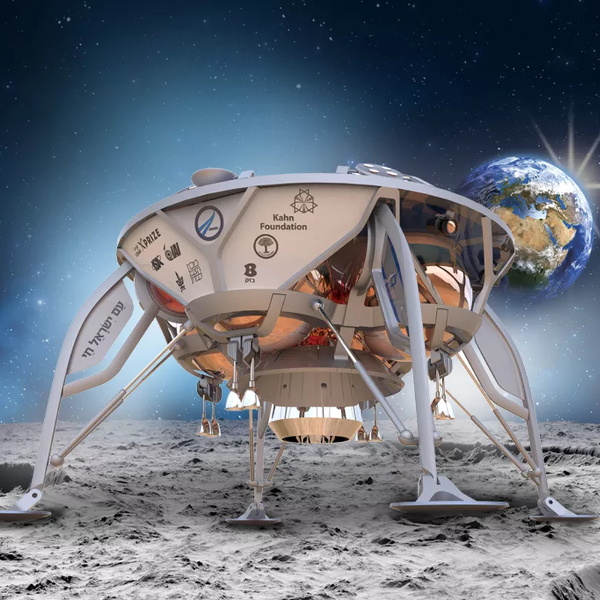
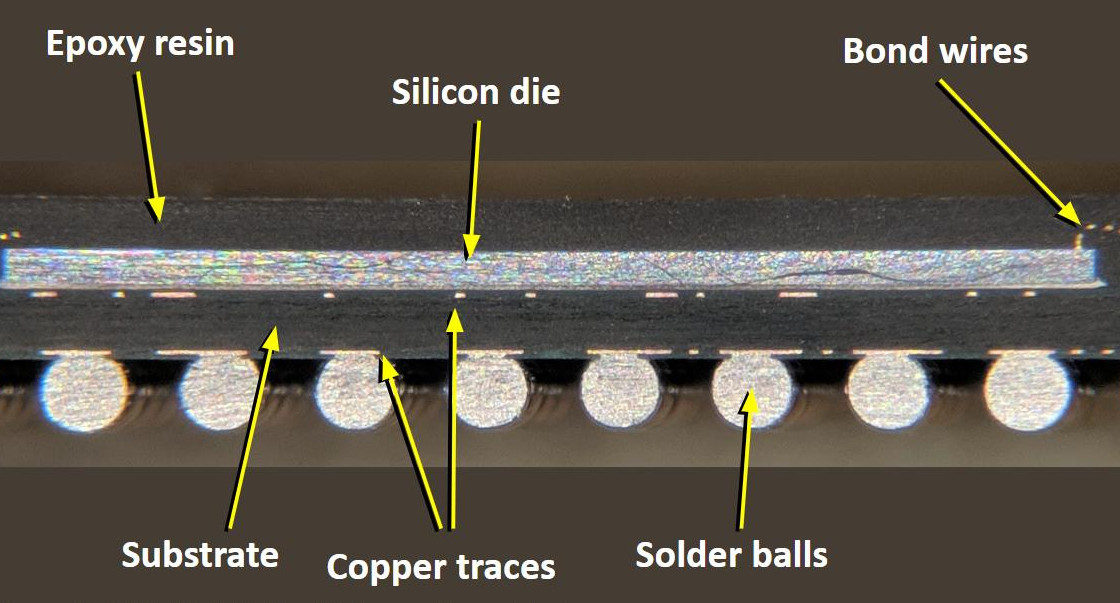
There’s no doubt that making professional PCB design tools available to the hobbyist has been a net benefit, but there a downside. Not every PCB design can be boiled down to the “one from column A, one from column B” approach. There are plenty of applications where stock materials and manufacturing techniques just won’t cut it. PCBs designed to operate in space is one such application, and while few of us will ever be lucky enough to have a widget blasted to infinity and beyond, learning what’s behind space-rated PCBs is pretty interesting.

Continue reading “Designing Space-Rated PCBs”

Applied Science Rolls An Electroluminescent Controller

After LEDs and TFTs and OLEDs and liquid crystals, there’s another display technology that doesn’t get a lot of attention. Electroluminescent displays have been around for ages, and there still aren’t a whole lot of applications for them. That might change soon, because Applied Science a.k.a. [Ben Krasnow] figured out an easy way to build EL displays on anything, and created a simple circuit that’s capable of driving video on a remarkable blue phosphor EL display.

For this build, [Ben] is using a specialty product from Lumilor consisting of a copper-ish conductive base layer, a clear dielectric, the ‘lumicolor’ phosphor, and a clear conductive top coat. All of these layers are applied with an airbrush, and the patterns are made with a desktop vinyl cutter.  This is an entire system designed to put electroluminescent displays on motorcycle gas tanks and to have doors that go like *this* and glow. That said, the system isn’t very dependent on the substrate, and [Ben] has had successful experiments in creating EL displays on plastic sheets, 3D printed parts, and even paper.

Compared to previous (and ongoing) efforts to create EL displays such as [Fran]’s recreation of the Apollo DSKY, the Lumilor system seems extraordinarily easy and clean. Current efforts as with [Fran]’s example are using a silkscreen process, which is a mess no matter how you look at it and can’t be applied to non-flat surfaces.

But EL displays are more than just putting a few layers of chemicals on a substrate — you need to drive these displays with high-frequency, high-voltage AC. For this, [Ben] designed a multi-channel electroluminescent driver based on the Adafruit Trinket M0, two LT3468 ICs to generate a high voltage, and either a an HV507 or HV513 to drive 8 or 64 channels.

With the ability to create EL displays and drive 64 channels, there really was only one thing to do: a 32×32 display. Even seeing a few lines scan across a 32×32 EL display is magical, but it’s got another trick up its sleeve: it also plays a low-resolution video of Never Gonna Give You Up.

This isn’t a video to be missed, check it out below.

Continue reading “Applied Science Rolls An Electroluminescent Controller”

Shushing Sonic Booms: NASA’s Supersonic X-Plane To Take Flight In 2021

The history of aviation is full of notable X-Planes, a number of which heralded in new generations of flight. The Bell X-1 became the first aircraft to break the speed of sound during level flight in 1947 with the legendary Charles “Chuck” Yeager at the controls. A few years later the X-2 would push man up to Mach 3, refining our understanding of supersonic flight. In the 1960’s, the North American built X-15 would not only take us to the edge of space, but set a world speed record which remains unbroken.

Compared to the heady post-war days when it seemed the sky was quite literally the limit, X-Planes in the modern era have become more utilitarian in nature. They are often proposed but never built, and if they do get built, the trend has been towards unmanned subscale vehicles due to their lower cost and risk. The few full-scale piloted X-Planes of the 21st century have largely been prototypes for new military fighter jets rather than scientific research aircraft.

But thanks to a commitment from NASA, the Lockheed Martin X-59 might finally break that trend and become another historic vehicle worthy of the X-Plane lineage. Construction has already begun on the X-59, and the program has recently passed a rigorous design and timeline overview by NASA officials which confirmed the agency’s intent to financially and logistically support the development of the aircraft through their Low Boom Flight Demonstrator initiative. If successful, the X-59 will not only help refine the technology for the next generation of commercial supersonic aircraft, but potentially help change the laws which have prevented such aircraft from operating over land in the United States since 1973.

Continue reading “Shushing Sonic Booms: NASA’s Supersonic X-Plane To Take Flight In 2021”

Creating Black Holes: Division By Zero In Practice

Dividing by zero — the fundamental no-can-do of arithmetic. It is somewhat surrounded by mystery, and is a constant source for internet humor, whether it involves exploding microcontrollers, the collapse of the universe, or crashing your own world by having Siri tell you that you have no friends.

It’s also one of the few things gcc will warn you about by default, which caused a rather vivid discussion with interesting insights when I recently wrote about compiler warnings. And if you’re running a modern operating system, it might even send you a signal that something’s gone wrong and let you handle it in your code. Dividing by zero is more than theoretical, and serves as a great introduction to signals, so let’s have a closer look at it.

Chances are, the first time you heard about division itself back in elementary school, it was taught that dividing by zero is strictly forbidden — and obviously you didn’t want your teacher call the cops on you, so you obeyed and refrained from it. But as with many other things in life, the older you get, the less restrictive they become, and dividing by zero eventually turned from forbidden into simply being impossible and yielding an undefined result.

And indeed, if a = b/0, it would mean in reverse that a×0 = b. If b itself was zero, the equation would be true for every single number there is, making it impossible to define a concrete value for a. And if b was any other value, no single value multiplied by zero could result in anything non-zero. Once we move into the realms of calculus, we will learn that infinity appears to be the answer, but that’s in the end just replacing one abstract, mind-boggling concept with another one. And it won’t answer one question: how does all this play out in a processor? Continue reading “Creating Black Holes: Division By Zero In Practice”