Have you ever thought about coffee purity? It’s more something you’d encounter with prescription or elicit drugs, but coffee is actually a rather valuable commodity. If a seller can make the actual grounds go a bit further by stretching the brew with alternative ingredients there becomes an incentive to cheat.
If this sounds like the stuff rumors are made of, that’s because it is! Here in Ho Chi Minh City there are age-old rumors a coffee syndicate that masterfully passes off adulterated product as pure, high-grade coffee. Rumors are one thing, but the local media started picking up on these suspicions and that caught my attention. I decided to look to simple chemistry to see if I could prove or disprove the story.
What we want to investigate is whether price and coffee purity are related. If they are, then after accounting for the effect of price, we will want to know whether proximity to the market where artificial coffee flavoring is sold has an effect on coffee purity.
You will most likely be familiar with both Qualcomm and Broadcom for their wireless and cellphone chipsets. As far as the Maker community is concerned, Broadcom makes the chipset for the Raspberry Pi, but in the context of a two hundred Billion dollar company, a ‘maker’ focused Linux dev board is the equivalent of a rounding error on a balance sheet.
This proposed deal follows several other semiconductor mergers and acquisitions including NXP and Freescale, Intel and Altera, Avago and Broadcom, On Semiconductor and Fairchild, and the one we’re most befuddled with, Atmel and Microchip. Why are these companies merging? Because they’re sitting on mountains of cash. All of these mergers with the exception of Avago and Broadcom, have been for single-digit Billions of dollars. The merger of Broadcom and Qualcomm — if it happens — will be the largest merger of two semiconductor companies ever. That’s easy to do when both Broadcom and Qualcomm are on the top ten list of largest semiconductor companies, but it is evidence enough that the mergers and acquisitions in the industry are not slowing down.
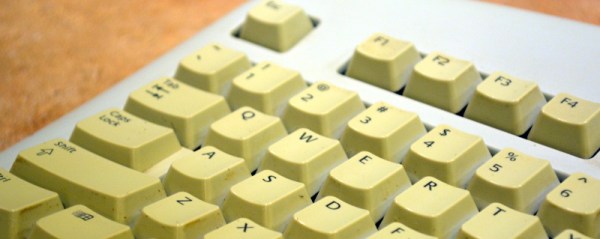
Your fancy white electronic brick of consumer electronics started off white, but after some time it yellowed and became brittle. This shouldn’t have happened; plastic is supposed to last forever. It turns out that plastic enclosures are vulnerable to the same things as skin, and the effects are similar. When they are stared at by the sun, the damage is done even though it might not be visible to you for quite some time.
Let’s start off with one of my favorite quotes from John von Neumann: “Any one who considers arithmetical methods of producing random digits is, of course, in a state of sin. For, as has been pointed out several times, there is no such thing as a random number — there are only methods to produce random numbers, and a strict arithmetic procedure of course is not such a method.”
What von Neumann is getting at is that the “pseudo” in pseudorandom number generator (PRNG) is really a synonym for “not at all”. Granted, if you come in the middle of a good PRNG sequence, guessing the next number is nearly impossible. But if you know, or can guess, the seed that started the PRNG off, you know all past and future values nearly instantly; it’s a purely deterministic mathematical function. This shouldn’t be taken as a rant against PRNGs, but merely as a reminder that when you use one, the un-guessability of the numbers that it spits out is only as un-guessable as the seed. And while “un-guessability” isn’t a well-defined mathematical concept, or even a real word, entropy is.
That’s why entropy matters to you. Almost anything that your computer wants to keep secret will require the generation of a secret random number at some point, and any series of “random” numbers that a computer generates will have only as much entropy, and thus un-guessability, as the seed used. So how does a computer, a deterministic machine, harvest entropy for that seed in the first place? And how can you make sure you’ve got enough? And did you know that your Raspberry Pi can be turned into a heavy-duty source of entropy? Read on!
Bill Shockley brought the transistor to a pasture in Palo Alto, but he didn’t land there by chance. There was already a plot afoot which had nothing to do with silicon, and it had already been a happening place for some time by then.
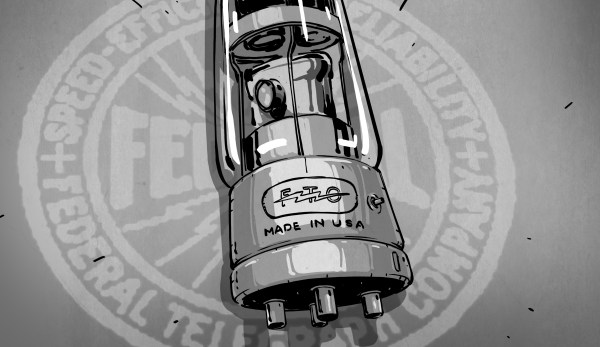
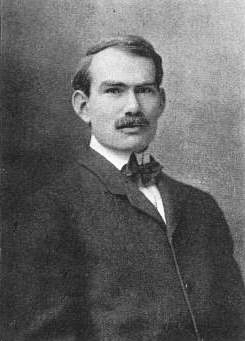
Often overshadowed by Edison and Menlo Park or Western Electric and its Bell Labs, people forget that the practical beginning of modern radio and telecommunications began unsuspectingly in the Bay Area on the shoestring-budgeted work benches of Lee de Forest at Federal Telegraph.
As the first decade of the 20th century passed, Lee de Forest was already a controversial figure. He had founded a company in New York to develop his early vacuum tubes as detectors for radio, but he was not very good at business. Some of the officers of the company decided that progress was not being made fast enough and drained the company of assets while de Forest was away. This led to years of legal troubles and the arrest of many involved due to fraud and loss of investors’ money.
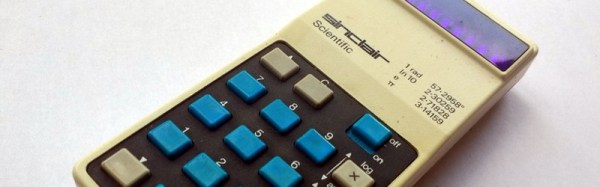
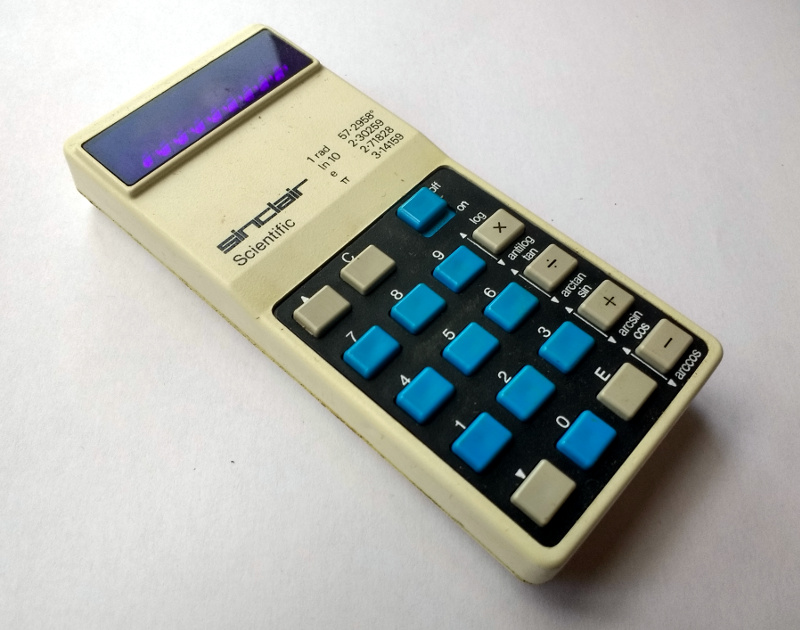
When writing a recent piece about Reverse Polish Notation, or RPN, as a hook for my writing I retrieved my Sinclair Scientific calculator from storage. This was an important model in the genesis of the scientific calculator, not for being either a trailblazer or even for being especially good, but for the interesting manner of its operation and that it was one of the first scientific calculators at an affordable price.
I bought the calculator in a 1980s rummage sale, bodged its broken battery clip to bring it to life, and had it on my bench for a few years. Even in the early 1990s (and even if you didn’t use it), having a retro calculator on your bench gave you a bit of street cred. But then as life moved around me it went into that storage box, and until the RPN article that’s where it stayed. Finding it was a significant task, to locate something about the size of a candy bar in the storage box it had inhabited for two decades, among a slightly chaotic brace of shelves full of similar boxes.
The Sinclair’s clean design still looks good four decades later.
Looking at it though as an adult, it becomes obvious that this is an interesting machine in its own right, and one that deserves a closer examination. What follows will not be the only teardown of a Sinclair Scientific on the web, after all nobody could match [Ken Shirriff]’s examination of the internals of its chip, but it should provide an insight into the calculator’s construction, and plenty of satisfying pictures for lovers of 1970s consumer electronics.
The Sinclair is protected by a rigid black plastic case, meaning that it has survived the decades well. On the inside of the case is a crib sheet for its RPN syntax and scientific functions, an invaluable aid when it comes to performing any calculations.
It shares the same external design as the earlier Sinclair Cambridge, a more humble arithmetic calculator, but where the Cambridge’s plastic is black, on the Scientific it is white. The LED display sits behind a purple-tinted window, and the blue-and-black keyboard occupies the lower two-thirds of the front panel. At 50 x 111 x 16 mm it is a true pocket calculator, with an elegance many of its contemporaries failed to achieve and which is certainly not matched by most recent calculators. Good industrial design does not age, and while the Sinclair’s design makes it visibly a product of the early 1970s space-age aesthetic it is nevertheless an attractive item in its own right.
For decades, Gordon Clark and his company Clark Foam held an almost complete monopoly on the surfboard blank market. “Blanks” are pieces of foam with reinforcing wood strips (called “stringers”) in a rough surfboard shape that board manufacturers use to make a finished product, and Clark sold almost every single one of these board manufacturers their starting templates in the form of these blanks. Due to environmental costs, Clark suddenly shuttered his business in 2005 with virtually no warning. After a brief panic in the board shaping industry, and a temporary skyrocketing in price of the remaining blanks in existence, what followed next was rather surprising: a boom of innovation across the industry.