Rotating Plasma Vortex Speaker

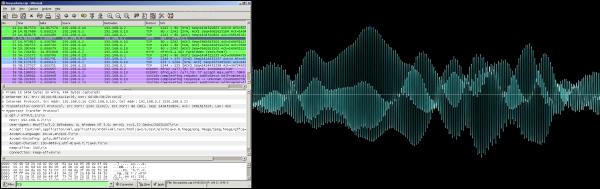
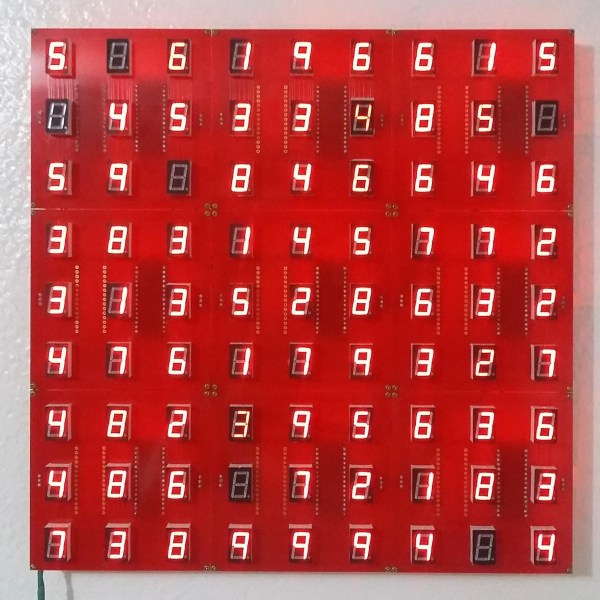
[Anthony Garofalo] has made a fancier plasma speaker. Not content with a simple spark, he uses a plasma vortex. To make the vortex, the spark gap is swapped out for an electrode placed in the centre of a ring magnet. The Lorentz force experienced by the arc causes it to rotate rapidly enough round the arc of the magnet’s centre to appear as a continuous sheet of plasma.

The speaker gets its power from an inverter using a flyback transformer driven through a MOSFET by a 555-based pulse width modulator. You can see the result in the video below the break, it’s very impressive to look at but probably not quite ready to sit in your hi-fi stack. The resulting sound isn’t quite as good as that from a stationary arc, but it looks a lot cooler.

Continue reading “Rotating Plasma Vortex Speaker”

Arduino Comes To The Raspberry Pi, Linux ARM Devices

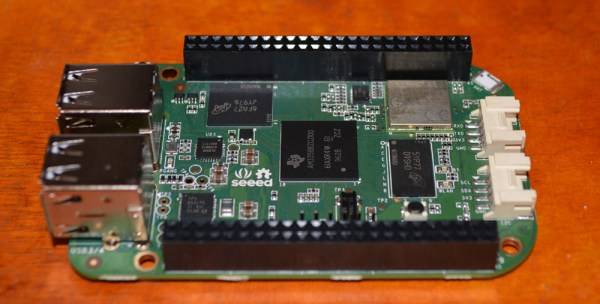
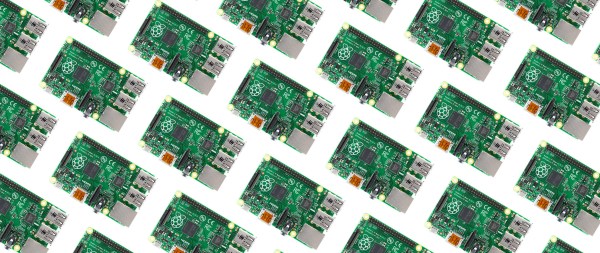
Arduino is the perfect introduction to microcontrollers and electronics. The recent trend of powerful, cheap, ARM-based single board Linux computers is the perfect introduction to computer science, programming, and general Linux wizardry. Until now, though, Arduino and these tiny ARM computers have been in two different worlds. Now, finally, there are nightly builds of Arduino IDE on the Raspberry Pi and other single board Linux computers.

The latest Arduino build for ARM Linux popped up on the arduino.cc downloads page early this week. This is the result of an incredible amount of work from dozens of open source developers across the Arduino project. Now, with just a simple download and typing ‘install’ into a terminal, the Arduino IDE is available on just about every single board Linux computer without having to build the IDE from source. Of course, Arduino has been available on the Raspberry Pi for a very long time with sudo apt-get install arduino, but this was an older version that cannot work with newer Arduino boards.

Is this distribution of the Arduino IDE the same you would find on OS X and Windows? Yep, everything is the same:

While this is really just arduino.cc improving their automated build process and putting a link up on their downloads page, it does make it exceptionally easy for anyone to set up a high school electronics lab. The Raspberry Pi is almost a disposable computing device, and combining it with Arduino makes for a great portable electronics lab.

A $1000 Tiny Personal Satellite

If you ever read any old magazines, you might be surprised at how inexpensive things used to be. A U.S. postage stamp was six cents, a gallon of gas was $0.34, and the same amount of milk was $1.07. Everything is relative, though. The average household income back then was under $8,000 a year (compared to over $53,000 a year in 2014). So as a percentage of income, that milk actually cost about seven bucks.

The same is true of getting into orbit. Typical costs today just to get something into orbit has gone from–no pun intended–astronomical, to pretty reasonable. Lifting a pound of mass on the Space Shuttle cost about $10,000. On an Atlas V, it costs about $6,000. A Falcon Heavy (when it launches) will drop the cost to around $1,000 or so. Of course, that’s just the launch costs. You still have to pay for whatever you want to put up there. Developing a satellite can be expensive. Very expensive.

Continue reading “A $1000 Tiny Personal Satellite”

IPhone Microscopy And Other Adventures

CMOS imaging chips have been steadily improving, their cost and performance being driven by the highly competitive smartphone industry. As CMOS sensors get better and cheaper, they get more interesting for hacker lab projects. In this post I’m going to demonstrate a few applications of the high-resolution sensor that you’ve already got in your pocket — or wherever you store your cell phone.

CMOS vs CCD

First lets quickly review image sensors. You’ve probably head of CMOS and CCD sensors, but what’s the difference exactly?

cddandcmos
CCD and CMOS imaging sensors: from this excellent page at CERN.

As the figure above shows, CCD and CMOS sensors are both basically photodiode arrays. Photons that hit regions on the chip are converted into a charge by a photodiode. The difference is in how this charge in shoved around. CCD sensors are analogue devices, the charge is shifted through the chip and out to a single amplifier. CMOS sensors have amplifiers embedded in each cell and also generally include on-chip analogue to digital conversion allowing complete “camera-on-a-chip” solutions.

Because CMOS sensors amplify and move the signal into the digital domain sooner, they can use cheaper manufacturing processes allowing lower-cost imaging chips to be developed. Traditionally they’ve also had a number of disadvantages however, because more circuitry is included in each cell, less space is left to collect light. And because multiple amplifiers are used, it’s harder to get consistent images due to slight fabrication differences between the amplifiers in each cell. Until recently CMOS sensors were considered a low-end option. While CCD sensors (and usually large cooled CCD sensors) are still often preferred for scientific applications with big budgets, CMOS sensors have now however gained in-roads in high performance DSLRs.

Continue reading “IPhone Microscopy And Other Adventures”

Apple Aftermath: Senate Entertains A New Encryption Bill

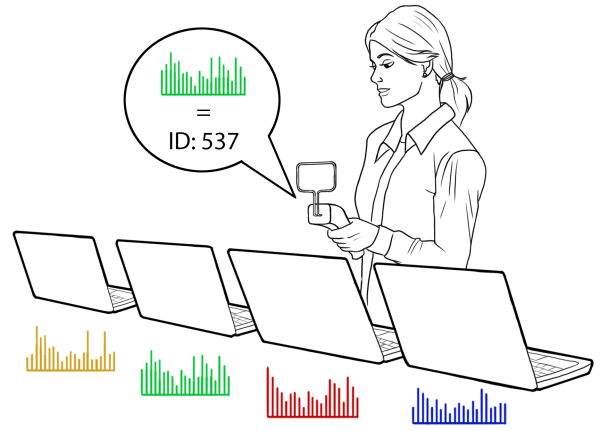
If you recall, there was a recent standoff between Apple and the U. S. Government regarding unlocking an iPhone. Senators Richard Burr and Dianne Feinstein have a “discussion draft” of a bill that appears to require companies to allow the government to court order decryption.

Here at Hackaday, we aren’t lawyers, so maybe we aren’t the best source of legislative commentary. However, on the face of it, this seems a bit overreaching. The first part of the proposed bill is simple enough: any “covered entity” that receives a court order for information must provide it in intelligible form or provide the technical assistance necessary to get the information in intelligible form. The problem, of course, is what if you can’t? A covered entity, by the way, is anyone from a manufacturer, to a software developer, a communications service, or a provider of remote computing or storage.

There are dozens of services (backup comes to mind) where only you have the decryption keys and there is nothing reasonable the provider can do to get your data if you lose your keys. That’s actually a selling point for their service. You might not be anxious to backup your hard drive if you knew the vendor could browse your data when they wanted to do so.

The proposed bill has some other issues, too. One section states that nothing in the document is meant to require or prohibit a specific design or operating system. However, another clause requires that covered entities provide products and services that are capable of complying with the rule.

A broad reading of this is troubling. If this were law, entire systems that don’t allow the provider or vendor to decrypt your data could be illegal in the U. S. Whole classes of cybersecurity techniques could become illegal, too. For example, many cryptography systems use the property of forward secrecy by generating unrecorded session keys. For example, consider an SSH session. If someone learns your SSH key, they can listen in or interfere with your SSH sessions. However, they can’t take recordings of your previous sessions and decode them. The mechanism is a little different between SSHv1 (which you shouldn’t be using) and SSHv2. If you are interested in the gory details for SSHv2, have a look at section 9.3.7 of RFC 4251.

In all fairness, this isn’t a bill yet. It is a draft and given some of the definitions in section 4, perhaps they plan to expand it so that it makes more sense, or – at least – is more practical. If not, then it seems to be an indication that we need legislators that understand our increasingly technical world and have some understanding of how the new economy works. After all, we’ve seen this before, right? Many countries are all too happy to enact and enforce tight banking privacy laws to encourage deposits from people who want to hide their money. What makes you think that if the U. S. weakens the ability of domestic companies to make data private, that the business of concealing data won’t just move offshore, too?

If you were living under a rock and missed the whole Apple and FBI controversy, [Elliot] can catch you up. Or, you can see what [Brian] thought about Apple’s response to the FBI’s demand.

A Low-Cost Mini PCB Printer

The next great advancement in homebrew electronics is an easy way to turn copper clad board into functional circuit boards. This has been done since the 60s with etch resist pens, sheets of etch resist rub-on transfers, the ever-popular photocopy and clothes iron, and now with small CNC mills. It’s still a messy, slow, and expensive process. [johnowhitaker] and [esot.eric] are trying to solve the latter of these problems with a mini PCB printer made out of DVD drives.

Playing around with the guts of a DVD drive is something [john] and [eric] have been doing for a while now, and for good reason. There’s a lot of interesting tech in DVD drives, with motors, steppers, and gears able to make very, very accurate and precise movements. Most PCBs aren’t very big, either, so a laser cutter that can only traverse an area a few inches square isn’t that much of a downside in this case.

With a small diode laser mounted to a CNC gantry constructed out of DVD drives, the process of making a PCB is actually pretty simple. First, a slurry of laser printer toner and alcohol is applied to the board. Next, the laser on this PCB printer lases over the traces and copper fills, melting the toner. The board is removed, the excess toner wiped off, and the unwanted copper is melted away. Simple, even if it is a little messy.

Of course this method cannot do plated traces like your favorite Internet-based board house, but this does have a few advantages over any other traditional homebrew method. It’s cheap, since CD and DVD drive mechanisms are pretty much standardized between manufacturers. It’s also easy to add soldermask printing to this build, given that soldermasks can be cured with light. It’s a very cool build, and one that would find a home in thousands of garages and hackerspaces around the world.

The HackadayPrize2016 is Sponsored by:

Everyman’s Turbomolecular Pump

What can you do with a very good vacuum pump? You can build an electron microscope, x-ray tubes, particle accelerators, thin films, and it can keep your coffee warm. Of course getting your hands on a good vacuum pump involves expert-level scrounging or a lot of money, leading [DeepSOIC] and [Keegan] to a great entry for this year’s Hackaday Prize. It’s the Everyman’s Turbomolecular Pump, a pump based on one of [Nikola Tesla]’s patents. It sucks, and that’s a good thing.

The usual way of sucking the atmosphere out of electron microscopes and vacuum tubes begins with a piston or diaphragm pump. This gets most of the atmosphere out, but there’s still a little bit left. To get the pressure down even lower, an oil diffusion pump (messy, but somewhat cheap) or a turbomolecular pump (clean, awesome, and expensive) is used to suck the last few molecules of atmosphere out.

The turbomolecular pump [DeepSOIC] and [Keegan] are building use multiple spinning discs just like [Tesla]’s 1909 patent. The problem, it seems, is finding a material that can be made into a disc and can survive tens of thousand of rotations per minute. It’s a very, very difficult build, and a mistake in fabricating any of the parts will result in a spectacular rapid disassembly of this turbomolecular pump. The reward, though, would be great. A cheap turbomolecular pump would be a very useful device in any hackerspace, fab lab, or workshop garage.

The HackadayPrize2016 is Sponsored by: