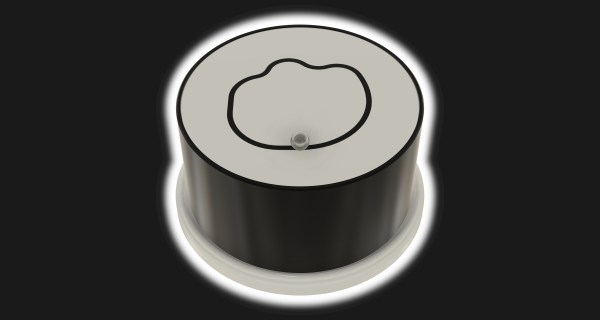
Sometimes a coworker sees something on your desk, and they have to ask, “Where can I get one of those?” and that has to be one of the greatest compliments to a maker. [Greg Zumwalt] nailed it with his “Marblevator Line Follower.” Roboticists will immediately recognize a black line on a white surface, but this uses hidden mechanics instead of light/dark sensors. Check out the video after the break to see the secrets, or keep bearing with us.
Inside the cylinder is a battery, charging circuit, inductive receiving coil, and a motor turning a magnet-laden arm beneath the cap. The overall effect is an illusion to convince people that the marble has a mind of its own. You can pick up the cylinder, and it keeps moving as expected from an autonomous bot. The black line is actually a groove, so the bearing follows a curvy course without any extra movements from the magnets within. The two-tone look is super-clean, but the whimsy of a “smart bearing” makes this an all-around winner.
“Marblevator Line Follower” is not the first Marblevator we featured, and we love our bouncing-bearing baubles and music-making machines.