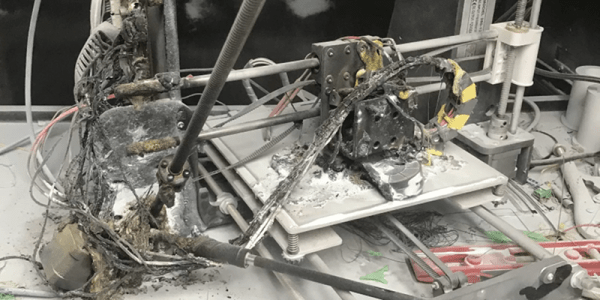
3D Printing is often heralded as a completely new fabrication method, creating things that simply cannot be manufactured in other ways. While this is true, the widest reaching usefulness of 3D printers isn’t for pushing the limits of fabrication. The real power is in pushing the limits of manufacturing for individuals who need one-off parts.
The proof point is in the story shown above. A missing key on a keyboard could have meant an otherwise fine piece of hardware headed for recycling, but was saved by a single part printed on a desktop 3D printer. Multiply this by the increasing number of people who have access to these printers and you can see how using 3D printing for repairs will have a huge impact on keeping our gear in service longer.
We want to see how you’ve saved things from the rubbish pile. Show them off in Hackaday’s Repairs You Can Print contest. The best Student entry and the best Organization entry (think Hackerspace) will each win a high-end 3D Printer. But anyone can enter, with the top twenty entries receiving $100 credit for Tindie.
If you’re like us though, these prizes are just icing on the cake. The real reward is showing what some think is mundane but the Hackaday crowd believes is worth celebrating. Check out all the entries so far and join us below for a few highlights.
Continue reading “The Most Utilitarian 3D Print Has The Widest Reach”


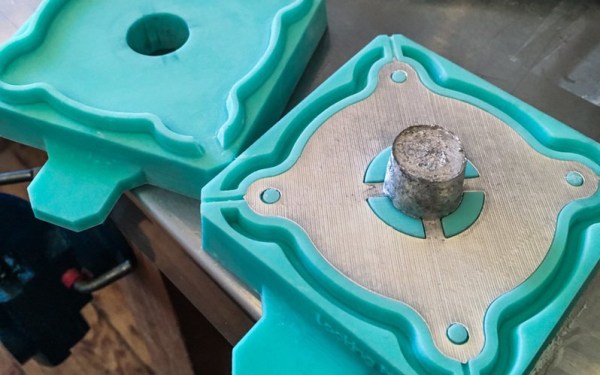
Some solutions come from no more than looking at two dissimilar things while in the right mindset, and realizing they can be mashed together. In this case I had recently segmented a large, hollow, 3D model into smaller 3D-printer-sized pieces and printed them all out, but found myself with a problem. I now had a large number of curved, thin-walled pieces that needed to be connected flush with one another. These were essentially butt joints on all sides — the weakest kind of joint — offering very little surface for gluing. On top of it all, the curved surfaces meant clamping was impractical, and any movement of the pieces while gluing would result in other pieces not lining up.