Color E-Ink Display Photo Frame Pranks [Mom]

As a general rule, it’s not nice to prank your mother. Moms have a way of exacting subtle revenge, generally in the form of guilt. That’s not to say it might not be worth the effort, especially when the prank is actually wrapped in a nice gesture, like this ever-changing e-paper family photo frame.

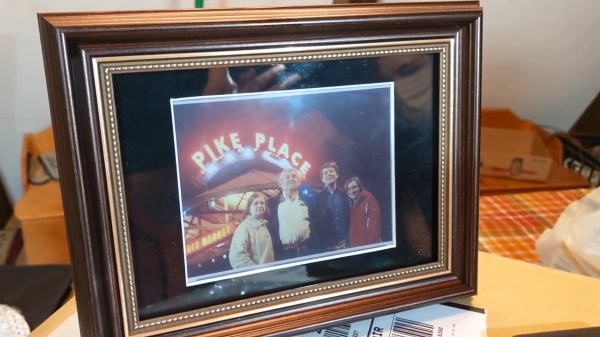
The idea the [CNLohr] had was made possible by a new generation of multicolor e-paper displays by Waveshare. The display [Charles] chose was a generous 5.65″ unit with a total of seven colors. A little hacking revealed an eighth color was possible, adding a little more depth to the images. The pictures need a little pre-processing first, of course — dithering to accommodate the limited palette — but look surprisingly good on the display. They have a sort of stylized look, as if they were printed on a textured paper with muted inks.

The prank idea was simple — present [Mrs. Lohr] with a cherished family photo to display, only to find out that it had changed to another photo overnight. The gaslighting attempt required a bit more hacking, including some neat tricks to keep the power consumption very low. It was also a bit of a squeeze to get it into a frame that was slim enough not to arouse suspicion. The video below details some of the challenges involved in this build.

In the end, [Mom] wasn’t tricked, but she still seemed pleased with the final product. These displays seem like they could be a lot of fun — perhaps a version of the very-slow-motion player but for color movies would be doable.

Continue reading “Color E-Ink Display Photo Frame Pranks [Mom]”

Internet Connected E-Paper Message Board

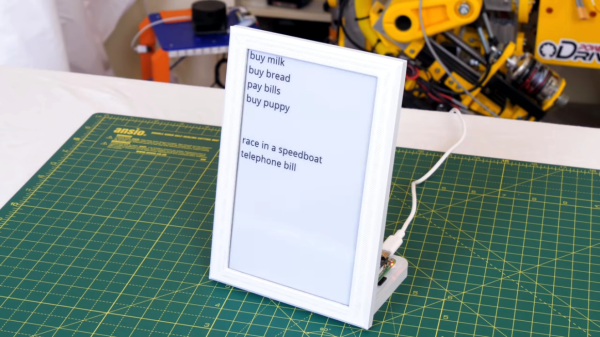
Are you still writing notes on paper and sticking them to the fridge like it’s the ’80s? Well, if you are, and you read this site, you’d probably like to upgrade to something a bit more 21st century. And, thanks to robot maker [James Bruton], you can leave your old, last century, message taking behind as he has a tutorial up showing you how to build an internet connected e-paper message display board. And, if you have a Raspberry Pi, an e-paper display and adapters just lying around doing nothing, then this project will cost you less than the buck that paper and a magnet will cost you.

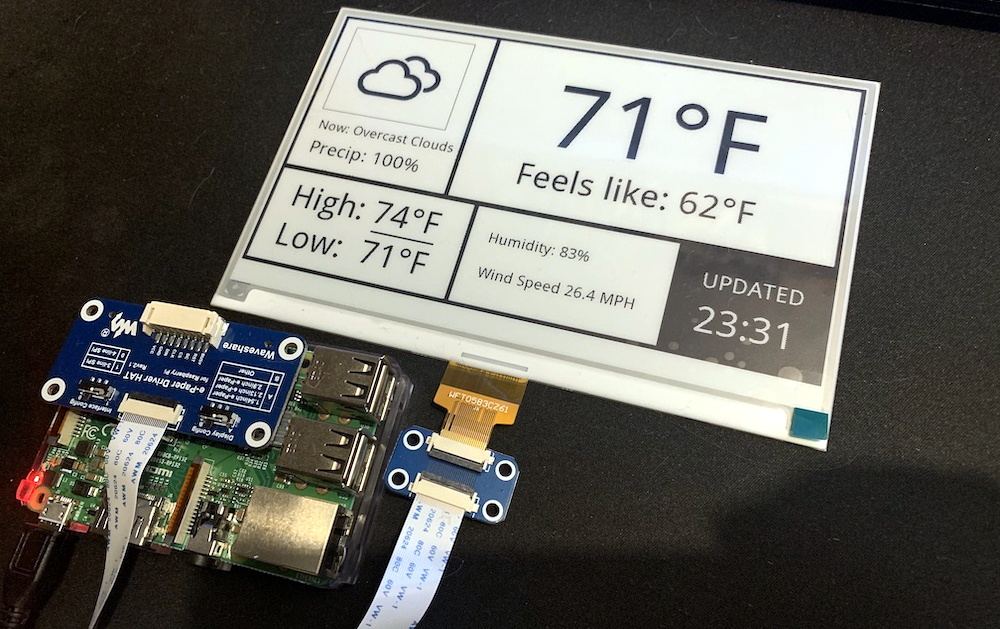
Sarcasm aside, this is a pretty nice project. As mentioned, the base of this is a Raspberry Pi – [James] uses a Pi 4, but you could get away with an older, lower powered model as well. This powers the cheap(-ish) e-paper display he found online, which comes with the necessary adapters for the Pi, as well as a python library to write to the display. [James] uses a Google Sheet as the cloud storage for the message board, and there is some python code to access the cells in the Sheet and print them on the display if anything has changed. A cron job runs the script every 5 minutes to catch changes in the messages.

As with most of the projects that [James] does, he gives a good overview in the video and goes over the process of finding the hardware and writing and updating the script. He’s put the script and details as well as the CAD file for the frame he created for the project up on GitHub. [James] has been featured several times on the site before, check out some of his projects.

Continue reading “Internet Connected E-Paper Message Board”

E-Paper Display Shows Movies Very, Very Slowly

How much would you enjoy a movie that took months to finish? We suppose it would very much depend on the film; the current batch of films from the Star Wars franchise are quite long enough as they are, thanks very much. But a film like Casablanca or 2001: A Space Odyssey might be a very different experience when played on this ultra-slow-motion e-paper movie player.

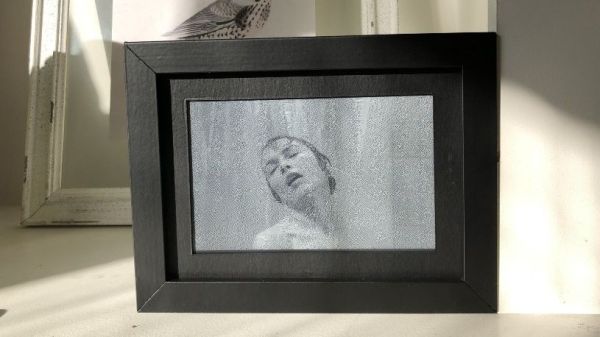
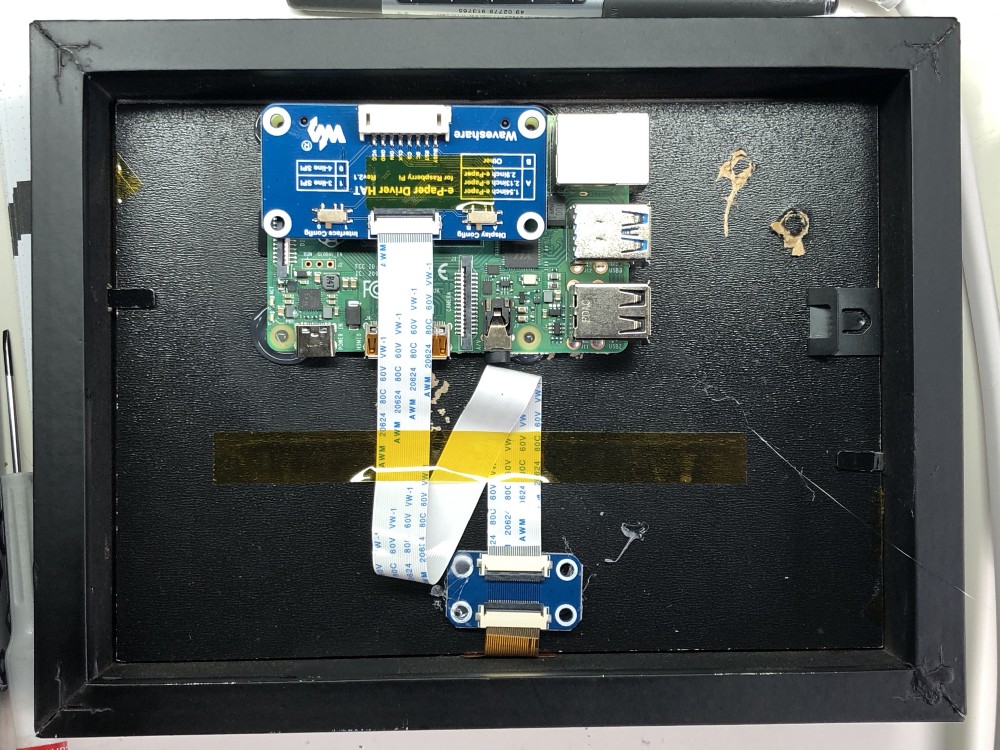
The idea of displaying a single frame of a movie up for hours rather than milliseconds has captivated [Tom Whitwell] since he saw [Bryan Boyer]’s take on the concept. The hardware [Tom] used is similar: a Raspberry Pi, an SD card hat with a 64 GB card for the movies, and a Waveshare e-paper display, all of which fits nicely in an IKEA picture frame.

[Tom]’s software is a bit different, though; a Python program uses FFmpeg to fetch and dither frames from a movie at a configurable rate, to customize the viewing experience a little more than the original. Showing one frame every two minutes and then skipping four frames, it has taken him more than two months to watch Psycho. He reports that the shower scene was over in a day and a half — almost as much time as it took to film — while the scene showing [Marion Crane] driving through the desert took weeks to finish. We always wondered why [Hitch] spent so much time on that scene.

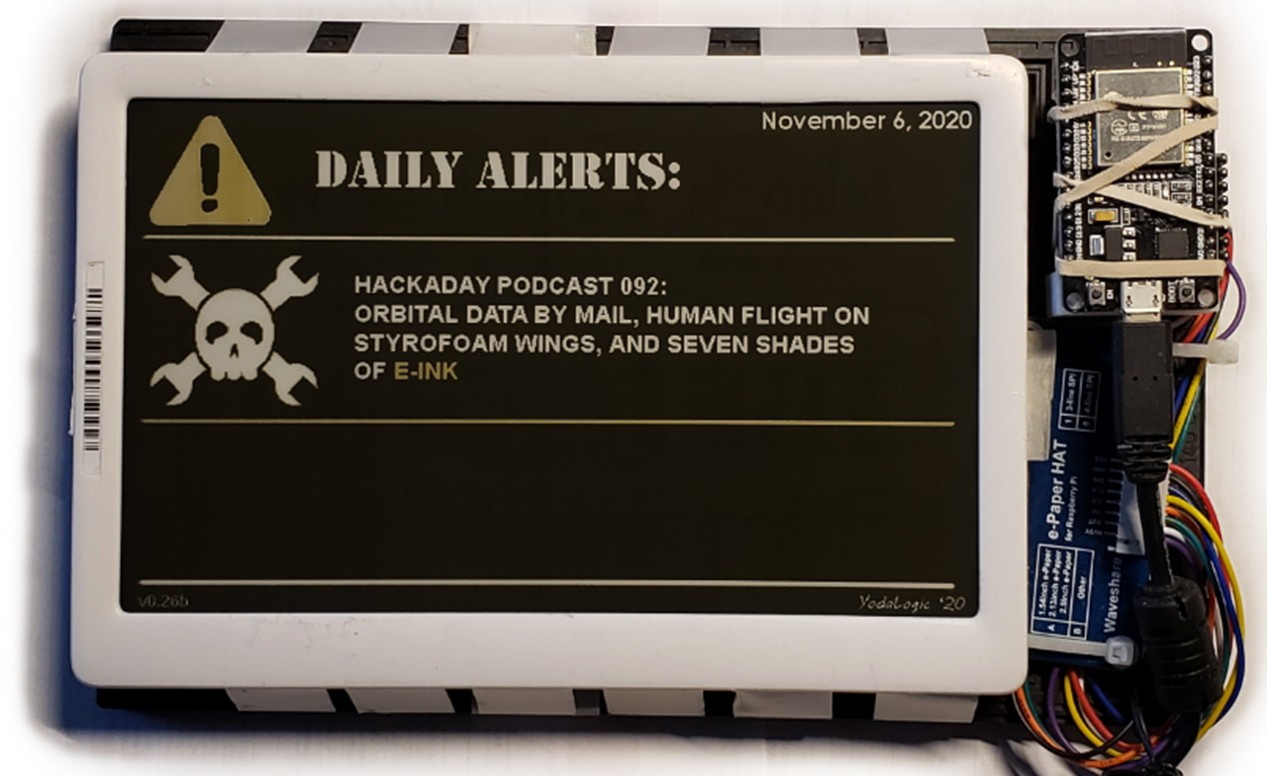
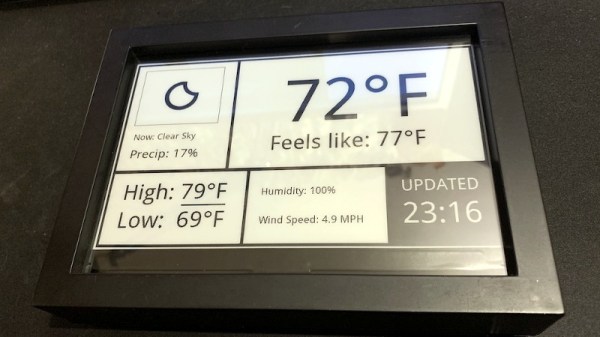
With the proper films loaded, we can see this being an interesting way to really study the structure and flow of a good film. It’s also a good way to cut your teeth on e-paper displays, which we’ve seen pop up in everything from weather stations to Linux terminals.

Hands On With A Batteryless E-Paper Display

E-paper displays are unusual in that power is only needed during a screen update. Once the display’s contents have been set, no power whatsoever is required to maintain the image. That’s pretty nifty. By making the display driver board communicate wirelessly over near-field communication (NFC) — which also provides a small amount of power — it is possible for this device to be both wireless and without any power source of its own. In a way, the technology required to do this has existed for some time, but the company Waveshare Electronics has recently made easy to use options available for sale. I ordered one of their 2.9 inch battery-less NFC displays to see how it acts.

Continue reading “Hands On With A Batteryless E-Paper Display”

New Part Day: Battery-Less NFC E-Paper Display

Waveshare, known for e-ink components aimed at hobbyists among other cool parts, has recently released a very interesting addition to their product line. This is an enclosed e-ink display which gets updated over a wireless NFC connection. By that description, nothing head-turning, but the kicker is that there is no battery inside the device at all, as it harvests the energy needed from the wireless communication itself.

Just like wireless induction charging in certain smartphones, the communication waves involved in NFC can generate a small current when passing through a coil, located on this device’s PCB. Since microcontrollers and e-ink displays consume a very small amount of current compared to other components such as a backlit LCD or OLED display, this harvested passive energy is enough to allow the display to update. And because e-paper requires no power at all to retain its image, once the connection is ended, no further battery backup is needed.

The innovation here doesn’t come from Waveshare however, as in 2013 Intel had already demoed a very similar device to promising results. There’s some more details about the project, but it never left the proof of concept stage despite being awarded two best paper awards. We wonder why it hadn’t been made into a commercial product for 5 years, but we’re glad it’s finally here for us to tinker with it.

E-paper is notorious for having very low refresh rates when compared to more conventional screens, much more so when driven in this method, but there are ways to speed them up a bit. Nevertheless, even when used as designed, they’re perfectly suited for being used in clocks which are easy on the eyes without a glaring backlight.

[Thanks Steveww for the tip!]

Winners Of The Take Flight With Feather Contest

It’s hard to beat the fidelity and durability of printed text on paper. But the e-paper display gets pretty close, and if you couple it will great design and dependable features, you might just prefer an e-reader over a bookshelf full of paperbacks. What if the deal is sweetened by making it Open Hardware? The Open Book Project rises to that challenge and has just been named the winner of the Take Flight with Feather contest.

This e-reader will now find its way into the wild, with a small manufacturing run to be put into stock by Digi-Key who sponsored this contest. Let’s take a closer look at the Open Book, as well as the five other top entries.

Continue reading “Winners Of The Take Flight With Feather Contest”

Agora, A Hackable E-Paper Clock

[Daniel Zilinec] appreciates the aesthetics of e-paper and thought it would make a great clock. 

The natural appearance of e-paper certainly appeals to a lot of hackers. We’ve seen everything from typewriters to trackers for imaginary money. The Agora clock is designed to be battery powered,;a classic night-stand alarm clock. With its wide angle viewing and even response to light it will be easily viewable even at dawn.

He saves the user a lot of time by designing the PCB up-front. It’s got a charging IC built in, back-light LEDs and pads for buttons. All you need to do is print out the case from the available thingiverse files and assemble. The schematic and firmware are available for the more enterprising hacker to work out as well.

There’s also a somewhat puzzling watch version of the clock. It would certainly be a fashion statement to wear one of these. Still, the is something nice about the organic feel and possible fonts that make it worth considering.